

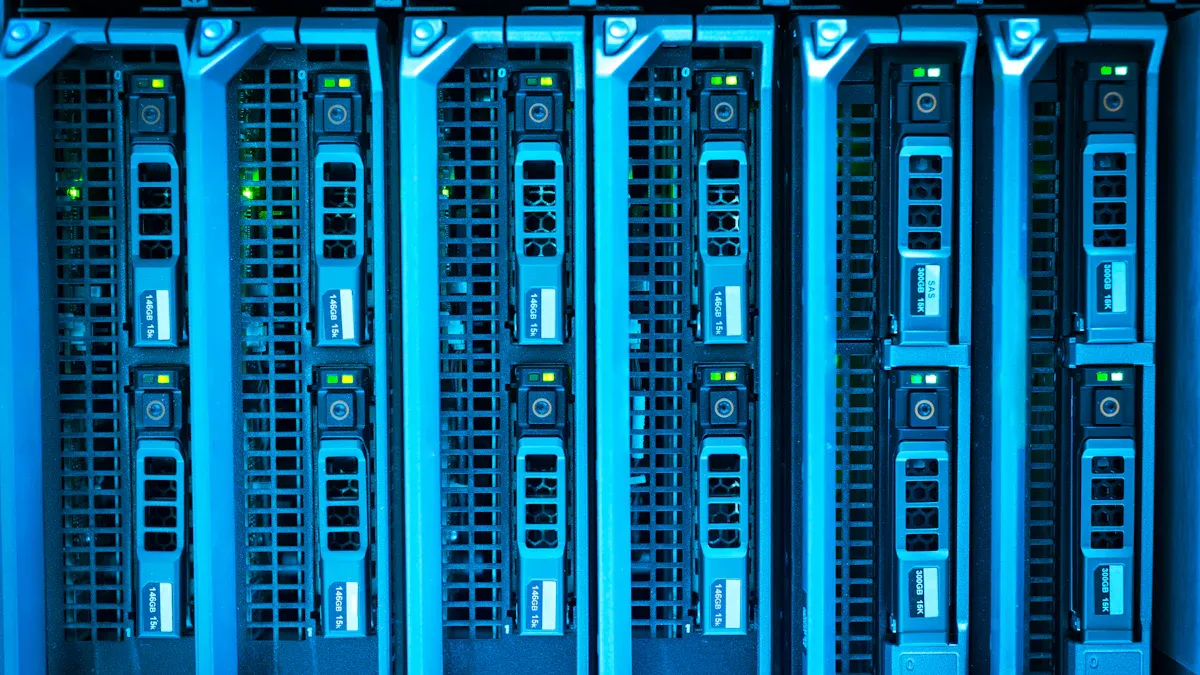
I see Data Center PDUs as indispensable for modern infrastructure. They handle the intense power demands of AI and high-density computing. This market, currently at $1.98 billion, should reach $4.18 billion by 2032, a 9.8% CAGR. For Power Distribution Units in data centers, I also anticipate a strong 14.8% CAGR through 2030.
Key Takeaways
- Data Center PDUs are important for managing power in data centers. They help handle the high power needs of modern technology.
- Different types of PDUs offer various features. Some PDUs only distribute power, while others can monitor usage or control power to individual devices.
- When choosing a PDU, consider its quality, how well it can grow with your needs, and its ability to connect with other systems. Also, look for good security and energy-saving features.
Leading Data Center PDU Manufacturers
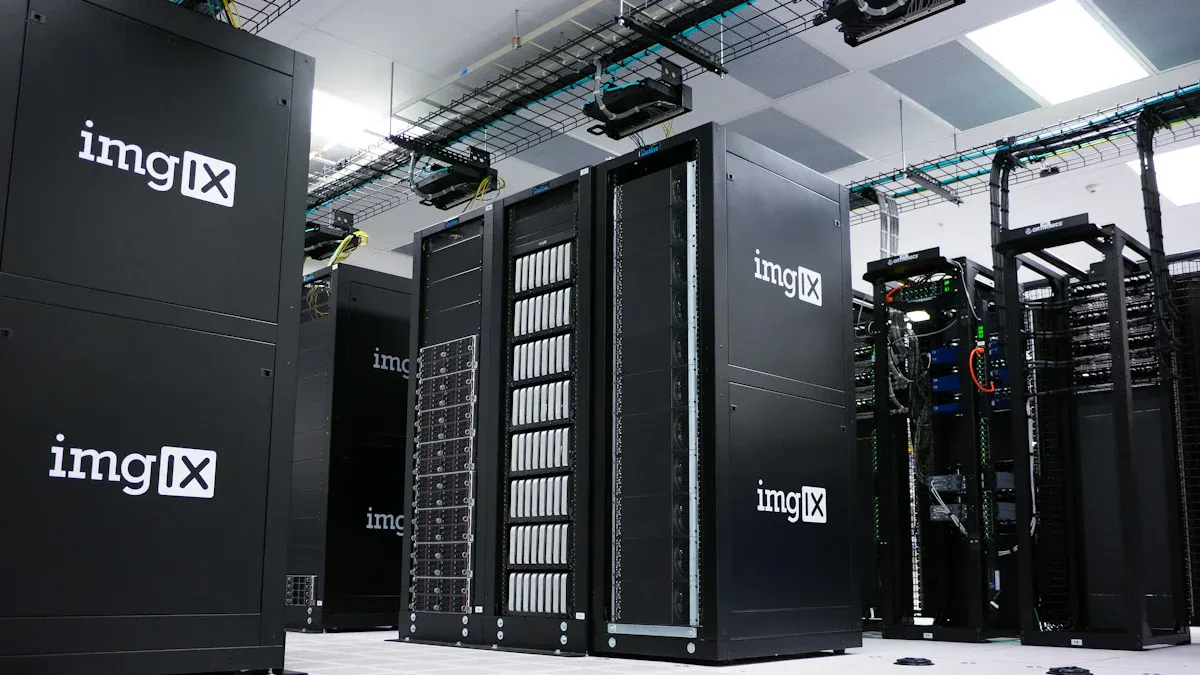
When I look at the landscape of power distribution in data centers, I see many strong players. Each manufacturer brings unique strengths to the table. They all aim to meet the growing demands of modern IT infrastructure. Let me tell you about some of the leaders I’ve observed in this space.
Eaton: A Global Data Center PDU Leader
Eaton stands out as a global leader. I find their Data Center PDU offerings to be incredibly versatile. They design their PDUs for seamless installation and to reduce cable clutter. For example, I’ve seen their configurable cord entry positions and lengths make a big difference. They also offer high-density designs, sometimes with up to 54 outlets per PDU. This includes the C39 outlet, which I think is great for future-proofing.
I appreciate how Eaton allows for configurable color chassis and alternating phase outlets. This makes it easy to identify A/B power feeds and balance loads. Their optimized input options, like various plug types and cable lengths, give me a lot of flexibility. The C39 outlet is particularly clever; it handles both 15 and 20 amp input plugs. I also like their configurable outlet modules, which let me mix and match IEC, NEMA, and C39 options. They even include IEC outlet grips and offer outlet-by-outlet switching and metering to prevent accidental disconnections and monitor usage.
Eaton’s ePDU G3 Series is impressive. It features a hot-swappable communications module with an advanced LCD display. This makes onsite issue resolution easy and increases uptime. I’ve seen their Metered Input PDUs allow daisy-chaining up to eight PDUs with just one IP address. This simplifies load balancing and helps prevent overloads. Their Metered Outlet PDUs monitor critical power quality factors like voltage and current. This helps with energy saving. For more control, their Managed PDUs provide power quality measurement, monitoring, and outlet-level control, including remote on/off. I also know they offer high-density PDUs that are fully configurable. These are designed for continuous uptime and environmental monitoring.
Eaton’s integration with software platforms like Intelligent Power Manager (IPM), Visual Power Manager (VPM), and Visual Capacity Optimization Manager (VCOM) is a huge plus. IPM automates virtual environments. VPM gives me robust monitoring for large PDU installations. VCOM builds on VPM, offering a complete DCIM software solution.
Schneider Electric: Innovating Data Center PDU Solutions
Schneider Electric is another major player. I see them constantly innovating, especially with the rise of AI. Their NetShelter Rack PDU Advanced is a great example. They’ve updated these units to support the high-current power needs of AI servers. I find their design for efficient rack layouts very practical, offering compact vertical and horizontal models. These PDUs also provide higher counts of dedicated circuits. I appreciate the intelligent operational features, enabled by their Network Management Card. These features enhance security and integrate seamlessly with EcoStruxure IT.
Vertiv: Reliable Data Center PDU Systems
Vertiv consistently delivers reliable Data Center PDU systems. I often see their solutions in demanding environments where uptime is critical. They focus on robust engineering and comprehensive support, which gives me confidence in their products for maintaining stable power delivery.
Raritan (Legrand): Advanced Intelligent Data Center PDUs
Raritan, now part of Legrand, truly excels in advanced intelligent PDUs. I’m particularly impressed by their iX Controller. It’s a hot-swappable controller that acts as the intelligence hub. It offers industrial-grade reliability and multilayer redundancy. Their intelligent rack PDUs provide accurate power quality monitoring, with ±0.5% metering accuracy. This gives me great insights for capacity planning. They even monitor total harmonic distortion and voltage dips at the PDU inlet.
The Xerus™ Technology Platform is the backbone of their products. It provides security, high compute power, and advanced alerting. I find its open architecture, supporting SNMP and REST-based APIs, very useful for interoperability. Raritan also offers advanced access automation. This allows me to define user profiles and work schedules. It can even link with intelligent door locks to manage physical access and comply with regulations. I also like their standard hot-swappable controller, which has an extremely low failure rate. It allows replacement without cutting power. Their PX 5000 Series uses Bi-State Hybrid Latching Relays. These are UL-listed and rated for high-current. They consume less energy and protect against in-rush currents. I can also set thresholds for power and environmental events and receive alerts via SNMP or email. This helps prevent unplanned downtime.
Server Technology (Legrand): High-Quality Data Center Rack PDUs
Server Technology, also part of Legrand, is known for its high-quality rack PDUs. I often turn to them for robust and dependable power solutions. They focus on precision and reliability, which is essential for critical data center operations.
CyberPower: User-Friendly Data Center PDU Management
CyberPower offers user-friendly Data Center PDU management. I find their interfaces very intuitive. They provide both remote and local monitoring options. I can track power status offsite or onsite. Their digital displays show important information like amperage, voltage, and IP address. I also appreciate their SNMP network interface for monitoring power usage over the network.
For local monitoring, I see LED indicators, LCD displays, and a Command Line Interface (CLI) via a serial port. For remote monitoring, I can use CLI via Telnet or SSH, the PDU’s web interface, or power management software. Their Monitored PDU series has a color-configurable LCD display for real-time remote/local monitoring. The Switched PDU series adds outlet control. Their Metered-by-Outlet PDU series monitors each connected equipment. The Switched Metered-by-Outlet PDU series allows both monitoring and control for each piece of equipment.
Delta Electronics: Top-Tier Data Center PDU Provider
Delta Electronics positions itself as a top-tier Data Center PDU provider. I see their commitment to engineering highly efficient and reliable power solutions. Their power distribution system offers extensive control over a data center’s electrical supply. It’s highly configurable based on voltage level and outlet configurations. I find their comprehensive control components, including modular PDUs, RPPs, and rPDUs, very effective. They also integrate green technologies to reduce carbon footprint.
Delta’s rPDUs ensure a steady energy flow to every device within a rack cabinet. They also offer protection for devices inside the rack. I appreciate their intelligent management features for optimized power distribution. Their diverse system components, like Rack Power Distribution Units (rPDU) and Rack-Mount Static Transfer Switches (rSTS), provide optimal power distribution and protection. Their PDU solutions offer a great balance of efficiency, flexibility, and reliability. I also like their space-saving and scalable PDUs, which reduce initial investment costs. The ViLink rPDU series incorporates advanced smart management capabilities and network security protections. I know their products undergo rigorous functional testing and reliability verification before shipment.
Rittal: Comprehensive Data Center PDU Offerings
Rittal provides comprehensive Data Center PDU offerings. I often see their solutions as part of a larger, integrated data center infrastructure. They focus on seamless integration with their enclosure systems, which simplifies deployment and management for me.
ABB: Powering Data Centers with Robust PDUs
ABB powers data centers with robust PDUs. I’ve seen their designs integrate isolation transformers and panelboard distribution directly into the rack line-up. This space-saving design maximizes power density. Despite their slim profile, they offer all the functionalities of larger PDUs. I find their power distribution highly configurable, allowing for flexible setups. Their advanced PowerView monitoring system gives me a centralized view of power quality and system health. The front-access, compartmentalized design simplifies integration and maintenance.
Belden: Trusted Data Center PDU Manufacturer
Belden is a trusted Data Center PDU manufacturer. I often rely on their reputation for quality and durability. They provide robust solutions that ensure reliable power delivery in critical environments.
ATEN: Versatile Data Center PDU Solutions
ATEN offers versatile Data Center PDU solutions. I appreciate their focus on resilience and uptime. They include built-in hydraulic-magnetic circuit breakers for automatic power cutoff. This protects against overloads. Their PDUs deliver power to connected equipment in less than 10 seconds. They also provide highly accurate kWh energy usage data. I find their energy-saving relay very effective. It controls large current flow and can lower energy consumption by up to 131.4 kWh annually per 30-outlet PDU unit. This reduces CO2 emissions and electricity expenses.
Their cascading capability is a great space-saver. It allows up to 64 PDU connections via a LAN port. This saves on extra network switches and cables. Their slim design (56mm width) lets me mount two PDUs in a 0U rack housing, effectively doubling device deployment capacity. ATEN offers various PDU types, including Basic, Metered, and Switched. They also provide IP Control Boxes and Energy Boxes for intelligent power monitoring. I can integrate their solutions with software like eco DC for remote access to power distribution and environmental data. I can also remotely control the power of any server and access individual outlets.
APC: Industry-Standard Data Center PDU Provider
APC, a brand I often associate with reliability, is an industry-standard Data Center PDU provider. I know their products typically meet important certifications and approvals. These include UL-EU Certificate, DENAN Agency Approval, cUL listed, and UL listed. This gives me confidence in their compliance and safety standards.
Key Data Center PDU Product Offerings
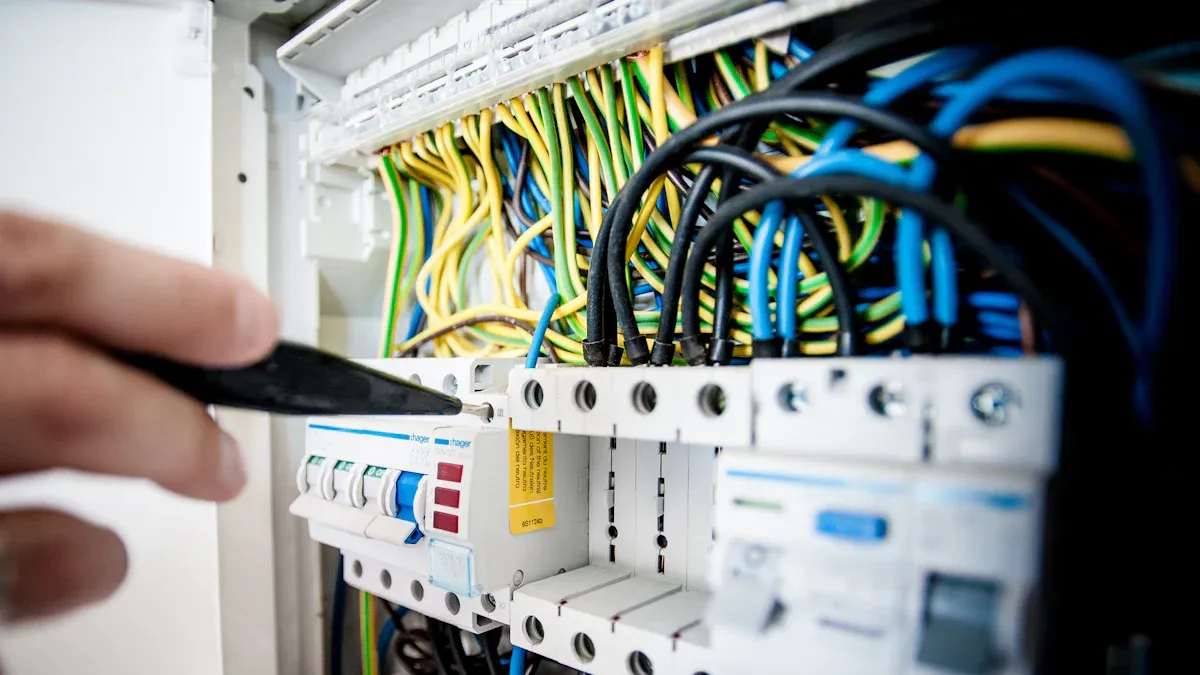
When I think about powering a data center, I realize not all Power Distribution Units (PDUs) are the same. Manufacturers offer different types, each with unique features. These features help meet various operational needs and budgets. Let me walk you through the main kinds of PDUs I see in the market.
Basic Data Center PDUs
I often think of basic PDUs as the workhorses of power distribution. They are simple, but they get the job done. These units are designed to reliably distribute power to multiple devices. I’ve learned that basic PDUs, categorized as Tier I, are used in data centers to distribute power from a single source. They offer minimal redundancy. Their primary applications include powering multiple office equipment like computers, printers, and phones in office settings. They also provide basic power distribution to servers and networking equipment in small server rooms. You won’t find advanced monitoring or control features here. I even see them offering additional power outlets for home electronics in home use scenarios. They are straightforward and dependable.
Metered Data Center PDUs
Moving up a step, I find metered PDUs. These units add a crucial layer of insight: power measurement. They come with a built-in current meter that locally monitors the load level. I can see metered power displayed locally, right on the unit. Sometimes, I can even view it over a secure network. This is true for both Metered Input PDUs and Metered Outlet PDUs. With Metered Outlet PDUs, I can accurately determine power usage and available capacity at the rack level. This helps me identify power consumption at the device and server level. I get local power consumption data via a local display. Plus, I can see key power utilization metrics like current, voltage, and power factor. This information is really helpful for understanding how much power my equipment uses.
Monitored Data Center PDUs
Monitored PDUs take power insight to the next level. I see these as intelligent rack PDUs. They provide real-time power monitoring and rack sensor information, like temperature and humidity. I can access this data through a web browser or a command-line interface. This allows me, as an IT administrator, to monitor power at the PDU level. I can set my own thresholds and receive alerts via email, text, or SNMP. This helps me proactively fix issues. Outlet-level monitoring helps me with informed capacity planning. I can identify power usage and even rearrange IT equipment if needed. Environmental sensors attached to these intelligent rack PDUs also help me optimize air conditioning and humidification settings.
I can monitor power per inlet, including current, voltage, power, and even accumulated energy. I can also monitor power per individual outlet, seeing current, voltage, and power (kW). I access this data via a secure network or serial connection, often with a built-in web interface. I can configure SNMP traps and email alerts. These PDUs even support temperature and humidity monitoring. They automatically collect real-time data from all devices, down to the individual outlet level, through one interface. I can set power and environmental thresholds on this data and get alerts for potential problems. I can also configure polling frequencies for meaningful data while keeping network traffic efficient. I can forward and filter traps to receive only relevant notifications. Analyzing and trending this collected data gives me insights into data center operations and helps with capacity forecasting. Monitored PDUs give me a comprehensive view of power usage at the rack and remotely. They offer unit-level and outlet-level remote monitoring for granular power usage data. I get quick access to critical information for evaluating energy usage trends. They also include alarming capabilities for user-defined power threshold breaches. These intelligent PDUs can even incorporate environmental sensors to proactively monitor conditions like heat and moisture within the rack. I can access them remotely via a network interface or serial connection to monitor power consumption and configure alert notifications.
Switched Data Center PDUs
Switched PDUs add a powerful capability: remote control. I find these incredibly useful for managing my equipment without being physically present. They offer remote access, letting me manage power distribution from anywhere. I can control individual outlets remotely, turning them on or off. This means I can reboot devices or monitor power usage without going to the data center. I get individual outlet control, which gives me precise management. I can switch individual outlets on or off, reboot equipment, and even implement power sequencing delays. This prevents inrush currents, which can be harmful.
These smart PDUs can integrate with network management systems. This gives me a comprehensive view of power distribution and environmental conditions. It supports proactive management. They also support power-on sequencing and outlet grouping. This prevents overloads and ensures stable power delivery. For connectivity, they feature various interfaces like Ethernet, RS485, and USB ports. This allows seamless integration. They support protocols such as SNMP, HTTP, and Telnet for comprehensive power and environmental management. Plus, they incorporate robust security measures like SNMPv3 for secure communication. They often have individual breakers per receptacle to prevent overloading, which I think is a great safety feature.
Intelligent Data Center PDUs
Intelligent PDUs are the most advanced offerings. They combine the best features of metered and switched PDUs with even more smart capabilities. I see them capturing metrics like voltage, current, active power, and energy. They offer options for input or outlet-level monitoring. They also enable remote control of individual outlets for power cycling equipment and implementing power sequencing delays. A cool feature is IP address aggregation. This allows multiple PDUs to share a single IP address, which reduces costs and management overhead.
I find their DCIM integration very valuable. It provides a unified view of real-time power data through integration with Data Center Infrastructure Management applications. They also support environmental monitoring, using sensors for temperature, humidity, and other conditions. This means I don’t need separate monitoring solutions. They provide insights into power usage per equipment and allow remote power cycling of devices. I get real-time alerts, notifying me of potential overloads to prevent downtime. For colocation or multi-tenant facilities, they offer precise billing by measuring power consumption at the outlet level.
These PDUs provide continuous monitoring of power consumption, temperature, humidity, and other parameters. I can customize alerts and thresholds. They offer advanced reporting, with historical data analysis and trend identification. This helps me make data-driven decisions, plan capacity, and optimize operations. Capacity planning is key; they assess power usage and distribution to optimize resource utilization and support future expansion. They offer comprehensive power usage views at the rack and remotely, with unit-level or outlet-level monitoring and alarming capabilities. They also provide remote control to turn on, off, or reboot power at each outlet, in addition to monitoring. IP aggregation reduces deployment costs by allowing multiple units to share a single IP address, with self-configuration for downstream devices. Environmental monitoring integrates sensors to proactively monitor rack conditions like heat and moisture. Remote connectivity allows remote access via network interface or serial connection for power consumption monitoring and alert configuration. They even offer out-of-band communication through integration with serial consoles or KVM switches if the primary network fails. Finally, DCIM access provides a single access point for real-time power and environmental data, along with trend reports for efficiency and availability.
Differentiating Factors for a Top Data Center PDU Manufacturer
When I evaluate a Data Center PDU manufacturer, I look beyond just the basic product. Several factors really set the top players apart. These elements show me a manufacturer’s true commitment to quality and innovation.
Product Quality and Reliability of Data Center PDUs
I always prioritize product quality and reliability. I need to trust that my power distribution will not fail. Next-generation intelligent rack PDUs, for example, monitor and report detailed real-time power quality measurements. They include advanced power quality metrics and diagnostic tools at both the PDU inlet and the outlets. This granular data helps me optimize rack power and ensure uptime.
Innovation and Technology in Data Center PDU Design
Innovation is key in this fast-changing industry. I see manufacturers constantly pushing boundaries. Recent advancements include redundant sourcing strategies for critical components and cybersecurity improvements in PDU firmware. Modular PDU designs offer great flexibility and scalability. I also notice enhanced monitoring and diagnostics for better reliability. New intelligent rack PDUs, like Legrand’s Server Technology PRO4X, offer enhanced monitoring for power quality and environmental factors. They handle higher power densities, which is crucial for AI and machine learning.
Customization Options for Data Center PDUs
I appreciate a manufacturer who offers strong customization. My data center has unique needs. I like options like QuadLock outlets that support multiple plug types in one unit. High-power configurations, up to 57.5 kW per cabinet, are also very useful. Color-coded outlets help me quickly identify circuits and balance loads. Manufacturers can also tailor PDUs to match my facility’s electrical architecture, including different cable lengths or mounting choices.
Global Support and Service for Data Center PDU Deployments
Global support is incredibly important to me. I need reliable assistance no matter where my data centers are located. Top manufacturers, like Panduit and Legrand, have a strong global presence. They offer expert support and resources worldwide. This gives me peace of mind.
Energy Efficiency Features in Data Center PDUs
Energy efficiency is a big concern for me. Intelligent PDUs offer monitoring and management features. They let me track power usage and environmental conditions. This helps me optimize power consumption. PDUs with high-efficiency transformers can be 2% to 3% more efficient overall. Smart PDUs also allow remote on/off switching for each outlet. This helps me identify high-energy-consuming equipment. They can even shed non-critical loads during peak demand, which saves on utility costs.
Selecting the Right Data Center PDU Manufacturer
Scalability and Future-Proofing Data Center PDU Solutions
I always think about tomorrow when I choose a Data Center PDU. My infrastructure needs to grow, so the PDU solutions I pick must be scalable. I look for options that let me expand without a complete overhaul. This means the PDU should handle increased power demands and new equipment easily. I want to avoid replacing everything when my data center expands.
Integration Capabilities of Data Center PDUs
Seamless operation is key for me. I need my PDUs to talk to everything else. Intelligent PDUs offer real-time monitoring and remote control. They also have advanced protective features, crucial for efficiency. I look for API integration to connect with my other tools. Multi-vendor device compatibility is important. This lets me aggregate data from different brands. I also want real-time monitoring and alerts across all my power infrastructure. Cloud-based monitoring gives me remote visibility and control.
Security Features in Data Center PDUs
Security is a top priority for me. I need to protect my critical infrastructure. I look for intelligent PDU solutions with secure boot processes. This protects against malware. Terminal access control and strong password policies are essential. They prevent unauthorized access. I always ensure PDUs use HTTPS or SSH encryption by default for network data. Firewalls, like IP-based access control lists, protect against unauthorized network access. X.509 digital certificates ensure secure connections from authorized users.
Compliance and Certifications for Data Center PDUs
I know compliance is not optional. My PDU must meet specific standards. For products sold in the EU, I look for the CE Mark. The IEC CB Scheme helps with multi-country certification. FCC Compliance ensures electromagnetic emissions are safe. For Great Britain, the UKCA Mark is becoming mandatory. I also check for SGS NRTL Certification. This ensures products meet U.S. and Canadian standards for safety and quality.
Total Cost of Ownership for Data Center PDU Investments
When I invest in PDUs, I consider the total cost, not just the sticker price. Acquisition costs include the initial purchase and installation. Operational expenses cover maintenance, repairs, and energy use. Metered and monitored PDUs can actually help me reduce these. Downtime costs are the losses from outages. Switched PDUs can help me avoid these by allowing remote management. Finally, I think about end-of-life costs for disposal or replacement.
I know choosing the right Data Center PDU manufacturer is a strategic decision. It directly impacts my data center’s reliability and future growth. I see PDU technology evolving rapidly. I expect more energy-efficient designs and sustainable materials. Enhanced monitoring, smart automation, and IoT integration will bring remote control and better data insights.
FAQ
What is a Data Center PDU?
I see a Data Center PDU as a power strip for my data center. It distributes electricity from a single source to many devices. It keeps my equipment running smoothly.
Why do I need an intelligent PDU?
I find intelligent PDUs give me more control. They monitor power usage and let me remotely turn outlets on or off. This helps me manage my power efficiently and prevent problems.
How do I choose the right PDU manufacturer?
I always look for quality and reliability first. Then, I consider their innovation, customization options, and global support. Energy efficiency and scalability are also very important to me.
Post time: Dec-22-2025


