

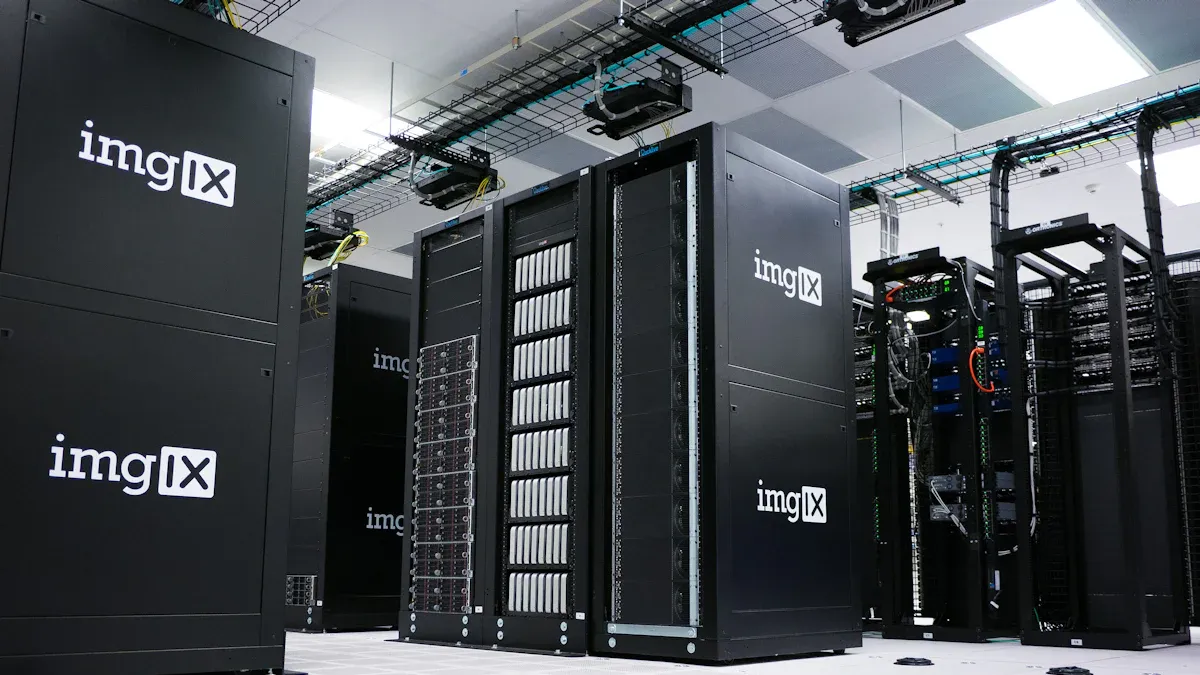
Defining the High Power PDU
You might ask, “What exactly is a High Power PDU?” I see it as a specialized power distribution unit. A standard PDU distributes power. However, a High PDU handles significantly more electrical load. We use these robust devices to manage power in demanding environments. They are crucial for modern data centers.
Key Takeaways
- High Power PDUs are special power units. They handle a lot of electricity. They are important for today’s data centers.
- Modern data centers need High Power PDUs. This is because computers use a lot of power. They help manage power for many devices in a small space.
- Choosing a High Power PDU means looking at voltage and safety. Good PDUs have features like surge protection. They also help you watch and control power use.
The Necessity of High Power PDU Solutions
Addressing Modern Data Center Power Demands
I’ve seen firsthand how much data centers have changed. They’re not just bigger; they’re hungrier for power. Modern data centers face immense power demands, and I believe this is where high power PDU solutions truly shine.
Think about it: our digital world keeps growing. More streaming, more cloud services, more AI. All of this needs powerful hardware. I’ve noticed that IT equipment, like servers, storage, and networking gear, is the biggest power hog. It can gobble up 40% or more of a data center’s total electricity!
| Equipment Type | Power Consumption Contribution |
|---|---|
| IT Equipment (servers, storage, networking) | Largest source, 40% or more of total electricity use |
| Specialized Processors (GPUs, AI chips) | Significantly higher power demand than standard CPUs |
| Cooling Systems | Major contributor, increasing with hardware power |
| Backup Systems (UPS, PDUs) | Lower energy needs compared to computing hardware |
| Lighting, Security, Fire Suppression | Minor power usage compared to cooling and IT |
What really blows my mind is the impact of AI and machine learning. These technologies rely on super powerful GPUs and specialized AI chips. They cause rapid spikes in energy use. Experts even project global data center power demand could jump by up to 165% by 2030, all because of AI growth!
As hardware gets more powerful, we also need more cooling. That’s another big power consumer. We’re seeing innovative cooling solutions like:
- Liquid Cooling: This uses chilled water or coolant directly on servers. It’s much more efficient than just blowing air.
- Immersion Cooling: Imagine submerging hardware in special fluids! This absorbs heat super fast.
- Hot Aisle/Cold Aisle Containment: We focus cooling to specific areas where the heat is highest.
- Free Cooling Systems: When the weather is cool enough, we can use outside air to save energy.
All these advancements mean one thing: more power, more efficiently delivered. That’s why I see high power units as absolutely essential.
Powering High-Density Rack PDU Environments
The shift to high-density racks is another huge reason I advocate for high power units. We’re packing more computing power into smaller spaces than ever before. Before AI became so prevalent, a high-density rack might use around 17kW. Now, I see many high-density environments needing 35-45kW per cabinet. Some systems, especially with those hungry GPU-based AI workloads, might even hit 70-80kW or more in just a few years!
It’s wild to think about, but colocation data centers are already supporting rack densities over 100 kW. I believe this 100+ kW per rack density is quickly becoming the new standard. It’s all driven by advancements in AI, high-performance computing (HPC), and cloud infrastructure. When I talk about a high-density data center, I mean one where each cabinet uses more than 10 kW. That’s a lot of power in a small footprint!
High power units are the backbone for these environments. They deliver the massive amounts of power needed to keep these densely packed racks running smoothly and efficiently. Without them, we simply couldn’t support the computing power our modern world demands.
Preventing Power Infrastructure Bottlenecks with Advanced PDU Technology
I’ve learned that even with plenty of power coming into a data center, you can still hit bottlenecks. These are like traffic jams for electricity. They can cause big problems. For instance, 92% of data centers view power capacity as a point of resource competition. That tells me most places struggle with power limitations.
What do these bottlenecks look like? I’ve seen several common indicators:
- Voltage Sags: Imagine your lights dimming for a second. In a data center, this temporary voltage drop can shut down critical equipment unexpectedly. That means data loss and downtime.
- Voltage Swells: The opposite problem! A temporary increase in voltage can overstress equipment, causing damage or even permanent failure.
- Harmonics: These are distortions in the power flow. They can overheat transformers, shorten equipment life, and waste energy.
- Power Factor Imbalance: If your power factor is low, you’re using power inefficiently. This means higher energy bills and more strain on your electrical system.
- Grounding Issues: When electrical current goes where it shouldn’t, it can damage equipment, cause system failures, and create safety hazards.
This is where advanced PDU technology becomes a lifesaver. I rely on these smart units to prevent these issues. They offer incredible features:
- Real-time Monitoring: My advanced unit gives me granular power consumption tracking. I can see exactly how much power the whole rack uses, or even individual outlets. It tracks voltage, current, power, energy consumption (kWh), and even the status of circuit breakers.
- Environmental Sensor Integration: It’s not just about power. My unit can integrate with sensors that monitor temperature, humidity, airflow, and even detect water leaks. If conditions go bad, I get an alert right away.
- Remote Power Control: This is a game-changer. I can remotely turn outlets on or off, or even power cycle a server, without physically being there. This saves so much time and reduces downtime.
- Automated Power Sequencing: This feature is brilliant. It makes sure devices power on or off in the right order. This prevents power surges and ensures everything starts up correctly.
These advanced features in these devices are crucial. They help me avoid those frustrating bottlenecks and keep the data center running smoothly.
Implementing High Power PDU Infrastructure

Upgrading Electrical Systems for High Power PDU Integration
When I think about bringing high power PDU solutions into a data center, the first thing that comes to mind is the electrical system itself. It’s like building a superhighway; you need to make sure the roads can handle the increased traffic. Upgrading our electrical systems is a critical step for high power PDU integration.
I always start with a thorough inventory. I track all our data center assets – hardware, software, network components – to get a clear picture of our current capacity. This helps me plan for future growth. We also need to put in place early and frequent capacity controls. Regular monitoring helps us spot potential bottlenecks before they become big problems. I find that using data center capacity planning tools, like predictive analytics software, really helps manage capacity effectively. We also monitor performance metrics constantly to make sure our capacity management efforts are working and to find areas where we can improve.
For power planning, I consider both our current and future power needs, along with the power density of our equipment. We implement energy-efficient power distribution and management systems to get the most out of our power and cut costs. It’s also super important to ensure we have enough space for planned equipment and future expansion. This includes adequate aisle space, good cable management, and thinking about equipment height and layout.
To really keep an eye on things, I use branch circuit monitors. They measure the current load on all our electrical panel circuits. This way, I get alerts before we hit capacity or trip a breaker, which is especially important when we add new servers. I also rely on intelligent rack PDUs. They monitor the power consumption of individual IT devices, like servers and storage units. This helps me find equipment that’s not being used enough or is overloaded. Plus, I can control and monitor them remotely. We also use data center environmental aggregators. They collect and analyze power and environmental data, giving me the information I need to make smart decisions about power use by both IT and facilities equipment. Finally, I accurately measure power usage to calculate our Power Usage Effectiveness (PUE). This helps me set baselines and track improvements, using tools like data acquisition devices for branch circuit amperage and intelligent PDUs for our critical IT load.
Rack-Level Power Management with High Power PDU Units
Managing power at the rack level is where high power PDU units truly shine for me. They give us incredible control and visibility right where the power is consumed. I’ve seen how these specialized units make a huge difference in high-density environments.
Let me tell you about the different types I use:
- Metered PDU: This type gives me real-time power measurement at the input level. It’s great for monitoring the rack’s overall power, giving me better visibility into the load, and helping prevent overloads.
- Monitored PDU: This goes a step further. It offers detailed power monitoring, often down to each individual outlet. I get threshold alerts, track energy usage, and it integrates nicely with our DCIM system.
- Intelligent PDU: This is the ultimate. It combines comprehensive power monitoring with remote outlet on/off and power cycling. I get outlet-level monitoring with network connectivity and API/DCIM integration for automation.
These units are designed for AI and other high-density needs. They handle larger loads and provide intelligent metering. I also appreciate the added redundancy they offer. Outlet-level power monitoring helps me find hidden issues, verify redundancy, and balance loads efficiently. Remote monitoring is a lifesaver; I can check power usage, temperature, and other critical parameters from anywhere. The intelligence built into them, like power sequencing and load balancing, prevents overloads and optimizes power distribution. They also help with efficiency by providing advanced power quality monitoring and metrics. Security is also a big deal, so I look for comprehensive capabilities like data encryption, user authentication, and firewall protection. Plus, they often include environmental monitoring, capturing data on temperature, humidity, and even vibration.
Some other features I find incredibly useful include:
- Switched Rack PDU: This lets me remotely turn outlets on or off, or even reboot devices, at each individual outlet.
- Alternating Outlets: This simplifies circuit and phase balancing, which is a huge help with cable management in dense racks.
- Locking Outlets: These secure physical connections, preventing accidental power cord disconnections.
- Fault-Tolerant Daisy Chaining: This ensures data reporting even if a network chain breaks, simplifying PDU connectivity.
- IP Aggregation: This reduces deployment costs by letting multiple units share a single IP address.
- Remote Connectivity: I can access them via a network interface or serial connection to monitor power and configure alerts.
- Out-of-Band Communication: This provides redundant communication through integration with serial consoles or KVM switches if our primary network fails.
- Future-Proof Design: I love that I can easily update hot-swappable monitoring devices without replacing the entire power strip.
Integrating High Power PDU Data with DCIM Systems
For me, the real magic happens when I integrate high power PDU data with our Data Center Infrastructure Management (DCIM) systems. It’s like connecting all the dots to get a complete picture of our data center’s health.
I’ve found that intelligent PDUs, with all their monitoring and control features, truly reach their full potential when they’re part of a DCIM platform. A well-designed DCIM system gives me a comprehensive view of power, cooling, and capacity metrics. This integration lets me monitor our power usage effectiveness and even predict our future capacity requirements. It’s incredibly powerful for planning.
Intelligent PDUs, sometimes called smart or networked PDUs, have an embedded intelligence module. This module measures, monitors, and controls power distribution. They can communicate with other devices using protocols like LAN or SNMP. These PDUs give me real-time data on power consumption, voltage, current, frequency, temperature, humidity, and other important parameters.
I use DCIM software to enhance our PDU features and capabilities. It provides an integrated, user-friendly interface. It automatically transforms all that collected PDU data into actionable insights. I can see these insights on business intelligence dashboards and through visual analytics. The same interface also lets me manage things remotely, perform power actions, do bulk firmware updates, clone configurations, and restore backups. It’s a central hub for control.
Our DCIM solution typically monitors our PDUs, branch circuits, and even our computer room air handler (CRAH) units. Having this visibility and monitoring of power and connectivity helps me reduce the time it takes to identify and fix problems. It makes my job so much easier and keeps our data center running smoothly.
Key Considerations for High Power PDU Selection and Safety
When I choose a high power PDU, I always think about a few key things. It’s not just about plugging things in. It’s about making sure everything runs safely and efficiently.
Voltage and Amperage Requirements for High Power PDU Deployment
First, I look at voltage and amperage. In North America, I typically see 120V and 208V. Three-phase circuits are often 208V, but 400V is becoming more common. Amperage usually comes in 15A, 20A, or 30A, but I remember to derate them by 20%. For example, a 20A circuit is really rated for 16A. Internationally, voltages vary, like 100V in Japan or 230V in Europe. Three-phase power is often 400V in Europe and Asia. Most IT equipment power supplies adjust automatically up to 240V, which is helpful.
I find that higher voltages and lower currents mean smaller cables, less weight, and lower costs. Three-phase power also uses fewer cables, which simplifies deployment. For example, a 30A, 400V three-phase setup can deliver 16.6kVA, which is a huge jump from a 30A, 208V single-phase at 5.0kVA. This really boosts power density.
| Factor | Single-Phase PDU | Three-Phase PDU |
|---|---|---|
| Power Needs | Suitable for moderate power requirements | Ideal for high-demand setups |
| Application | Best for small offices or home environments | Excels in data centers and industrial settings |
| Scalability | Less scalable; may require frequent upgrades | Offers better scalability for future growth |
| Efficiency | Less efficient for high loads | More efficient for high power distribution |
| Voltage/Amperage | Typically lower voltage and amperage capacity | Higher voltage and amperage capacity for greater power delivery |
A three-phase PDU can deploy much more power. It often handles both 120V and 208V devices in the same unit. This gives me great flexibility.
Safety Standards and Compliance for High Power PDU Operation
Safety is non-negotiable for me. I always check for certifications like UL, CE, and RoHS. These ensure the PDU meets strict safety and environmental standards. ISO9001 means consistent manufacturing quality. The IEC CB Scheme helps with global acceptance.
| Certification | Region/Scope | Impact on Product Quality and Safety |
|---|---|---|
| ISO9001 | International | Ensures consistent manufacturing quality and process control |
| UL Listed | North America | Guarantees safety from fire, electric shock, and hazards |
| CE Mark | European Union | Confirms compliance with EU safety and low-voltage directives |
| RoHS Compliance | EU and others | Restricts hazardous substances, promoting environmental safety |
I also look for specific safety features. Surge protection guards against power spikes. Overload protection automatically shuts down power to prevent overheating. Circuit breakers trip when there’s too much current. Thermal protection alerts me if temperatures get too high. Some units even have Emergency Shutdown (EMO) for quick power-downs.
Advanced Features and Monitoring in High Power PDU Devices
Modern high power PDUs offer amazing features. I rely on remote outlet switching, power monitoring, and predictive analysis. These let me track consumption in real-time and plan for growth.
Advanced PDUs give me real-time data. I can see power usage, voltage, and current. They often have network connectivity for remote access. Monitored PDUs track and report energy consumption trends. I can even toggle individual outlets remotely. This helps me manage loads and reduce overload risks.
Some PDUs also support environmental sensors. These give me real-time temperature and humidity readings. This is crucial for keeping the data center optimal. I can adjust air conditioning settings and monitor results at individual racks. This helps me optimize cooling and prevent energy waste.
I see high power PDU technology as essential for future-proofing our data centers. It ensures reliability and reduces operational costs, boosting efficiency. This technology helps us achieve better PUE by optimizing power distribution and minimizing losses. Ultimately, it saves money and supports our sustainability goals.
FAQ
What makes a High Power PDU different from a regular PDU?
I see a High Power PDU as a specialized unit. It handles significantly more electrical load. We use them for demanding environments like modern data centers.
Why do modern data centers need High Power PDUs?
I find modern data centers are power-hungry. They use powerful hardware for AI and cloud services. High Power PDUs deliver the massive power these high-density racks need.
What safety features should I prioritize in a High Power PDU?
I always look for certifications like UL or CE. Surge protection, overload protection, and circuit breakers are also crucial. These features keep our operations safe.
Post time: Dec-26-2025


