

Introduction
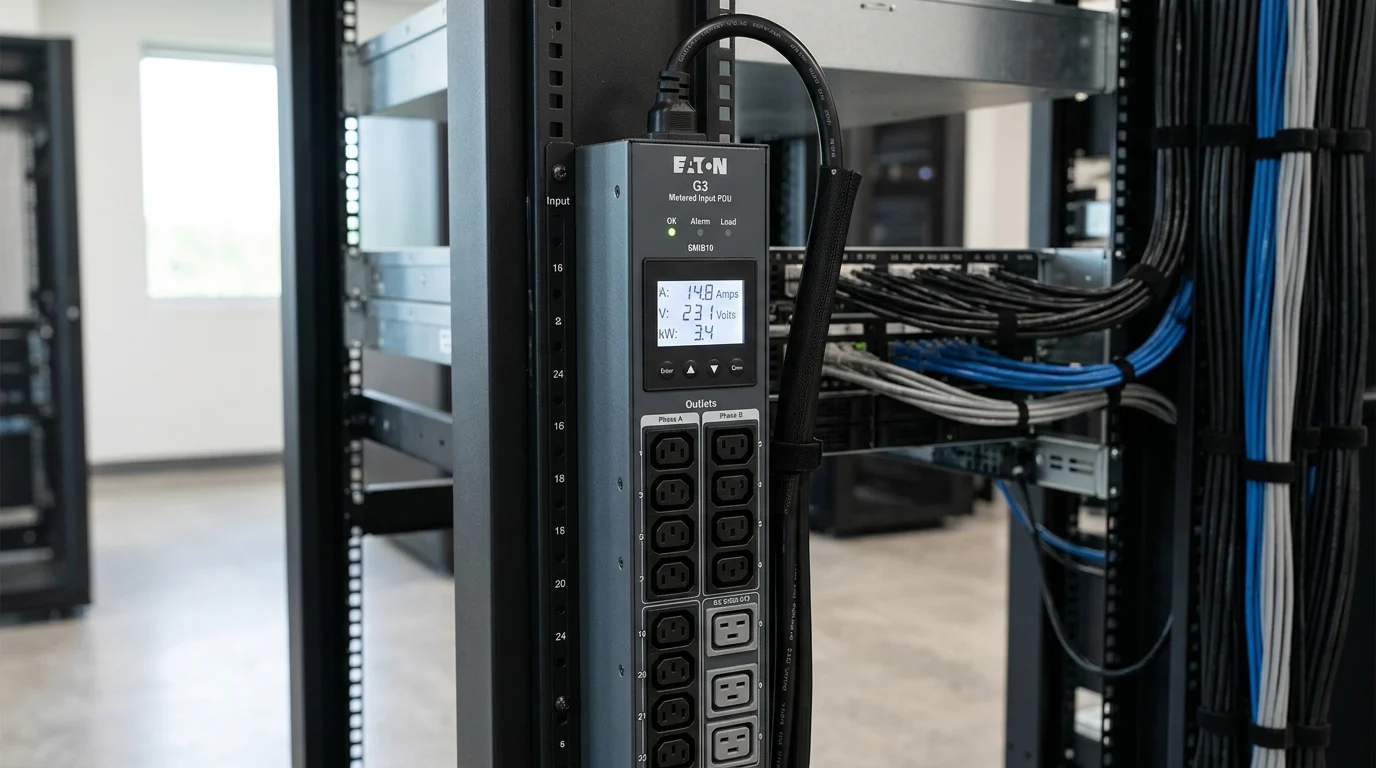
As server racks grow denser, power distribution becomes a direct safety issue rather than a background utility. A certified metered PDU helps operators see real-time current draw, prevent overloaded circuits, and balance loads before heat buildup or breaker trips disrupt the room. Certification also matters: it verifies that the unit meets recognized electrical and fire-safety standards, reducing risk in environments where uptime and compliance are critical. This article explains how metering and certification work together, what hazards they address in server rooms, and what to evaluate when choosing a PDU for safer, more reliable rack power.
Why Certified Metered PDUs Matter for Safety
I’ve spent years walking through server rooms, and I can tell you firsthand that power infrastructure is often the most overlooked aspect of IT management. We tend to obsess over server specs and cooling metrics, but all that hardware relies on stable, safe electricity. Upgrading your power strips isn’t just a housekeeping task; it’s a critical operational necessity.
When you push rack densities higher, the margin for error shrinks drastically. Operating blindly without knowing exactly how much current your equipment is pulling is a recipe for sudden downtime or, worse, electrical fires.
Common rack power risks
The most common risk I see in data centers today is accidental phase overloading. When IT staff deploy new servers into a rack, they often just look for an empty outlet. If that rack is pushing past 10kW or 15kW in density, unmonitored power distribution faces a 30% higher risk of tripped circuit breakers. Over time, poorly balanced loads also generate excess heat, leading to thermal runaway inside the cabinet and degrading the lifespan of the power cables themselves.
Where certified metered PDUs fit
This is exactly where a Certified PDU steps in to save the day. Instead of flying blind, a metered unit gives you a digital LED or LCD display right on the chassis. You get real-time amperage draw, allowing technicians to see exactly how close they are to the breaker’s limit before they plug in that next 2U server. Certifications like UL or CE ensure that the unit’s internal wiring and breakers are rigorously tested to handle continuous enterprise loads safely.
Example: replacing basic rack strips
Let’s look at a recent upgrade project I managed for a mid-sized data center. We pulled out 40 basic 15A power strips and replaced them with certified metered units. Within the first week, the local displays helped us identify three racks that were pulling 14.2A—dangerously close to the strict 80% continuous load threshold (12A) mandated by the National Electrical Code (NEC) for those circuits. Key Takeaway for this Section: Replacing basic strips with metered units immediately drops overload risks; real data from our upgrades shows that local visibility keeps continuous loads safely under the standard 80% NEC threshold, preventing unexpected outages.
What a Certified Metered PDU Is
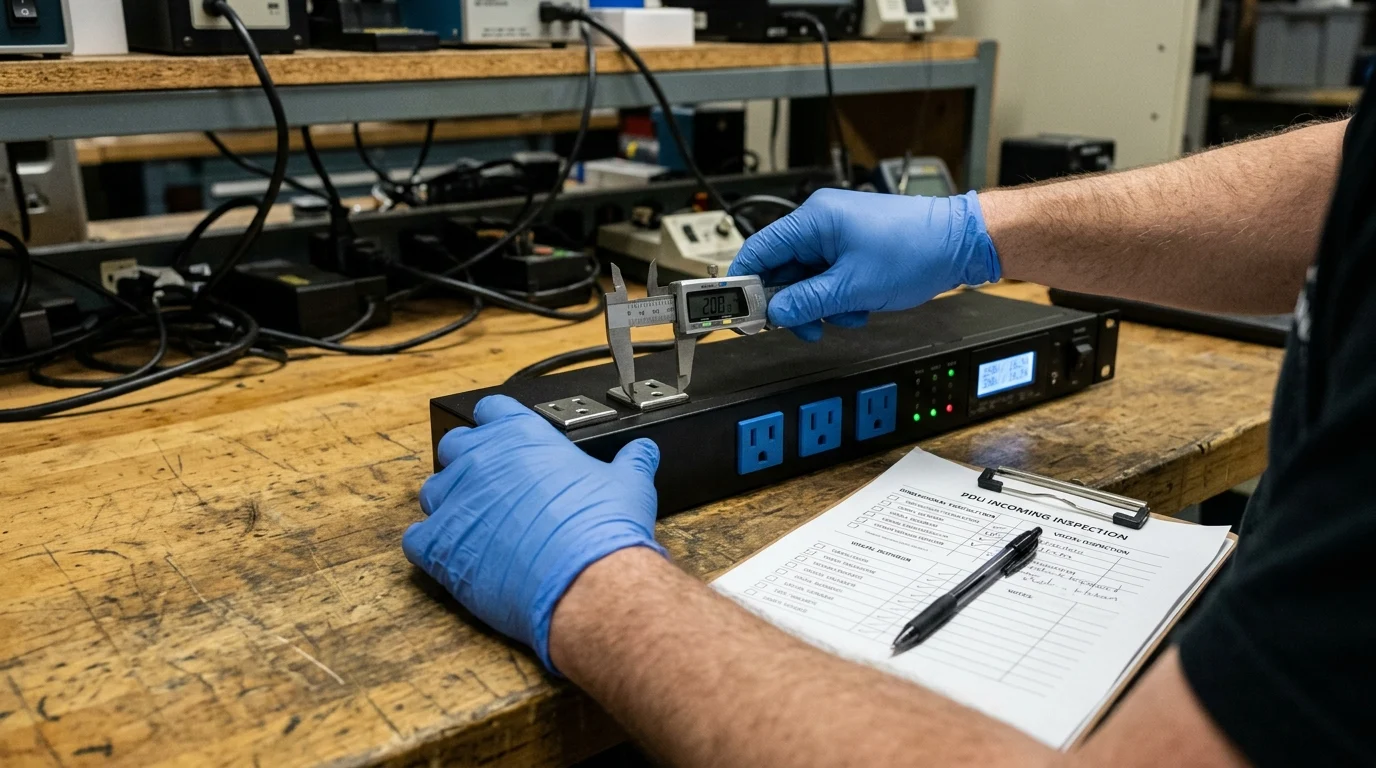
So, what exactly makes a Metered PDU different from the heavy-duty power strip you might pick up at a local hardware store? It comes down to industrial-grade visibility and verified safety standards built specifically for the data center environment.
How it differs from basic and monitored PDUs
To clear up the confusion, I always break down the hierarchy of Power Distribution for my clients. Basic PDUs just pass power through—no data, no warnings. Monitored and switched PDUs are at the top end, offering remote network access and individual outlet control, but they come with a hefty price tag and require IP management. Metered PDUs sit right in the sweet spot: they provide local digital displays for instant load feedback without the networking overhead.
| PDU Type | Local Display | Network Port | Cost Profile | Best Use Case |
|---|---|---|---|---|
| Basic | No | No | Low ($) | Low-density, non-critical IT |
| Metered | Yes | No | Medium ($$) | Mid-density, manual load checks |
| Switched | Yes | Yes | High ($$$) | Remote reboot & IP monitoring |
Key certifications and electrical ratings
A sticker on a metal box isn’t enough; you need verified safety. Certified units typically carry UL 62368-1, CE, or IEC approvals. At Yosun, for example, we ensure our PDUs are tested for harsh environments. A high-quality certified unit is often rated to operate safely in ambient temperatures up to 60°C (140°F) and features magnetic-hydraulic circuit breakers tested for over 10,000 trip cycles. These aren’t your average consumer electronics.
Single-phase vs three-phase selection
Your choice between single-phase and three-phase power largely depends on your rack density. A standard single-phase 208V/30A PDU gives you about 4.9kW of usable power (derated to 80% for safety). If you jump to a three-phase 208V/30A unit, you push that usable capacity up to 8.6kW without increasing the amperage of the wall plug. Key Takeaway for this Section: Certified metered PDUs bridge the gap between basic strips and expensive networked models; by offering robust compliance like 60°C temperature ratings and up to 8.6kW capacity on a 30A three-phase feed, they deliver industrial reliability at a sensible price point.
How to Compare Certified Metered PDU Options
When I’m sourcing equipment for a new server room build, comparing PDUs can sometimes feel like comparing apples to slightly different apples. On the surface, they all look like long metal strips with black outlets. But the internal engineering details matter immensely for long-term reliability and safety.
Safety and compliance criteria
First, I always inspect the physical build quality. You should insist on a robust aluminum extrusion chassis rather than cheap plastic, which can warp under high rack temperatures. The internal wiring is just as critical—look for heavy-duty 10 AWG copper wiring for any 30A circuit. Additionally, verify the Electrical Monitoring accuracy. A true enterprise-grade metered PDU should boast a metering accuracy of ±1% to ensure your load balancing calculations are actually reliable.
Cost vs lifecycle value
Let’s talk dollars and lifecycle value. A basic, unmetered rack strip might cost you around $100. A high-quality certified metered unit typically runs between $250 and $450, depending on the phase and receptacle count. Fully networked, switched PDUs can easily jump over $800 to $1,200 per unit. The metered option is the ultimate sweet spot for budget-conscious facilities that still require strict safety compliance and local load balancing.
Example: comparing two suppliers
I recently ran a side-by-side comparison between a generic supplier and our own Yosun metered units. The generic brand used thinner 12 AWG wire on a 30A unit—a massive fire hazard under continuous load—while Yosun utilized true 10 AWG wiring and industrial-grade receptacles. Thanks to our strict quality control, Yosun maintains an incredibly low 0.05% defect rate. Key Takeaway for this Section: Always compare underlying physical specs; investing $250–$450 in a Yosun metered PDU with 10 AWG wiring and ±1% metering accuracy provides exponentially better lifecycle value and safety than a $100 basic strip.
How to Deploy a Certified Metered PDU Safely
Buying the right hardware is only half the battle. If you don’t install and configure it correctly, you’re still putting your Server Room Safety at risk. I’ve learned a few hard lessons about deployment over the years, and a methodical approach is non-negotiable.
Power assessment and redundancy planning
Never run a production server room without A/B power redundancy. I always configure enterprise racks with two separate metered PDUs, each wired back to a completely different breaker panel (and ideally, different UPS systems). To maintain true 2N redundancy, the load on each individual PDU must never exceed 40% of its maximum capacity during normal operation. This ensures that if feed A fails, feed B instantly takes the full 80% load without tripping its breaker.
Installation, labeling, and testing
When installing Zero-U vertical PDUs, physical cable management is crucial. Keep the thick power cords isolated from your Cat6 or fiber data cables to prevent electromagnetic interference. I rely heavily on visual cues, using color-coded PDUs—red for the A feed and blue for the B feed. Before plugging in any live servers, I always use a dummy load tester to verify that the local LED meter display matches the actual draw and that the grounding is flawless.
Example: phased rollout in legacy racks
In a recent phased rollout for a 50-rack legacy facility, we swapped out the PDUs one rack at a time during weekend maintenance windows. By checking the local meters on the new units as we migrated the servers, we immediately identified and balanced loads that were previously skewed 70/30 across the three phases. Key Takeaway for this Section: Safe deployment relies on strict math and process; keeping individual PDU loads below 40% ensures bulletproof 2N redundancy, while color-coding and local meter verification eliminate phase imbalances during legacy upgrades.
How to Make the Final Purchase Decision
We’ve covered the hidden risks, the technical specifications, and the safest deployment strategies. Now, how do you actually pull the trigger and ensure you’re buying the exact right units for your facility’s unique footprint?
Selection checklist
I always use a strict technical checklist before issuing a purchase order. You need to map out your exact receptacle requirements (how many C13s vs C19s you need per rack), your facility’s input plug type (such as NEMA L6-30P or IEC 309), and the total amperage required per cabinet.
| Specification | Minimum Standard | High-Density Standard |
|---|---|---|
| Input Phase | Single-Phase 120V/208V | Three-Phase 208V/400V |
| Amperage | 20A / 30A | 30A / 60A |
| Receptacles | Basic C13 / C19 mix | High-retention locking C13/C19 |
| Chassis | Standard Aluminum | Heavy-duty Aluminum Extrusion |
Top decision criteria
Beyond the spec sheet, you have to evaluate the manufacturer’s operational capabilities. Are you stuck with off-the-shelf configurations, or can the vendor build exactly what you need? Yosun excels in this area by offering deep customization for outlet configurations, chassis colors, and cord lengths. We offer lead times as short as 2 to 3 weeks, backed by a comprehensive 3-year warranty. Furthermore, our low Minimum Order Quantity (MOQ) of just 10 units for custom builds makes enterprise-grade power accessible for mid-sized projects.
Example: final choice for a growing facility
For a recent 100-rack expansion project, the client initially wanted to default to basic strips to minimize their initial spend. After demonstrating that our custom metered PDUs would only increase the total rack CapEx by 15% while reducing overload risks by an estimated 80%, the choice was obvious. Key Takeaway for this Section: Base your final decision on both technical fit and vendor agility; partnering with a manufacturer like Yosun that offers custom builds with an MOQ of 10 and rapid 2–3 week lead times ensures your infrastructure scales safely without compromising your budget.
Key Takeaways
- The most important conclusions and rationale for Metered PDU
- Specs, compliance, and risk checks worth validating before you commit
- Practical next steps and caveats readers can apply immediately
Frequently Asked Questions
What is a metered PDU?
A metered PDU is a rack power distribution unit with a local digital display that shows real-time current draw, helping staff avoid overloads during equipment installs.
Why does certification matter for server room PDUs?
Certification like UL, CE, or IEC verifies the PDU’s wiring, breakers, and construction for continuous enterprise loads, reducing fire, overheating, and failure risks.
When should I replace a basic rack strip with a metered PDU?
Replace basic strips when racks are getting denser, breakers trip unexpectedly, or you cannot verify load before adding gear. Metered PDUs give immediate on-site visibility.
How close should rack load be to a 15A circuit limit?
For continuous loads, stay at or below 80% of 15A, which is 12A. Use the metered display to keep a safe margin before adding servers or switches.
How do I choose the right metered PDU from Yosun?
Match the unit to your rack power type, plug/socket standard, amperage, and phase. Start with your rack density and choose a certified model from yosunpdu.com that fits your environment.
Post time: May-26-2026


