

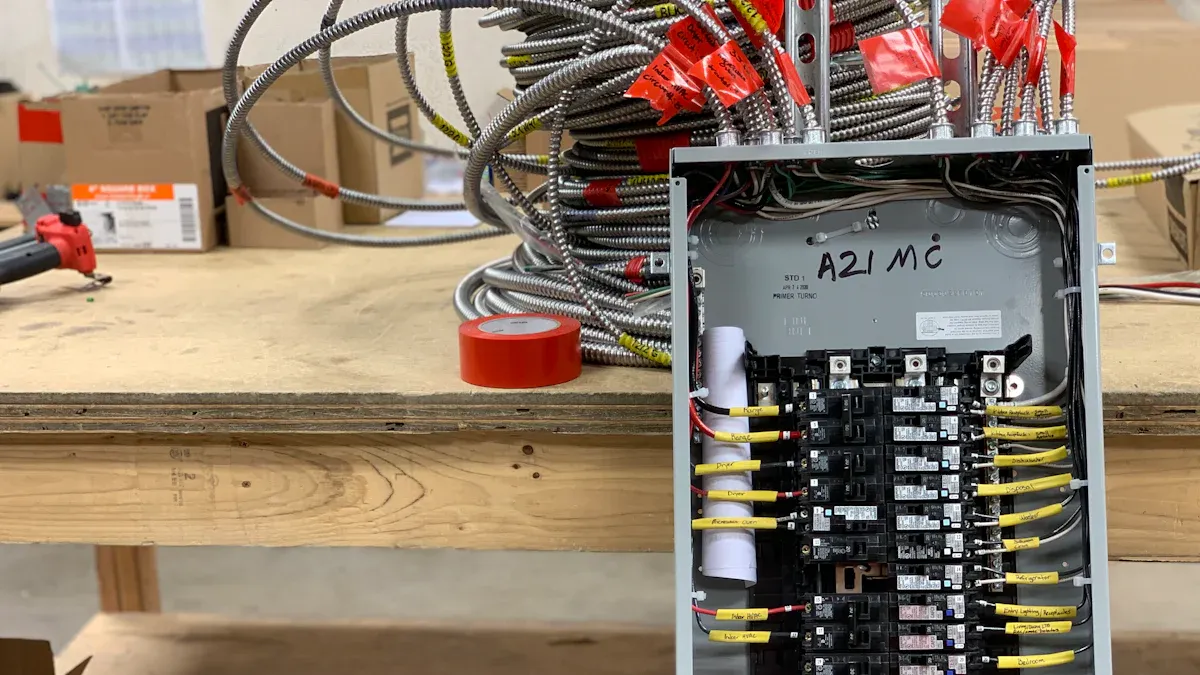
An industrial PDU, or power distribution unit supplier, provides essential equipment for managing electrical power in manufacturing and industrial settings. Choosing the right heavy duty PDU supplier is crucial because it directly impacts your operations. A reliable industrial PDU supplier ensures stable power distribution, which keeps your high power PDU machinery running smoothly and efficiently.
Key Takeaways
- Choosing the right industrial PDU supplier is vital for ensuring stable power distribution and efficient operations.
- Evaluate suppliers based on key criteria like product quality, delivery reliability, and compliance with safety standards.
- Consider customization options to meet specific needs, as tailored PDUs can enhance performance in various applications.
Types of Industrial Power Distribution Unit Suppliers
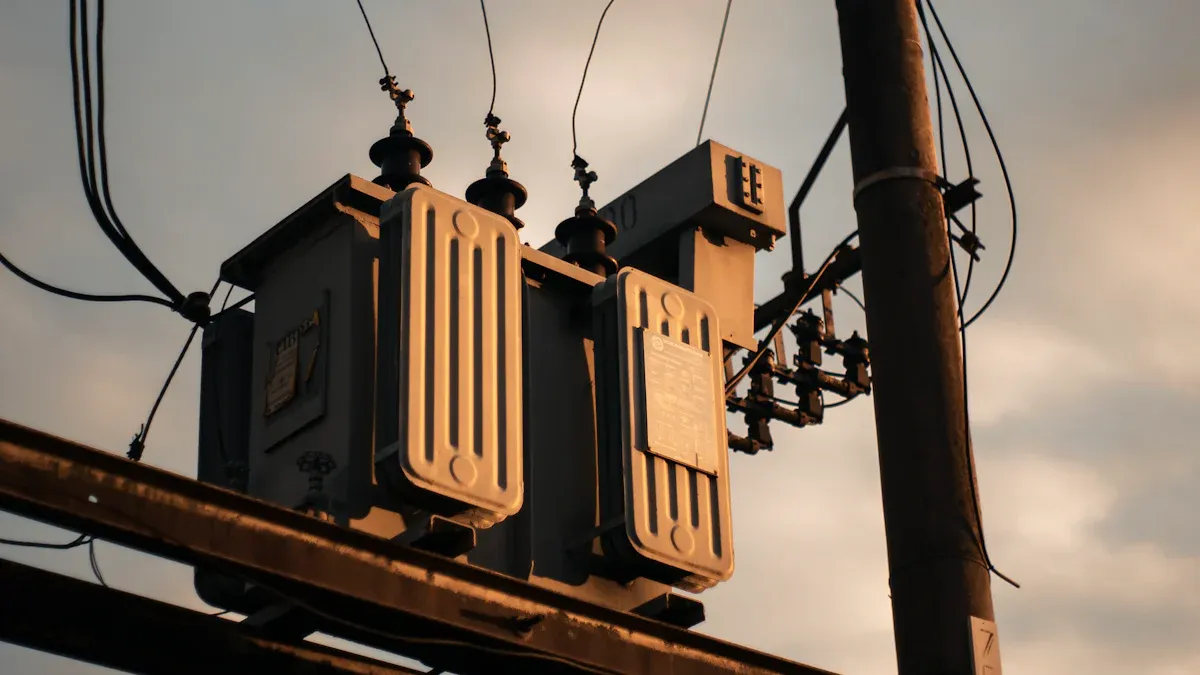
When I think about industrial power distribution unit suppliers, I see three main types: manufacturers, distributors, and online retailers. Each type plays a unique role in the supply chain.
Manufacturers
Manufacturers are the backbone of the industry. They create the power distribution units (PDUs) that we rely on. These companies often differentiate themselves by offering value-added services, like inventory management and asset tracking. This helps customers streamline their operations. For instance, a manufacturer might provide a customized PDU that meets specific project goals, ensuring compliance with safety standards like UL 508A. This focus on quality control is crucial, as it guarantees that the units are safe and reliable.
Distributors
Distributors act as intermediaries between manufacturers and end-users. They stock a variety of PDUs from different manufacturers, making it easier for businesses to find what they need. Distributors often have established relationships with manufacturers, which can lead to better pricing and availability. They also provide essential support, such as technical assistance and logistics management. This can be a lifesaver when you need a quick replacement or upgrade.
Online Retailers
Online retailers have changed the game for purchasing PDUs. They offer convenience and often lower prices due to reduced overhead costs. However, there are pros and cons. On the plus side, you can easily compare products and read customer reviews. But, you might face challenges like limited communication with sellers and varying commission rates. It’s essential to weigh these factors when considering an online purchase.
Key Features of Industrial PDUs

When I think about the key features of industrial power distribution units (PDUs), I realize how crucial they are for ensuring reliable power management in heavy-duty applications. Let’s dive into some of the most important aspects that I consider when evaluating PDUs.
Product Specifications
Understanding product specifications is vital for selecting the right PDU. Here are some critical specifications that I always look for:
| Specification | Description |
|---|---|
| Voltage Compatibility | Ensures safe operation by matching the PDU to the facility’s power configuration. Common voltages include 120V, 208V, 240V, and 400V. |
| Monitoring & Remote Control | Enables proactive management with real-time usage stats, alert thresholds, and remote reboot capabilities. |
| EMI Filters | Reduces electromagnetic interference, ensuring stable performance of sensitive equipment. |
| Built-in Display / Control Board | Provides on-site visibility into power usage and system health with real-time data. |
| Breaker & Surge Protection | Essential for preventing hardware damage and maintaining uptime, includes hydraulic-magnetic and thermal breakers. |
| Reliability & Brand Quality | Evaluates PDU quality based on uptime track record, MTBF rating, and support coverage. |
These specifications help ensure that the PDU can handle the demands of industrial environments effectively.
Compliance and Certifications
Compliance and certifications are non-negotiable when it comes to industrial PDUs. They not only ensure safety but also enhance marketability. Here are some of the most common certifications I look for:
- Low-Voltage Directive (LVD): Covers electronic equipment with specific voltage ranges.
- IEC CB Scheme: A global standard for safety recognized by multiple countries.
- IEC 60950-1 and IEC 62368-1: Standards for IT and communications equipment safety.
- FCC Compliance: Ensures electromagnetic emissions do not interfere with other devices.
- UKCA Mark: Required for products marketed in Great Britain post-Brexit.
- UL508: Industrial Control Equipment.
- CSA 22.2 No 14-13: Industrial Control Equipment.
- EN 12100: General principles for design and risk assessment.
- EN 60204-1: Electrical equipment for industrial machines.
- IEC/UL/EN 60601-1: Medical electrical equipment safety requirements.
Having these certifications not only minimizes safety risks but also differentiates products in the marketplace. I’ve seen how compliance can open doors for OEMs, allowing them to access global markets and ensuring long-term reliability.
Customization Options
Customization is another key feature that I find essential. Many industrial clients, including myself, often request tailored solutions to meet specific needs. Here are some common customization options available:
| Customization Options | Description |
|---|---|
| Tailored receptacle counts | Customizable number of outlets based on client needs. |
| Component layout | Specific arrangement of components as per requirements. |
| Visual identification | Custom labels and colors for easy identification. |
| Non-standard receptacles | Options for unique receptacle types. |
| Power capabilities | Custom power ranges from 60kW to 135kW. |
I appreciate that leading suppliers like Legrand, Geist, and Vertiv offer these options. Custom PDUs can be designed to meet specific capacity requirements for different applications, which is especially important in sectors like defense and aerospace.
Pricing Considerations for Heavy Duty PDUs
When it comes to heavy-duty power distribution units (PDUs), pricing can be a bit tricky. I’ve learned that several factors influence the cost, and understanding these can help me make better purchasing decisions.
Cost Factors
Several key elements affect the price of heavy-duty PDUs. Here’s what I consider:
- Technical specifications: The more advanced the features, the higher the price. For instance, PDUs with monitoring capabilities or advanced surge protection typically cost more.
- Materials used: High-quality materials can increase durability but also the price. I always check if the materials justify the cost.
- Efficiency standards: PDUs that meet higher efficiency standards often come at a premium. However, they can save money in the long run through reduced energy consumption.
- Market conditions: Supply chain issues or demand spikes can affect pricing. I keep an eye on market trends to anticipate changes.
Additionally, I look at specific characteristics like:
- Voltage level: Higher voltage PDUs usually cost more.
- Current rating: PDUs with higher current ratings tend to be pricier.
- Power handling capacity: The greater the capacity, the more I can expect to pay.
Comparison of Pricing Models
Understanding different pricing models helps me evaluate the total cost of ownership (TCO) for PDUs. Here’s a comparison of various tiers based on purchase price, efficiency, failure rate, and TCO:
| Tier | Purchase Price | Efficiency | Failure Rate | TCO |
|---|---|---|---|---|
| 1 | $30,000 | 99.7% | 0.3% | $103,425 |
| 3 | $12,000 | 99.0% | 2% | $132,975 |
From my experience, investing in a higher-tier PDU can lead to significant savings over time. The lower failure rate and higher efficiency of Tier 1 units often outweigh the initial cost.
Long-term Value
When I think about long-term value, I consider the lifespan of heavy-duty PDUs. Typically, these units last between 8 to 15 years. Here are some points I keep in mind:
- Proper installation and maintenance can extend the operational life of the equipment.
- A longer lifespan ensures reliability and reduces costs associated with unplanned downtime.
- Investing in a quality PDU can save money in the long run, as I won’t have to replace it frequently.
Customer Service and Support from Power Distribution Unit Suppliers
When I think about choosing a power distribution unit supplier, customer service and support are top priorities for me. I want to know that help is available when I need it.
Availability of Technical Support
Having access to technical support can make a huge difference. I appreciate suppliers who offer 24/7 support. It gives me peace of mind knowing that if something goes wrong, I can reach out for help anytime. I often check if they provide multiple channels for support, like phone, email, or live chat. This flexibility makes it easier for me to get the assistance I need quickly.
Warranty and Return Policies
Warranties and return policies are also crucial. I always look for suppliers that offer solid warranties. A good warranty shows that the supplier stands behind their products. I prefer suppliers with clear return policies, too. If I receive a PDU that doesn’t meet my expectations, I want to know I can return it without hassle. This transparency builds trust and makes me feel more confident in my purchase.
Customer Reviews and Testimonials
Finally, I pay attention to customer reviews and testimonials. Hearing from other users helps me gauge the reliability of a supplier. I often check online reviews to see what others say about their experiences. Positive feedback can sway my decision, while negative reviews raise red flags. I find that real-world experiences often provide insights that product descriptions can’t.
Comparison of Top High Power PDU Suppliers
When I look at the market for high power PDUs, I find several suppliers stand out. Here’s a quick overview of three top contenders.
Supplier A Overview
Supplier A is known for its robust product compatibility. They excel at integrating their solutions with existing infrastructure. I appreciate how they offer scalable options, allowing businesses to grow without needing a complete overhaul. Their customer support is responsive, which is a big plus for me.
Supplier B Overview
Supplier B focuses heavily on security features. They implement strong measures to protect against cyber threats and physical tampering. I find their commitment to innovation impressive, as they leverage the latest trends like IoT and AI. This keeps their products relevant and efficient. Their pricing is competitive, making them a solid choice for many businesses.
Supplier C Overview
Supplier C shines in compliance and certifications. They ensure their products meet industry standards, which gives me peace of mind. Their deployment process is straightforward, and they provide excellent maintenance support. I often recommend them to colleagues who value reliability and ease of use.
Here’s a quick comparison of these suppliers based on key criteria:
| Criteria | Description |
|---|---|
| Product Compatibility | How well does the solution integrate with existing infrastructure and protocols? |
| Scalability | Can the solution grow with your needs, from small setups to large deployments? |
| Security Features | What measures are in place to protect against cyber threats and physical tampering? |
| Innovation & Technology | Does the vendor leverage latest trends like IoT, AI, or edge computing? |
| Customer Support | How responsive and knowledgeable is the vendor’s support team? |
| Pricing & Licensing | Is the solution cost-effective, with flexible licensing options? |
| Compliance & Certifications | Are the products compliant with industry standards and regulations? |
| Deployment & Maintenance | How straightforward is installation, and what are the ongoing maintenance requirements? |
This table helps me quickly assess which supplier might be the best fit for my needs.
Choosing the right supplier for industrial power distribution units is crucial. A reliable supplier can make a significant difference in your operations. I encourage you to evaluate suppliers based on key criteria like quality, delivery reliability, and compliance.
Here’s a quick look at some important factors to consider:
| Criteria | Description |
|---|---|
| Total Cost of Ownership | Evaluates the complete cost associated with a supplier over time. |
| Quality | Assesses the standard of products or services provided by the supplier. |
| Delivery Reliability | Measures the supplier’s ability to deliver on time consistently. |
By focusing on these aspects, you can make informed decisions that lead to better purchasing outcomes. Remember, a little research goes a long way!
FAQ
What is the typical lifespan of an industrial PDU?
Most industrial PDUs last between 8 to 15 years, depending on usage and maintenance.
How do I choose the right PDU for my needs?
I recommend assessing your power requirements, compatibility, and any specific features you need before making a decision.
Can I customize my PDU?
Absolutely! Many suppliers offer customization options to fit your specific requirements, like outlet types and power capacities.
Post time: Feb-02-2026


