


Partnering with an OEM ODM PDU manufacturer in China offers specialized services. They design, produce, and brand Power Distribution Units tailored for your needs. This provides cost-effective, scalable solutions for various industries. A Custom PDU Manufacturer understands your requirements. This guide helps you find a reliable ODM PDU partner.
Key Takeaways
- OEM means a manufacturer builds your PDU design. ODM means you choose from their designs and they customize it.
- Chinese manufacturers offer good prices, advanced technology, and large production capacity for PDUs.
- Always check a manufacturer’s quality control, communication, and how they protect your designs before you partner with them.
Understanding OEM and ODM in PDU Manufacturing
When I talk about PDU manufacturing, you often hear “OEM” and “ODM.” These terms are super important for understanding how I can get custom power solutions. Let’s break them down.
Defining OEM (Original Equipment Manufacturer) in the PDU Context
With OEM, I bring my specific PDU design to the manufacturer. Think of it this way: I have a detailed blueprint for a PDU, maybe with unique outlets, specific monitoring features, or a particular form factor. The OEM manufacturer then builds that PDU exactly to my specifications. They use my design, my engineering, and my vision. My brand name goes on the final product. It’s like they are my dedicated production line, bringing my unique PDU concept to life.
Defining ODM (Original Design Manufacturer) in the PDU Context
ODM is a bit different. Here, the manufacturer already has a range of PDU designs they developed themselves. I look through their existing catalog or their proven designs. I might choose one of their standard PDUs and ask for some minor modifications, like adding my logo, changing the color, or adjusting the cable length. The core design, however, is theirs. They handle the research and development, and I leverage their existing expertise and products.
Key Differences and Strategic Advantages for PDU Production
The main difference is who owns the design. With OEM, I own the design; with ODM, the manufacturer owns it. For me, choosing OEM means I get a truly unique product, tailored precisely to my market needs. It gives me full control over innovation. However, it often involves more upfront investment in R&D.
ODM, on the other hand, offers speed and cost efficiency. I can get a reliable PDU to market much faster because the design is already proven. It reduces my R&D costs significantly. If I need a standard PDU with my branding, ODM is a fantastic strategic choice. I pick the best option based on my project’s specific requirements and budget.
Why Choose a Chinese Manufacturer for OEM ODM PDUs

When I look for a partner to make my PDUs, I often turn to Chinese manufacturers. They offer some really strong advantages. Let me tell you why I think they are a great choice.
Cost-Effectiveness and Competitive Pricing
One of the biggest reasons I consider Chinese manufacturers is the cost. They can offer incredibly competitive pricing. This means I can get high-quality PDUs without breaking my budget. It helps me keep my product prices attractive for my customers.
Advanced Manufacturing Capabilities and Technology
I am always impressed by the advanced manufacturing capabilities I find in China. Many factories use state-of-the-art technology and automation. This leads to precise production and consistent quality for my PDUs. They often have the latest equipment, which helps them build complex designs efficiently.
Scalability and High-Volume Production Capacity
If I need a lot of PDUs, Chinese manufacturers can handle it. They have massive production capacities. This means they can scale up quickly to meet my demands, whether I need a few hundred or tens of thousands. I also find their production lead times are quite efficient; for high-volume orders, the typical production lead time is usually between 25 and 30 days. This speed helps me get my products to market faster.
Access to a Vast Supply Chain for Components
China has an incredibly vast supply chain. This means manufacturers there have easy access to almost any component I might need for my PDUs. This access helps keep costs down and ensures they can source parts quickly. It also means I have more options for customization.
Expertise in Diverse PDU Types
I have found that Chinese manufacturers have deep expertise across many PDU types. They can produce a wide range of solutions. For example, I often see them specializing in:
- High-voltage DC electrical devices for EV, solar energy systems, and energy storage applications.
- High-voltage PDU for Commercial Vehicles.
- High-voltage PDU for Heavy Trucks. They also excel at more common types like:
- Basic PDU
- Metered PDU
- Smart PDU
- Heavy Duty PDU
This broad expertise means I can find a Custom PDU Manufacturer that truly understands my specific needs, no matter how specialized they are.
Key Benefits of Partnering with a Custom PDU Manufacturer
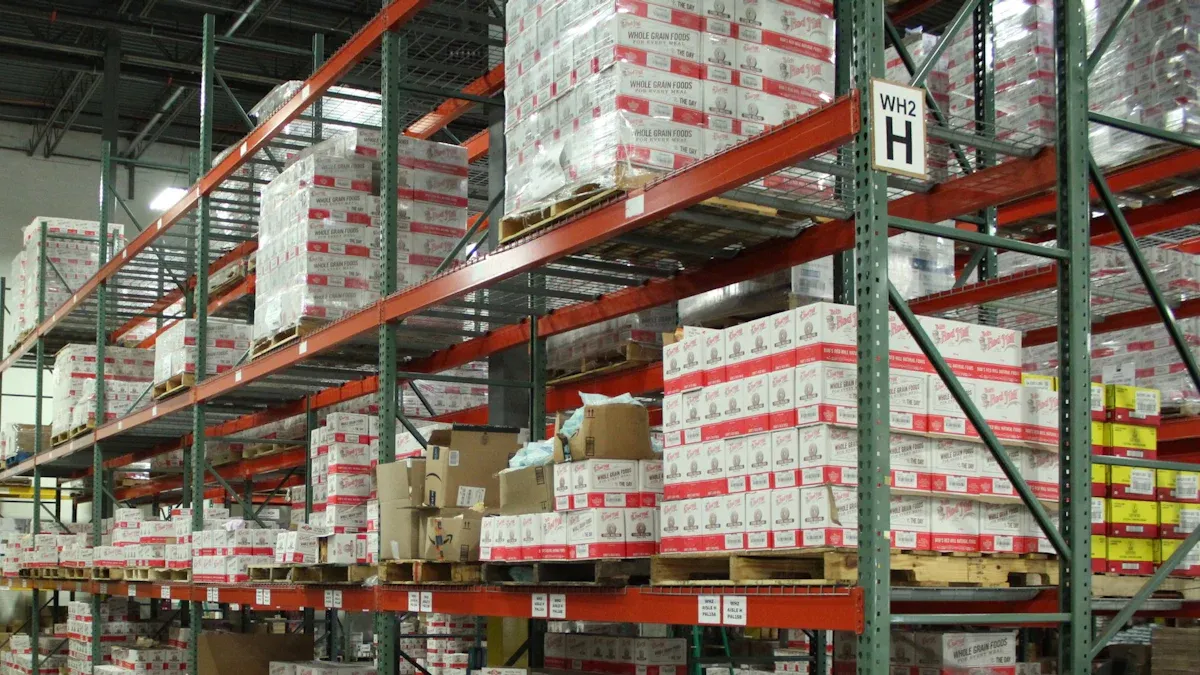
When I decide to partner with an OEM or ODM PDU manufacturer, I look for specific advantages. These partnerships bring many benefits to my business. They help me create better products and run my operations more smoothly. Let me tell you about the key benefits I see.
Customization and Brand Integration
I want my products to stand out in the market. A Custom PDU Manufacturer helps me do just that. They let me create PDUs that are truly unique. I can integrate my brand identity directly into the product. This means my customers see my logo and my specific features.
Think about it: I can introduce intelligent, modular, and highly customizable PDUs. This helps me meet the changing needs of my end-users. I can even integrate cool tech like IoT, AI, and cloud-based management platforms. These features allow for real-time monitoring and predictive analytics. Many top companies use this strategy to differentiate themselves.
| Company | Product Differentiation through Customization/Features |
|---|---|
| Vertiv | High power density capabilities, modular PDUs for scalability |
| Eaton | Intelligent PDUs, remote power management, real-time load balancing |
| Raritan (Legrand) | Intelligent PDUs with outlet-level monitoring, highly customizable solutions, modular designs |
| ABB | Robust, high-performance PDUs, reliability, and energy efficiency |
| Leviton | Low-cost, high-efficiency PDUs, outlet-level monitoring, and remote management in advanced models |
This focus on tailored solutions and responsive support is a big success factor in today’s competitive PDU market.
Reduced R&D Costs and Time to Market
Developing new products can be expensive and time-consuming. When I partner with a PDU manufacturer, I can significantly cut down on my research and development costs. I don’t need to invest heavily in my own engineering team or testing facilities.
They already have the expertise and infrastructure. This means I can bring my new PDU designs to market much faster. I leverage their existing knowledge and production lines. This speed is crucial in a fast-paced industry. It helps me stay ahead of the competition.
Quality Assurance and International Certifications
Quality is super important to me. I need to know my PDUs meet high standards. My partners ensure this through strict quality control processes. They also help me get the necessary international certifications.
For North America, I know UL standards and CSA recognition are the market norm for control devices.
- UL 508 (and UL 508A for control panels) governs safety testing and listings.
- CSA provides parallel certification recognized in Canada.
In Europe, I need CE marking. This is required under the Low Voltage Directive (LVD) and the EMC Directive. Environmental regulations like RoHS (restriction of hazardous substances) and REACH (chemical registration/notification) are also crucial.
- The IEC 60947 series, particularly IEC 60947-4-1, serves as a baseline for contactors. It defines performance and type-testing procedures used globally.
- The IECEE CB Scheme allows manufacturers to obtain test reports and certificates under IEC standards. These are accepted by participating national certification bodies. This reduces duplicate testing and accelerates approvals internationally.
These regulatory standards ensure my PDUs comply with safety, quality, and environmental requirements.
Technical Support and After-Sales Service
My relationship with a manufacturer doesn’t end after the sale. I value strong technical support and after-sales service. This ensures my products perform well in the long run. Many manufacturers offer comprehensive support.
- Product Manuals
- Firmware Downloads
- MIB and OID Tree Downloads
- Warranties, Returns, and End-of-Life Products
- Technical References
- FAQs
- Online Help / Help Desk
Some even offer advanced support. For example, Raritan provides a technical support team for their Software Development Kit (SDK) and open API. This allows for advanced PDU management through JSON RPC scripting. I can use it for firmware updates, configuration backup/restore, and controlling various PDU functions. This kind of support is invaluable.
Focus on Core Business While Outsourcing Manufacturing
Outsourcing PDU manufacturing lets me focus on what I do best. I can free up my internal resources. This includes capital, talent, and time. I can then reallocate these resources to high-value initiatives.
- I can invest more in R&D, automation upgrades, and scaling my customer-facing functions.
- My engineering teams can concentrate on innovation.
- I can maintain bandwidth to respond to market shifts without being overstretched.
- It reduces the upfront capital I need for in-house production. This capital can be reinvested in higher-margin opportunities.
By outsourcing non-core processes, I enable my internal teams to concentrate on innovation and enhancing the customer experience. This is a smart move for any business.
How to Select the Right OEM ODM PDU Manufacturer in China
Finding the perfect OEM ODM PDU manufacturer in China is a big step. I always approach this process with careful consideration. It’s about building a strong partnership. Here’s how I go about selecting the right one.
Assessing Manufacturing Capabilities and Facility Tours
First, I need to see what they can actually do. I look for manufacturers with advanced capabilities. This means they integrate IoT sensors for real-time monitoring. They also develop energy-efficient power conversion technologies. I want to see their adoption of advanced power management software.
I also check for cutting-edge features. Do they offer advanced security certifications like UL 2900-1 and IEC 62443-4-2 standards? I look for twin gB Ethernet ports for redundancy. A 1% accuracy in power measurement is also a great sign. Cybersecurity is a big deal for me, so I check for robust encryption protocols and adherence to security standards. I also value energy efficiency. This means real-time monitoring, intelligent power monitoring systems, and energy-efficient designs. I like to see advanced analytics and smart technologies, like IoT-enabled devices. These help optimize energy usage and integrate seamlessly with data center management systems. Modular designs and customization options are also key. They show me the manufacturer can meet diverse data center configurations and allow for scalability. Real-time monitoring and remote management capabilities are essential for comprehensive power management. Finally, I appreciate sustainability initiatives. This includes using recyclable materials and carbon-neutral operations.
Evaluating Quality Control Processes and Certifications
Quality is non-negotiable for me. I thoroughly evaluate their quality control processes. I want to see a full-process management system. This includes production line QC cross-verification and QR code traceability. It means everything is traceable, from raw materials to production and test records.
For raw materials, I check for copper conductivity (≥58MS/m). I also look for flame retardant material with UL94 V0 grade certification. Contact plating thickness should be silver plating ≥8μm. During production, I expect tight tolerances. Injection molding dimension tolerance should be ±0.1mm. Welding porosity should be ≤0.3%. Assembly torque should be 3.5N·m±5%.
When the PDU is finished, I expect rigorous testing. This includes a load temperature rise test (ΔT≤40K). Insulation withstand voltage should be 2.5kV with no breakdown. Plug life should be ≥8000 times. Before shipment, they should perform a batch inspection. An AQL sampling plan (level II) is standard. I expect zero fatal defects and major defects ≤0.65%.
I also look for specific tests. An intelligent load aging test simulates 125% rated load for 4 hours. It monitors temperature rise and meets IEC 60320-1 Appendix C. A contact resistance test uses a Kelvin four-wire micro-ohmmeter. It ensures contact resistance between the PDU jack and plug is ≤1.5mΩ (industry standard ≤3mΩ). Plug-in life tests are also crucial.
I also verify their certifications. For the US, FCC Certification is mandatory for electronic devices. UL Certification is a widely recognized safety mark in North America. For Europe, I need CE Marking. This indicates compliance with health, safety, and environmental standards. RoHS Compliance is also important for restricting hazardous substances. Depending on my target markets, I might also need CCC (China), KC Mark (Korea), PSE Mark (Japan), or BIS Certification (India). I also look for ISO9001 certification. This shows a commitment to quality management systems. I always ask for on-site audits of their facilities. This lets me check their quality control and production processes firsthand. I review their Standard Operating Procedures (SOPs) for employee training and equipment calibration. I also check GMP compliance, physical plant, equipment, and production controls. I always request samples of their PDUs for my own rigorous testing. This ensures they meet my performance and reliability standards.
Reviewing Product Portfolio and Customization Options
I always review a manufacturer’s existing product portfolio. This gives me a good idea of their capabilities. I also need to know their customization options. I want a Custom PDU Manufacturer that offers solutions tailored to my specific operational requirements. This includes integrating features like remote management and real-time monitoring.
Manufacturers like Server Technology offer reliable and customizable solutions. They optimize power distribution and energy management. Geist provides customizable options, allowing adaptation of PDUs to specific requirements. They focus on sustainability and customization. YOSUN delivers customizable solutions tailored to specific client needs. They emphasize customization, quality, and innovation. CyberPower also offers customizable solutions to meet specific business requirements. Customization ensures the PDU meets my specific operational needs. I can select features like outlet types, monitoring capabilities, and form factors. This helps with efficient power management and future scalability.
Checking Communication Efficiency and Language Proficiency
Clear communication is vital for a successful partnership. I need a manufacturer who can communicate efficiently. This means quick responses and clear answers to my questions. Language proficiency is also important. I prefer working with teams that have strong English skills. This minimizes misunderstandings and speeds up the entire process. I pay attention to how they handle my initial inquiries. This gives me a good sense of their communication style.
Understanding Pricing Structures, MOQs, and Payment Terms
Before I commit, I need to understand the financial aspects. I carefully review their pricing structures. I look for transparency and competitive rates. Minimum Order Quantities (MOQs) are also important. I need to ensure their MOQs align with my production needs. Sometimes, I can negotiate MOQs, especially for a long-term partnership. Finally, I clarify all payment terms. This includes deposit requirements, payment schedules, and any credit terms. I want to avoid any surprises down the line.
Verifying Intellectual Property Protection Policies
Protecting my intellectual property (IP) is a top priority. I need to ensure the manufacturer has robust policies in place. China’s Anti-Unfair Competition Law helps. Article 9 defines and protects trade secrets. This includes technical or business information unknown to the public. It must have commercial value and the owner must take secret-keeping measures. This law also protects information with ‘negative value’ and holds third parties accountable for infringement. I also make sure to file my patents, copyrights, or trademarks with customs authorities. This is a prerequisite for customs to actively protect my IP. It helps identify infringing goods and deters infringers.
I always insist on robust contracts. All agreements with Chinese manufacturers explicitly outline IP protection. I engage legal experts familiar with Chinese IP law to draft these contracts. They include specific clauses. Confidentiality clauses are crucial for safeguarding proprietary information. Non-Disclosure Agreements (NDAs) add another layer of protection. They stipulate that the manufacturer cannot use my proprietary information without written consent. Non-compete agreements prevent the manufacturer from competing against me using my IP.
An Intellectual Property Rights clause in the manufacturing agreement addresses key questions. Who owns the designs or formulas? Is the manufacturer allowed to use those designs for other clients? What happens to product molds or prototypes when production services are complete? How will trade secrets be protected if the relationship ends? This clause also covers provisions for handling IP infringement claims. A Confidentiality Clause obligates both parties to keep sensitive information confidential. It defines what constitutes confidential information and specifies the duration of the obligation. An Indemnification Clause outlines each party’s responsibilities to indemnify the other for losses or damages. This includes claims related to IP infringement. I also ensure the agreement includes terms restricting the manufacturer from using my designs, inventions, trademarks, or trade secrets for any purpose other than contract performance. It should require the certified return or destruction of my IP assets upon contract termination. Robust IP indemnification protections are also essential. These align with limitation of liability, disclaimers, and governing law for enforceability. A non-compete or non-circumvention provision prevents proprietary information from being used to compete against my company. Confidentiality and data security measures are also critical. This includes implementing ‘best in class’ data security, limiting access to confidential data, and establishing data breach notification protocols.
Requesting Samples and Conducting Pilot Runs
I never skip requesting samples. This lets me physically inspect the product quality. It also helps me verify that the design matches my specifications. After samples, I move to pilot runs. I plan my pilot run ahead of time. This determines equipment, space, and staffing needs. I ensure all teams (production, assembly, QC, warehousing, logistics) are trained. They need training on equipment, quality assessment, and testing procedures. I utilize the lag between hardware and software readiness. The hardware team focuses on the pilot run while software is finalized. I verify that all equipment is ready and calibrated. This prevents product reliability failures or defects. I prepare and optimize processes in advance. This helps identify improvements like automation or addressing bottlenecks.
Pilot runs help identify issues with pick and place machines, pasting, and stencil application. They reveal problems with missing or ill-fitting parts and soldering issues. This could be incorrect temperature or placement. Pilot runs ensure testing stations are correctly positioned on the production line. They also allow for the testing and correct placement of automation and jigs. I consider the scope of the pilot run. It can range from testing a component to the full production process. I define the main objectives, like assessing component quality or machine placement. I determine who will perform the pilot run. This is usually a knowledgeable team led by a senior staff member. I develop a comprehensive plan for carrying out the pilot run. This includes schedules, team, equipment, and components. I establish a method for documenting and evaluating the pilot run. This includes lessons learned and corrective actions. Not conducting pilot runs significantly increases the risk of schedule and funding overruns during mass production. This is due to unaddressed issues. It can lead to costs from reworking defective products, overtime pay, brand damage, customer warranty returns, and potential lawsuits or product recalls. Pilot runs are generally not expensive to set up. They can prevent much larger financial losses.
Common Challenges and How to Overcome Them
Even with great partners, I sometimes face challenges. It is part of doing business internationally. I always prepare for these issues.
Navigating Cultural and Communication Differences
Working with Chinese manufacturers means I need to understand their culture. I know that personal connections (personal connections) is super important. It builds trust. I also learn about ‘face’ or social capital (‘face’ or social capital). It means showing respect. I make sure to send senior people to meetings. This shows I value their social status (social status). I also use an intermediary. This person helps connect us. They interpret moods. They mediate discussions. I focus on building friendships. This creates interpersonal harmony (interpersonal harmony). It helps business flow smoothly.
Ensuring Consistent Quality and Adherence to Specifications
I always make sure my PDU quality stays high. I set clear expectations. I define quality standards in written agreements. I also use a strong quality assurance plan. This includes testing protocols. I do inspections for raw materials. I also check in-process and final products. I use technology like video calls. This helps bridge geographical gaps. I also do regular audits. Sometimes, I do surprise audits. This checks if they follow my standards. I also invest in training. This helps my team and their team. We learn about quality management.
Managing Logistics and Shipping
Getting products from China to my location can be tricky. I plan ahead for logistics. I work with experienced freight forwarders. They help me navigate customs. They also manage shipping schedules. I always track my shipments closely. This helps me avoid delays. I also build in extra time for unexpected issues.
Protecting Intellectual Property
Protecting my designs is a big deal. I always review contracts carefully. I look for clauses about IP ownership. I also get legal advice. This helps me understand risks. I use IP insurance. This protects me financially. I also do thorough searches. This checks for existing IP rights. I use technology transfer agreements. These define who owns what. I also protect my trademarks. This keeps my brand safe. I also set up a plan to monitor my IP. This helps me adapt to new information.
I believe partnering with a Custom PDU Manufacturer in China brings huge benefits. You get customized, high-quality, and cost-effective power solutions. Doing your homework during selection is super important for a long-term win. By checking manufacturing, quality, communication, and IP protection, you can secure a reliable partner.
FAQ
What is the main difference between OEM and ODM for PDUs?
I provide my specific PDU design for OEM. The manufacturer builds it exactly. For ODM, I choose from their existing designs. They then customize it for me.
Why do I choose Chinese manufacturers for my PDUs?
I find them very cost-effective. They have advanced technology and huge production capacity. They also offer a vast supply chain for components. China
How do I ensure PDU quality with a Chinese partner?
I evaluate their quality control processes. I check all certifications. I also request samples and conduct pilot runs. I do regular audits too.
Post time: Dec-22-2025


