

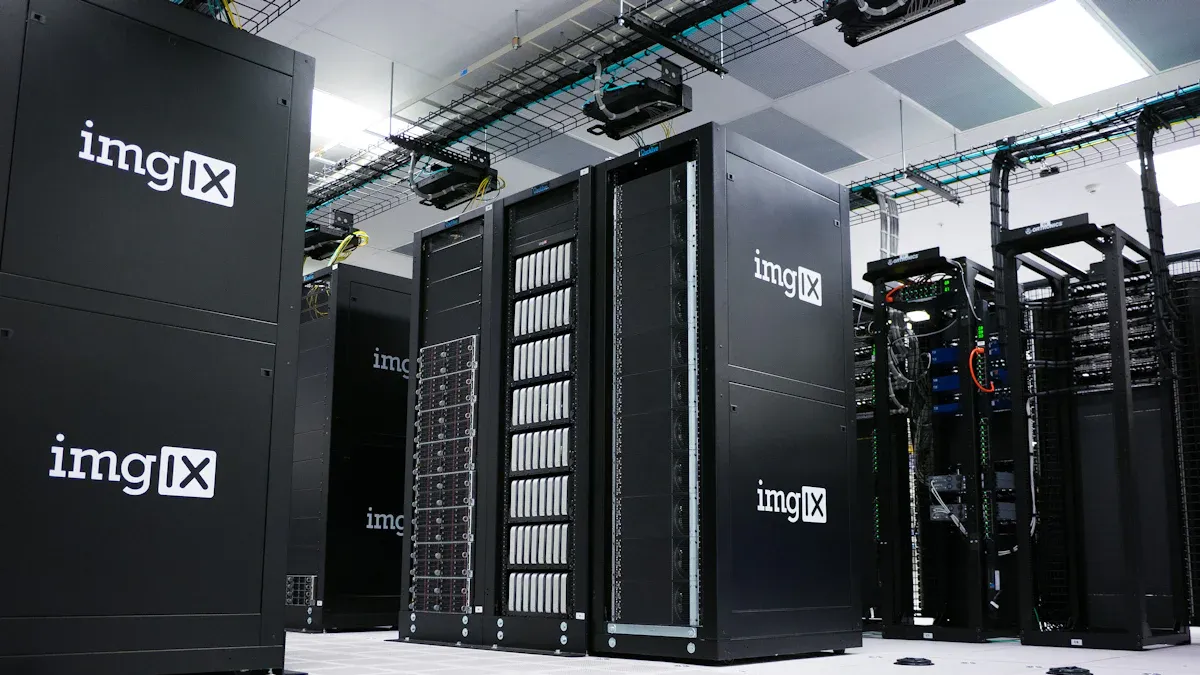
Choosing the right PDU for your data center is critical. I know PDU issues cause 52% of power outages, making reliability paramount. The global Data Center PDU Market will hit $3.5 billion by 2030, so finding a top PDU manufacturer is vital. I want to help you confidently pick the optimal PDU for lasting performance and longevity.
Key Takeaways
- PDUs are very important for data centers. They keep equipment running, save space, and make power use better.
- When you pick a PDU, think about how much power it can handle, if it can watch power use, and if it can grow with your needs.
- Top PDU makers like APC, Eaton, and Raritan offer different features. Choose the one that best fits your data center’s specific needs and budget.
The Indispensable Role of PDUs in Modern Data Centers
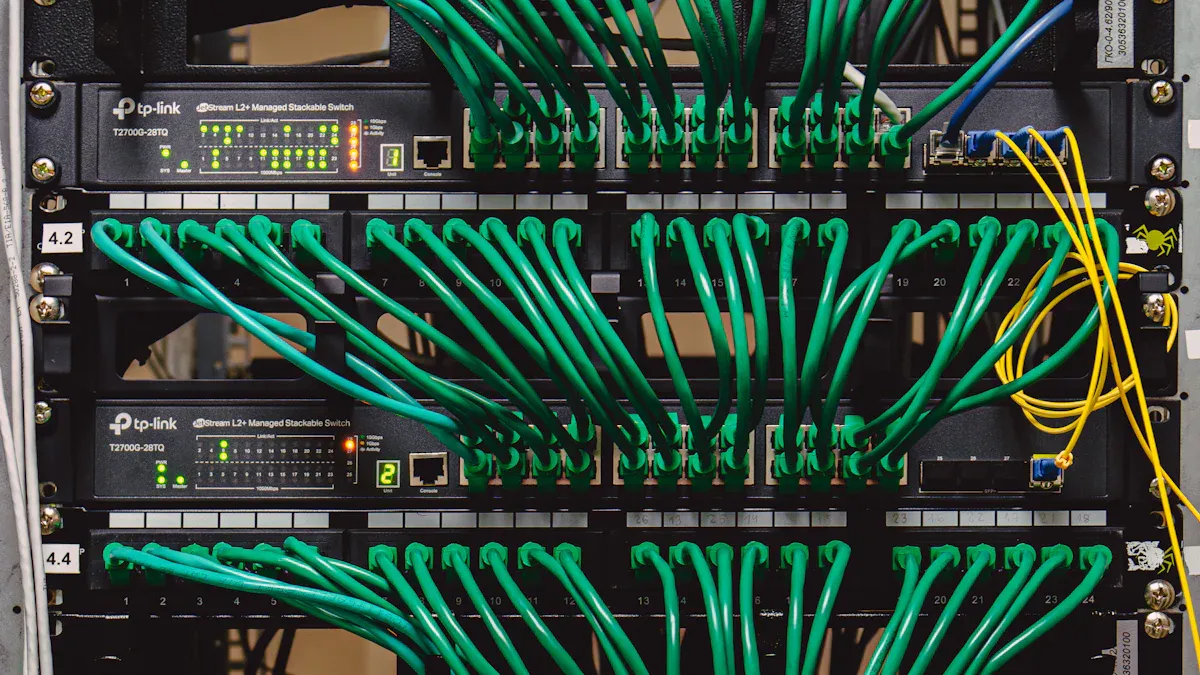
I see PDUs as the unsung heroes of any data center. They do so much more than just plug things in. They are truly essential for keeping everything running smoothly and efficiently. Let me tell you why.
Ensuring Uninterrupted Power Delivery
First, PDUs are crucial for keeping your equipment powered without a hitch. I know they ensure reliable power delivery from the source right to your servers, cutting down on messy cables. This means continuous operation, even if a UPS has a hiccup or power briefly drops. PDUs also help me prevent overloads on breakers or UPS units by monitoring power usage. They can even spot problems like overheating before they become big issues and alert me. Plus, I can remotely power cycle equipment, which saves me a trip and reduces downtime.
Optimizing Rack Space and Cable Management
I find that modern PDUs are fantastic for making the most of my rack space. For example, three-phase rack PDUs handle high power with fewer cords. This frees up valuable room in the rack. They also do a great job organizing power cables. Less clutter means better airflow, and that keeps my equipment cooler.
Enhancing Operational Efficiency and Uptime
PDUs really boost how efficient my data center runs and how long it stays up. I rely on them for real-time data like current, wattage, and voltage. This helps me balance loads and cut down on wasted energy. They also monitor load status, warning me if things get too close to capacity. I also use them to track temperature and humidity with environmental sensors. All this data, logged and graphed, helps me make smart decisions and keep everything running perfectly.
Essential Criteria for Evaluating PDU manufacturer
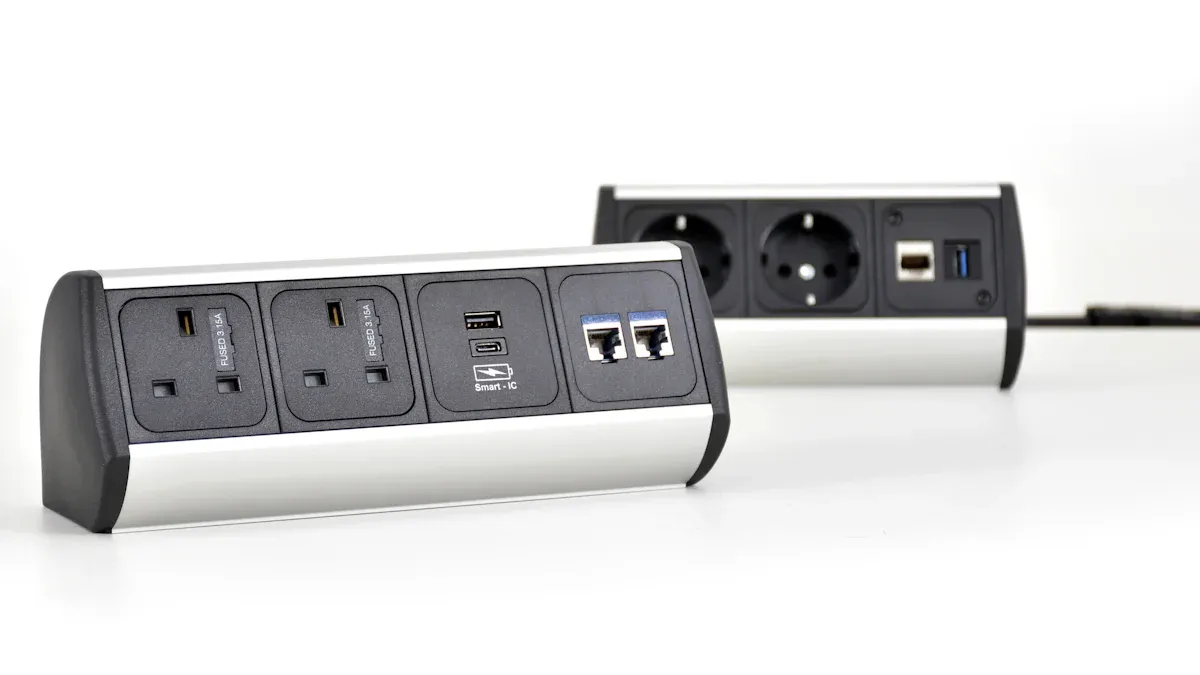
When I look for a PDU, I know it’s more than just plugging things in. I consider several key factors to make sure I get the best fit for my data center.
Power Capacity and Configuration Flexibility
I always check the power capacity first. Modern server racks need a lot more power, often going from 2 kilowatts to 12 kilowatts, and high-density racks can even hit 35kW. I look for PDUs that can handle this, like Raritan Intelligent PDUs rated up to 55kW. I also need flexibility in configuration. Vertical (0U) PDUs save rack space, and some have 40 or more outlets. I find outlet color-coding really helpful for identifying circuits and balancing loads. I also look for high-temperature rated PDUs because my server cabinets can get hot. Switched PDUs are great because I can remotely control individual outlets, which helps me manage power and reboot devices.
Advanced Monitoring and Management Capabilities
I rely heavily on advanced monitoring. I need input metering to track electricity flow and prevent overloads. High-accuracy metering gives me real-time power consumption insights, helping me find inefficiencies. Outlet-level metering is crucial for seeing how much power each device uses. I also make sure the PDU has environmental sensors to monitor temperature and humidity. Remote alerts and hot-swappable controllers are a must for me; they let me fix issues without shutting down my systems.
Reliability, Redundancy, and Uptime Assurance
Uptime is everything to me. I look for PDUs with dual power systems or dual input PDUs that connect to two independent power sources. This gives me N+1 redundancy. Automatic Transfer Switching (ATS) is also vital; it switches to a backup source instantly if the primary fails. I also appreciate features like built-in circuit breakers that protect against power spikes. Server Technology’s PRO2 architecture, for example, offers great reliability with redundant features and better management.
Scalability and Future-Proofing for Growth
My data center is always growing, so I need scalable PDUs. Modular power systems are fantastic because I can expand my power capacity without disrupting anything. High-density PDUs allow me to add new workloads like AI without a major reinvestment. Modular designs also mean I can deploy quickly and add capacity incrementally, which saves me money upfront.
Cost-Effectiveness and Total Cost of Ownership (TCO)
I always consider the total cost, not just the purchase price. Operational expenses like maintenance and energy consumption add up. Metered and monitored PDUs help me see power usage, which can reduce these costs. Downtime is expensive, so switched PDUs that let me troubleshoot remotely save me a lot. I also think about end-of-life costs; a PDU that lasts longer means I replace it less often.
Manufacturer Support, Warranty, and Global Service
Finally, I always check the manufacturer’s support. A good warranty gives me peace of mind. I also need to know if they offer global service, especially if I have data centers in different locations. This ensures I get help quickly if anything goes wrong.
Leading PDU manufacturer and Their Core Offerings
APC by Schneider Electric: Comprehensive Solutions
When I look at APC by Schneider Electric, I see a company that really understands data center power. They offer what I consider a comprehensive solution with their NetShelter Rack PDU Advanced. This PDU is pretty smart because it has industry-first 4-in-1 combination outlets. This means I can pick and deploy them faster, and they give me a lot of flexibility. I’ve seen these PDUs support twice the number of devices and handle a 50 percent jump in power needs, which makes installations and future IT upgrades much smoother. Some models can even support up to 43.5 kW in a single wide form factor and come with up to 48 outlets. This is great for racks that need more and more power. Plus, they have cool features like a Live Swappable Network Management Card, display module power sharing, and they can work in temperatures up to 60ºC. They also have dual network ports and can connect up to eight environmental sensors, which helps me keep everything running smoothly.
Eaton: Versatile Power Management
Eaton is another big player I often consider for versatile power management. Their rack-mount PDUs offer some top-notch features. I really like their patented IEC outlet grip plug retention and advanced LCD pixel screens. They also measure power consumption right at the outlet level, which is super helpful. Their new HD rack PDUs build on their G3 line, offering even more configurability, better outlet density, and even color options.
Here’s a quick look at some common features I find across their PDU lines:
| Feature | Basic | Metered Input | Metered Outlet | Managed | HD |
|---|---|---|---|---|---|
| Low-weight aluminum chassis | X | X | X | X | X |
| Low-profile form factor | X | X | X | X | X |
| Pre-installation, tool-less mounting buttons | X | X | X | X | X |
| Flexible mounting options (0U or 1U/2U) | X | X | X | X | X |
| Three-year advanced placement warranty | X | X | X | X | X |
| Integrated IEC outlet grips | X | X | X | X | X |
| Color-coded outlet sections | X | X | X | ||
| Hot-swappable meter | X | X | X | X | |
| Monitor power consumption (1% billing-grade acc.) | X | X | X | X | |
| Measure power consumption at outlet level | X | X | X | ||
| Switched PDU: Remote outlet on/off | X | X | |||
| Remote site management | X | X | |||
| Turn off unused outlets | X | X |
Eaton offers different types of PDUs, each with specific benefits:
- Metered Input PDU: I use these to save on infrastructure costs. I can daisy-chain up to eight PDUs with just one IP address, which simplifies load balancing and helps prevent overloads.
- Metered Outlet PDU: These are great for monitoring and measuring important power quality factors like voltage, current, and power consumption. They help me save energy and optimize my data center.
- Managed PDU (Switched PDU): These give me power quality measurement and monitoring, plus I get outlet-level control. I can remotely turn outlets on or off and even reboot groups of A and B feeds.
- High Density (HD) PDU: I can fully configure these with options for input power, circuit protection, and outlet types to meet my data center’s exact needs.
I find Eaton’s PDUs make installation easier with tool-less setup. They are also designed for continuous uptime and help me monitor the environment, cut costs, and improve performance. Their advanced management features give me granular control over my IT environment, which boosts my confidence and frees up my time. I also appreciate that I can design their PDUs to fit my specific data center requirements.
For larger setups, Eaton’s three-phase PDUs are robust, ranging from 50 to 300 kVA. They offer easy service and setup with features like optional IR scan windows and front access maintenance. Their monitoring and connectivity are top-notch, providing state-of-the-art alarming through Eaton’s Energy Management System (EMS). Safety is also a big focus, with protective panels and UL/CSA approvals.
Vertiv: Integrated Infrastructure Solutions
Vertiv is a company I look to for integrated infrastructure solutions. They offer a wide range of power distribution options, including innovative PDUs and rack PDUs, which help me manage data center power usage effectively. Their offerings go from basic PDUs all the way to monitored and switched rack power distribution units. I can also get remote monitoring and management capabilities for power usage, which is a huge plus. For really big data centers, they use the Liebert RX remote distribution cabinet for power distribution. Vertiv also provides diverse integrated power distribution units for server racks and enclosures, and I can choose between monitored, controlled, modular, or monolithic designs. I find their intelligent PDUs are great for distributing power to racks and precisely monitoring and managing data center consumption. Their smart PDUs go beyond just distributing power; they offer monitoring, management, and control for multiple devices.
Raritan (Legrand): Intelligent PDU Specialization
Raritan, now part of Legrand, really specializes in intelligent PDUs, and I find their features incredibly useful. They offer advanced environmental monitoring, which means I can track temperature, humidity, airflow, and even detect water leaks. They send me real-time alerts if conditions get too risky, helping me prevent downtime. Security is also a big deal for me, and Raritan equips its PDUs with strong access controls, like role-based permissions. They support secure protocols such as HTTPS, SNMPv3, and LDAP integration, which protects against unauthorized access and cyber threats. I also benefit from their advanced analytics. These PDUs collect detailed data on power usage, environmental conditions, and device status. Their built-in analytics tools help me spot trends, predict future capacity needs, and optimize energy use, leading to better decisions. Finally, their seamless DCIM integration is fantastic. Raritan PDUs work well with Data Center Infrastructure Management (DCIM) platforms, giving me centralized monitoring and control of power, cooling, and environmental systems. They support automated workflows, compliance reporting, and help me respond to issues quickly through open APIs.
Server Technology (Legrand): High-Density Power
Server Technology, also part of Legrand, is my go-to for high-density power solutions. They offer High Density Outlet Technology (HDOT) for applications that need a lot of power in a small space. I especially like their HDOT Cx outlets because they can take both C14 or C20 plugs, which is a clever innovation. These PDUs also come with smart options like outlet switching and individual outlet metering.
Here are some of their key high-density solutions:
- Flexibility + Density Solutions (HDOT Cx):
- They offer two outlets in one with their HDOT Cx Hybrid C13 and C19 Outlet.
- I get the most outlets per form factor.
- Load balancing is easy with their Alternating Phase Technology.
- Many configurations ship quickly, often in 10 days.
- High-Density Solutions (HDOT):
- They provide 3-Phase PDUs.
- HDOT means the Highest Density Outlet Technology.
- Again, I get the most outlets per form factor.
- They put the right outlets in the right place for my setup.
- They have a higher certified operating temperature of 65° C.
- Alternating Phase makes load balancing simple.
- PRO3X PDU:
- These come with HDOT and HDOT Cx (Hybrid C13 and C19) Outlets.
- They feature RamLock Cam-style Locking Outlets and Cord Retention.
- I can link PDUs and group outlets together.
- Outlets and branches are evenly distributed for better cable management.
- They also use Alternating Branch Technology.
CyberPower: Cost-Effective and Reliable Options
When I need cost-effective and reliable PDU options, I often look at CyberPower. Their monitored PDUs provide network-grade power distribution with remote monitoring through an SNMP network interface or a local digital meter display. I appreciate their flexibility, with up to 38 outlets available in 0U, 1U, or 2U form factors for vertical or horizontal mounting. They are also scalable, working well for single units in small networks or many units in large data centers.
CyberPower offers specific monitored PDU models for different environments:
- PDU20M8FNET: This is a compact 1U design, perfect for small IT setups that need remote monitoring.
- PDU31003: For medium-sized data centers, this model offers robust power distribution with automated notifications.
- PDU33103: This one is ideal for high-density data centers, featuring 44 outlets, three-phase power, and it can operate up to 140°F.
- PDU20MVT24FNET: This is a vertical 0U design, great for edge computing because it saves space and still offers remote monitoring.
- PDU31001: This model balances features for small to medium setups. It has a switch-free design to prevent accidental shutdowns and offers dual remote/local monitoring.
For basic, reliable power distribution, I find the CyberPower Basic PDU PDU15B6F10R to be a solid choice. It’s a straightforward and cost-effective solution for IT environments. It has a durable metal housing, a standard input plug, and provides 120V input with 10 NEMA 5-15R output outlets. It’s a 1U rackmount form factor, perfect for small to medium-sized data closets, server rooms, and data centers. I’ve found it to be sturdy and robust, offering great functionality and ease of use, and it even comes with a lifetime warranty. This PDU manufacturer definitely offers value.
In-Depth PDU Manufacturer Comparison
I find that comparing PDU manufacturers goes beyond just looking at features. It’s about understanding how their offerings align with my data center’s specific needs. Let’s dive into some key areas where these companies differentiate themselves.
Power Density and Outlet Customization
I know that maximizing space in a data center is always a challenge. That’s why I really appreciate how different PDU manufacturers approach power density and outlet customization. For high-density rack environments, I look for solutions that not only save space but also keep things running smoothly. Intelligent PDUs and high-density outlet technology are key here. I’ve seen PDU models with up to 38 outlets, which gives me a lot of scalability for different data center sizes. Plus, having form factor options like 0U, 1U, and 2U means I can fit them into almost any setup. Raritan PDUs, for example, really stand out because they offer customizable configurations. This helps me meet my specific business requirements perfectly.
Advanced Monitoring Features (e.g., outlet-level, environmental)
When it comes to keeping an eye on things, advanced monitoring features are a game-changer for me. I need to know exactly what’s happening with my power. ATEN’s eco PDU, for instance, offers metering and monitoring at both the PDU and outlet levels. This means I can see how much power the whole unit uses and also how much each individual device consumes. It even includes an environment sensor port where I can connect up to 8 sensors. These sensors help me monitor temperature, humidity, airflow, differential air pressure, and even leaks. Raritan’s PX-5000 family of switched PDUs also gives me outlet-level metering. They support a wide range of environmental sensors too, like those for temperature, humidity, airflow, differential air pressure, leaks, vibration, and even proximity. This level of detail helps me prevent problems before they start.
Security and Access Control Protocols
Security is always on my mind, especially when it comes to power infrastructure. I want to make sure only authorized people can access my PDUs. Many manufacturers use a strong AAA security framework, supporting protocols like LDAP and RADIUS. This helps me set up Role-Based Access Control (RBAC), so people only get access to what they need. I also look for vendors who show firmware integrity through things like code signing. This verifies authenticity and prevents tampering. Third-party cybersecurity certifications like USGv6, UL2900-1, and IEC 62443-4-2 give me extra confidence that the security claims are real. Robust encryption is a must, using protocols such as HTTPS, SSH, SNMPv3, and TLS 1.3 by default. Some even support 802.1x MIL-grade security and 256 AES Encryption. Ongoing firmware maintenance with secure, automated updates is also important for addressing vulnerabilities. Physical security features, like intelligent rack handles and dual authentication, help prevent unauthorized cabinet access.
I also see strong password policies, requiring minimum length, character variety, and preventing reuse of recent passwords. They often force default password changes and implement password expiration. Firewalls with IP-Based Access Control Lists (ACL) filter traffic based on IP addresses, and RBAC helps manage access based on user roles. Defense-in-depth strategies are common, blocking access after multiple failed login attempts, timing out inactive sessions, and limiting concurrent logins. X.509 digital certificates, both CA and self-signed, secure TLS connections and protect against man-in-the-middle attacks. Secure communication defaults to HTTPS (TLS 1.2/1.3 with AES 128/256-bit ciphers), SSH (public key authentication), and SNMPv3 (with various encryption options). Secure Boot ensures the PDU only boots with trusted firmware.
Vertiv rPDUs, for example, implement security features and standards mandated by the UL2900-1 certification. This certification ensures rigorous cybersecurity for network-connected equipment. It requires secure communication protocols, strong access control, and regular security updates to protect against cyber threats. Server Technology’s PRO4X PDUs also encrypt all data using industry-leading methods. They have strong password policies, use IP-Based Access Control Lists (IP ACL) and Role-Based Access Control (RBAC) for network access, and employ multiple security layers. They support digital certificates and include Secure Boot features with an onboard Secure Element cryptographic security module. This ensures firmware integrity and authenticity during the boot process.
Environmental Monitoring Integration
I find that intelligent PDUs really boost my data center’s environmental monitoring. They have built-in sensors that track conditions like temperature and humidity. This data helps me keep my equipment performing optimally and lasting longer. These systems can also trigger immediate alerts if environmental changes are abnormal. This allows me to respond quickly, prevent equipment failures, and reduce downtime. It also ensures my critical infrastructure lasts a long time. Intelligent rack PDUs do more than just distribute power. They act as platforms for real-time remote power metering, rack-based power quality monitoring, and environmental monitoring. They also integrate deeply with Data Center Infrastructure Management (DCIM) systems. This creates a smarter IT infrastructure that helps me proactively address potential issues.
Centralized Software Management Platforms
Managing many PDUs can be a lot of work, so I really value centralized software management platforms. They let me monitor and control everything remotely. YOSUN‘s monitored rack PDUs, for example, integrate with Data Center Infrastructure Management (DCIM) software for centralized monitoring and control. They use standard protocols like SNMP, Modbus, and API, so I can bring their data into a unified DCIM dashboard. Raritan offers its own powerful DCIM software, like Power IQ DCIM Software and dcTrack®. These tools give me a comprehensive view of my data center. I also see solutions like The Hive SR + ZPE Cloud, which is a next-generation PDU remote management solution. ZPE Cloud is a management platform that offers centralized control over power devices and other infrastructure, especially at distributed locations. It lets my IT team update or roll back firmware, configure or power-cycle equipment, and receive monitoring alerts.
Global Availability and Service Network
Finally, I always consider global availability and the service network. If I have data centers in different regions, I need to know that the PDU manufacturer can support me everywhere. A strong global presence means I can get consistent products and support, no matter where my operations are. It also ensures that if something goes wrong, I can get local assistance quickly. This is crucial for maintaining uptime and minimizing disruptions across my entire infrastructure. I want a PDU manufacturer that stands by its products globally.
Comparative Analysis Table: Key PDU Manufacturer Features
APC vs. Eaton vs. Raritan: Feature Set Comparison
When I look at APC, Eaton, and Raritan, I see distinct strengths. APC offers a full range of PDUs, from basic to advanced switched 0U rack models. Their switched PDUs, like the AP8632US or AP8932US, give me remote on/off control for individual outlets. I can even group outlets with models like the AP8932. APC also provides excellent basic and metered monitoring options. They focus on a consistent ecosystem, which I find really helpful.
Raritan, on the other hand, targets demanding data center environments. They are leaders in intelligent and outlet-level control, giving me granular power management. Their monitoring is super advanced, showing me electrical metrics like Power Factor and Total Harmonic Distortion. Raritan’s Xerus Technology Platform offers deep insights into my power infrastructure. Eaton, as I mentioned before, provides versatile power management with features like hot-swappable meters and advanced LCD screens.
| Feature Category | APC PDUs | Raritan PDUs |
|---|---|---|
| Product Range | Full spectrum from basic to fully featured switched 0U rack PDUs | Targets demanding data center environments with intelligent network devices |
| Outlet Control | Switched PDUs offer remote on/off control for individual outlets and outlet-level grouping | Leader in intelligent and outlet-level control, enabling granular power management |
| Monitoring | Excellent basic and metered options | Advanced electrical metrics monitoring: Power Factor, Crest Factor, Total Harmonic Distortion |
| Specialized Features | Remote reboots, power sequencing, securing unused outlets, integration within a consistent ecosystem | Xerus Technology Platform for advanced automation and deep insight into power infrastructure |
| Target User | Businesses needing a mix of PDU types within a single, consistent ecosystem | Data centers requiring the deepest level of insight and most granular control |
Monitoring, Reliability, and Scalability Differentiators
I see some clear differences when I compare monitoring, reliability, and scalability across manufacturers. For example, Raritan PX Intelligent Rack PDUs offer very high metering accuracy, often ±0.5%. They also have hot-swappable iX Controllers, which really boosts reliability. Server Technology’s PRO2 Series also provides advanced monitoring with PIPS technology and hot-swappable controllers. Eaton’s ePDU G3 Series stands out with its hot-swap network meter module, letting me maintain reliability without downtime.
When it comes to reliability, I also look for features like IEC outlet grips from Eaton, which prevent accidental disconnects. Tripp Lite’s Switched PDUs offer an integrated Automatic Transfer Switch (ATS), giving me redundancy. For scalability, CyberPower’s Switched Rack PDUs are great. They offer advanced outlet control and come in many form factors, even with up to 38 outlets. This helps me grow my data center easily.
| Feature / Model | APC AP8000 | Eaton ePDU G3 | Raritan PX Intelligent | Server Tech PRO2 |
|---|---|---|---|---|
| Power Monitoring | Yes | Yes | Yes | Yes |
| Remote Outlet Control | Yes | Yes | Yes | Yes |
| Energy Optimization | Advanced | Advanced | Advanced | Advanced |
| Hot-Swap Components | No | Yes | Yes | Yes |
| Environmental Monitoring | Yes | Yes | Yes | Yes |
| Metering Accuracy | High | High | Very High (±0.5%) | High |
| Redundancy/ATS | No | No | No | No |
| Typical Use Case | Enterprise | Enterprise | Critical Infrastructure | Enterprise |
Selecting the Right PDU for Your Data Center Needs
Choosing the right PDU feels like a puzzle sometimes. I know it depends entirely on my data center’s unique demands. Let me walk you through how I approach this.
High-Density Computing Environments
For my high-density racks, I need PDUs that can handle a lot. I look for real-time monitoring and remote control. This helps me manage devices and power settings from anywhere. Power usage analytics and outlet-level monitoring are also critical. They show me inefficiencies and help me allocate resources effectively. I also need environmental sensors and alarm systems to keep things optimal. My ideal PDU supports high power, like 380-415V 3-Phase Wye or 208V 3-Phase Delta. It should handle up to 57.6 kVA in North America or 78.7 kVA internationally. I also love versatile 4-in-1 combination outlets that accept C13/C15/C19/C21 plugs. Locking outlets are a must for security.
Budget-Conscious Deployments
When I’m on a tight budget, I often turn to basic or metered PDUs. Basic PDUs are simple and affordable. They reliably distribute power from one source to many outlets. I use them for non-critical systems or temporary setups where I don’t need fancy features. Metered PDUs are another great option. They give me precise power consumption data without outlet-level control. I get real-time usage metrics, load balancing data, and threshold alerts. This helps me prevent overloads and track energy efficiency without breaking the bank.
Remote Management and Automation Requirements
I always prioritize remote management. It saves me so much time. I need intelligent PDUs that let me monitor and control power from afar. This includes turning outlets on or off and rebooting devices. Automation features are also key. They help me streamline operations and respond quickly to issues without being physically present.
Edge Data Center and Distributed IT Solutions
Edge data centers and distributed IT solutions have unique needs. I find specific PDU solutions work best here. Power demand can fluctuate a lot, so efficient power distribution is vital. Intelligent or smart PDUs are especially important. They offer real-time monitoring and remote management. They also help with automated power balancing across multiple locations. This ensures efficient power usage and prevents surges.
Future Expansion and Technology Integration Needs
I always plan for the future. My data center is always growing. I choose PDUs that are scalable. Modular designs are great because I can add capacity without big disruptions. I also look for PDUs that integrate well with new technologies. This ensures my infrastructure stays relevant and efficient for years to come.
I’ve explored many top PDU manufacturer. The best choice truly aligns with your data center’s unique needs. Always prioritize advanced monitoring, scalability, and strong manufacturer support. This helps you make an informed, future-proof selection. I know this approach ensures long-term performance, reliability, and a solid return on your investment.
FAQ
What is the most important thing a PDU does for my data center?
I think the most important thing is ensuring uninterrupted power. It delivers power reliably to your equipment. This keeps everything running smoothly, even during minor power issues.
How do I choose the right PDU for my specific needs?
I always consider power capacity, monitoring features, and scalability. Think about your current and future growth. Also, look at the manufacturer’s support and warranty.
Can PDUs help me save energy?
Yes, they definitely can! I use metered PDUs to track power consumption. This helps me identify inefficiencies and optimize energy use. It saves money too.
Post time: Dec-02-2025


