

Introduction
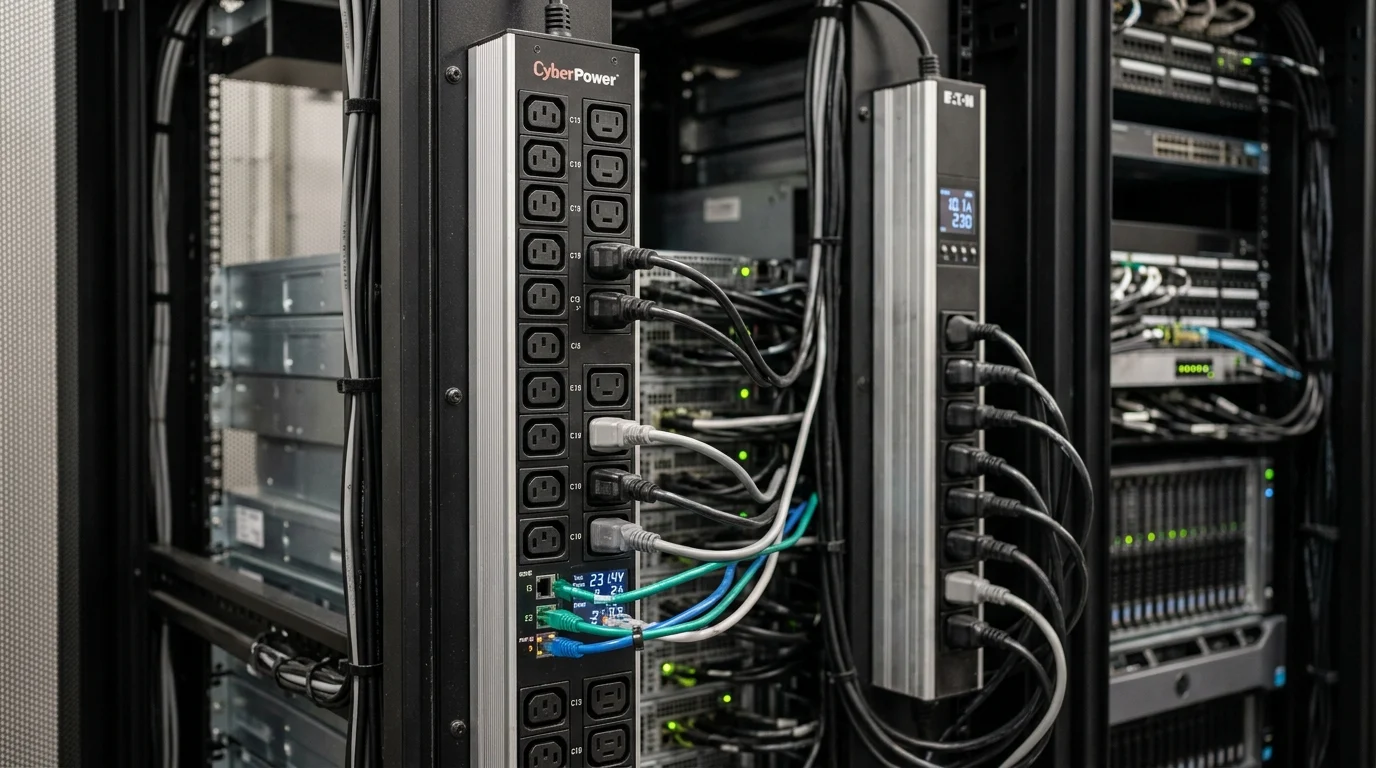
By 2026, AI infrastructure will push rack power densities far beyond what conventional power distribution was designed to handle. GPU-heavy servers, bursty training loads, and tighter uptime requirements make outlet-level visibility and control a practical necessity, not a nice-to-have. This article explains why high-density smart PDUs are becoming foundational in modern data centers, especially for teams managing power risk, capacity planning, and remote operations at scale. It will show how smarter distribution units help prevent overloads, improve monitoring, and support the reliability demands of next-generation AI environments.
Why Smart PDUs matter for AI workloads
If you’ve walked a data center floor recently, you know the landscape has changed dramatically. We aren’t just racking standard 1U pizza boxes anymore. The AI boom has fundamentally altered how we approach power distribution and risk management. Legacy power strips simply won’t cut it when a single rack pulls more power than an entire row did five years ago. That is exactly why Smart PDUs have become the unsung heroes of modern AI infrastructure. Without them, we are essentially flying blind into a storm of unprecedented electrical demand.
AI rack power density and visibility
When analyzing AI Server Power requirements today, the numbers are staggering. A single GPU-dense server, like those packing eight high-end AI accelerators, can easily draw upwards of 10.2kW on its own. Multiply that across a 42U or 48U rack, and the risk of tripping a breaker or causing thermal runaway skyrockets.
AI workloads are incredibly bursty; training models create sudden, massive power spikes that test the limits of our electrical design points. We need absolute visibility into every single outlet. Smart PDUs provide real-time telemetry, allowing us to monitor micro-fluctuations in current and voltage before a sudden AI training spike takes down a multi-million-dollar cluster.
Defining high-density requirements
What exactly counts as “high density” as we march toward 2026? Back in 2020, 15kW per rack was considered a remarkably heavy load. Today, the baseline for a modern AI cluster starts at 40kW, and facility planners routinely prepare for 100kW to 120kW per rack for next-generation liquid-cooled setups. To handle this, data centers are deploying massive 60A and 100A three-phase circuits just to keep the systems running.
| Metric | Standard Rack (2020) | AI Training Rack (2026 Target) |
|---|---|---|
| Average Power Draw | 5kW – 10kW | 40kW – 120kW |
| Circuit Amperage | 30A (Single-phase) | 60A – 100A (Three-phase) |
| PDU Operating Temp | 45°C | 60°C+ |
| Cooling Method | Air Cooled | Direct-to-Chip Liquid / Rear Door |
Key Smart PDU capabilities for high-density AI
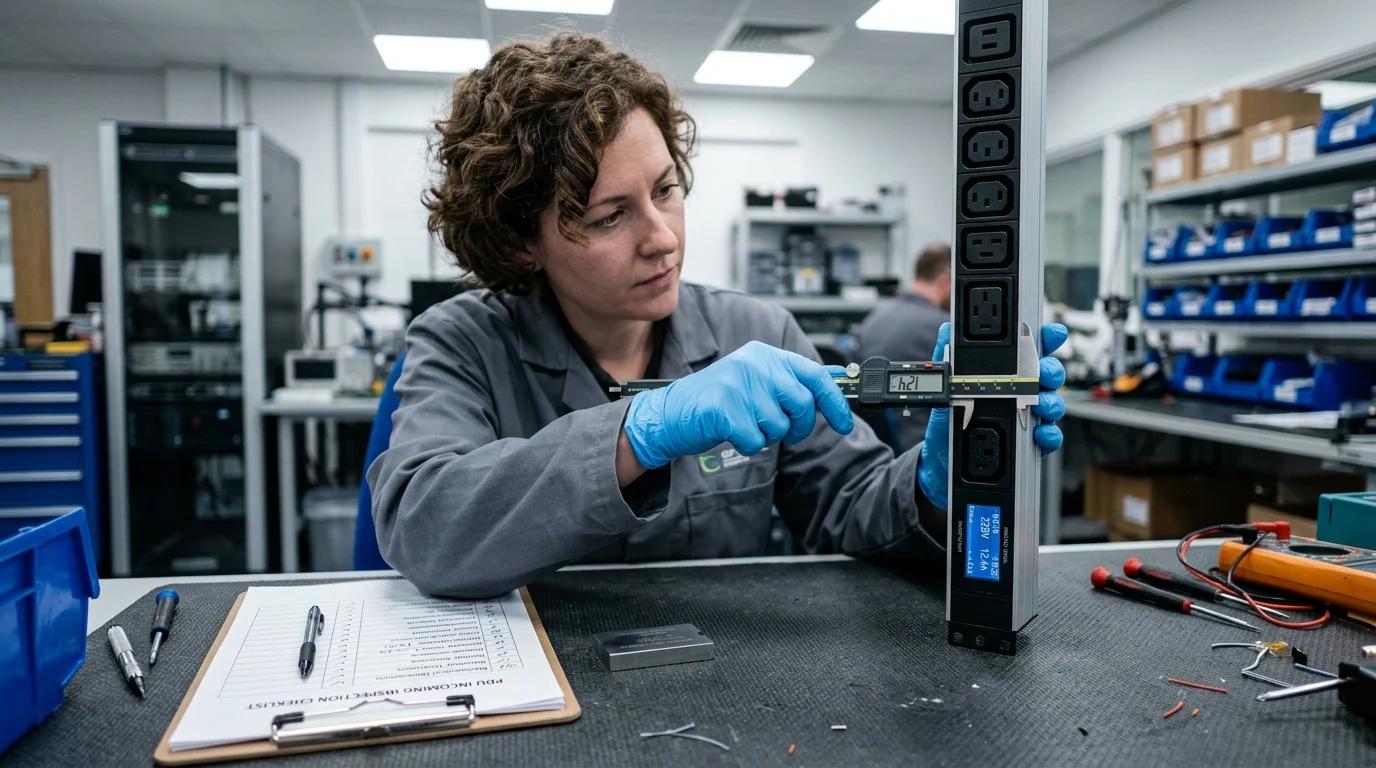
Having established the sheer volume of power involved, we must examine what makes a PDU “smart” enough for these intense AI workloads. It is no longer just about remote rebooting or basic load balancing. We need devices that act as the central nervous system for the rack’s electrical and environmental health, providing the data required to optimize performance.
Metering, branch monitoring, and environmental sensors
For high-density setups, billing-grade metering with ±1% accuracy is essential. When managing Rack Level Power at 80kW, a 5% margin of error means flying blind on 4kW of power—an entire server’s worth of ghost load.
Furthermore, branch circuit monitoring and environmental sensors are non-negotiable. Deploying daisy-chained temperature and humidity sensors directly via the PDU helps monitor hot spots. This is critical as facilities push inlet temperatures up to 27°C (80.6°F) to optimize Power Usage Effectiveness (PUE) and save on cooling costs.
Evaluating three-phase deployment options
You simply cannot deliver 100kW through traditional 120V or 208V single-phase lines without impractically thick copper cables. Consequently, most AI deployments are moving to 400V or 415V three-phase power. A 415V three-phase PDU at 60A delivers roughly 43kW, significantly cutting down cable bulk beneath the raised floor and minimizing phase-balancing headaches.
Looking ahead to the massive scale of 2026, we are even evaluating 800V DC PDU architectures. Shifting to direct current can eliminate AC-to-DC conversion losses entirely, saving about 3% to 5% in total power overhead—translating to massive cost savings at a megawatt scale.
How to choose Smart PDUs for 2026 AI deployments

When specifying a data center build for 2026, future-proofing every component is paramount. Buying a PDU is no longer a simple catalog order; it is a complex engineering decision. Choosing the right hardware requires balancing raw electrical capacity, physical footprint, and seamless integration with next-generation cooling technologies.
Sizing Smart PDUs for AI racks
Sizing a High Density PDU requires strict adherence to safety margins and redundancy protocols. If an AI rack is designed to pull 80kW during a peak training run, you cannot simply buy an 80kW PDU. Because of the National Electrical Code’s 80% derating rule for continuous loads, a 100A breaker is only rated to safely carry 80A continuously.
Furthermore, in an A/B redundant power setup, if feed A fails, feed B must instantly carry the entire 80kW load without tripping. Therefore, each individual PDU must be sized to handle 100% of the rack’s peak draw, meaning you are actually installing two 100kW-capable PDUs per rack to ensure safety and uptime.
Decision framework for balancing requirements
Beyond the math, the physical reality of the rack dictates hardware choices. AI racks are incredibly cramped. With massive GPU chassis, high-speed InfiniBand switches, and thick cabling taking up space, the PDU needs a low-profile design with locking outlets that accommodate heavy-duty plugs.
More importantly, as the industry transitions away from pure air cooling, finding a Liquid Cooling Compatible PDU is essential. These PDUs are designed to operate safely in environments where liquid manifolds run parallel to power lines. They feature high-temperature ratings—often operating flawlessly in up to 60°C ambient heat—since the air inside a densely packed, liquid-assisted rack can get surprisingly hot. Balancing these thermal, spatial, and electrical constraints is the absolute key to a successful 2026 deployment.
Key Takeaways
- The most important conclusions and rationale for Smart PDUs
- Specs, compliance, and risk checks worth validating before you commit
- Practical next steps and caveats readers can apply immediately
Frequently Asked Questions
Why are smart PDUs essential for AI racks in 2026?
AI racks can reach 40kW to 120kW with sudden training spikes. Smart PDUs provide real-time outlet and branch visibility to prevent overloads, breaker trips, and thermal issues.
What PDU capacity should I consider for high-density AI deployments?
Plan for 60A to 100A three-phase PDUs, depending on rack load. For many 2026 AI racks, 400V or 415V three-phase designs are the practical starting point.
Which smart PDU features matter most for AI workloads?
Prioritize ±1% metering accuracy, branch monitoring, outlet-level visibility, remote management, and temperature/humidity sensor support. These features help control bursty loads and identify hot spots early.
How do YOSUN smart PDUs support high-density data center racks?
YOSUN offers smart and metered PDUs designed for rack-level monitoring, remote visibility, and higher-density power distribution. Check yosunpdu.com for model options aligned with AI server power needs.
Can smart PDUs improve efficiency in liquid-cooled AI environments?
Yes. Smart PDUs with environmental sensors help track inlet conditions and rack hot spots, supporting better cooling control and safer operation in direct-to-chip or rear-door cooled racks.
Post time: Apr-29-2026


