

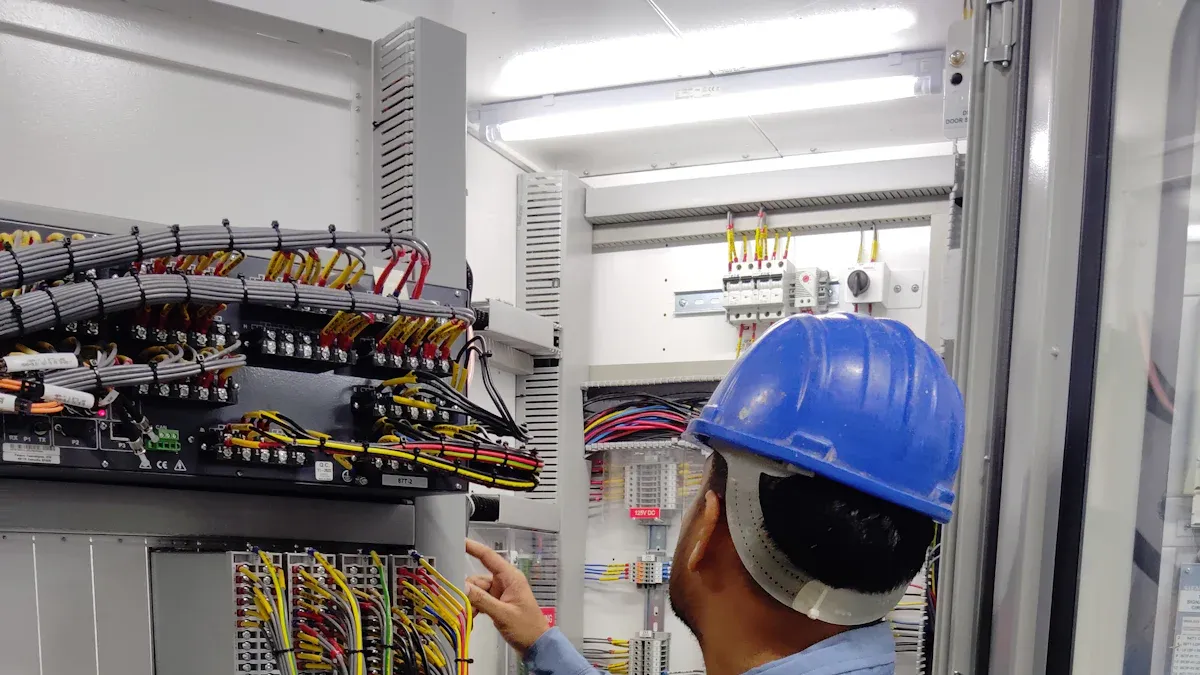
I find that China PDU factories are vital for our IT infrastructure. They specialize in Power Distribution Units (PDUs), which are essential for data centers and server rooms. These factories offer a compelling mix of product variety, including a Metered PDU PDU with current meter Load monitoring, and cost-effectiveness. The overall PDU market is growing at a 14.8% CAGR, showing its importance. I believe understanding their capabilities helps us choose the right partner for reliable power solutions.
Key Takeaways
- China PDU factories offer many types of power distribution units, including basic and smart ones, for different needs.
- These factories provide good quality PDUs at lower prices, often with options to change them to fit your specific needs.
- It is important to check a factory’s reputation, quality, and certifications to choose the best partner for your power solutions.
What is a Basic PDU and Its Importance?
Definition and Core Function
I often think about how crucial power is for our IT gear. A basic PDU, or Power Distribution Unit, is really simple. It takes power from one source, like a wall outlet, and then gives it to many devices. Think of it as a super-powered extension cord for your servers. Its main job is to distribute power without any fancy extras. It just focuses on getting power where it needs to go.
Key Components and Features
When I look at a basic PDU, I see its core function clearly. It takes a single power input and turns it into multiple power outputs, usually around eight. This is like a power strip, but for serious IT equipment. Some basic PDUs are just standard, offering multiple outlets. Others, like a monitored PDU, might show me basic electrical data, such as current or voltage. This helps me keep an eye on things.
Common Applications
I use basic PDUs in many places. They are essential in data centers, server rooms, and network closets. For example, I deploy them in server racks to power everything from servers to network switches. They help me organize power, reduce cable clutter, and keep things running smoothly. I also see them in industrial environments. Horizontal rack-mount PDUs are common; they fit right into my rack space and provide 8-16 outlets.
Benefits of Basic PDUs
I find basic PDUs offer many benefits. They efficiently distribute power from one source to multiple devices, simplifying my wiring. They also protect my connected devices from power issues like surges and overloads. This gives me peace of mind. Plus, they help me manage cables, making my installations neat and easier to maintain. I also appreciate their flexible mounting options, whether I need to mount them in a rack or on a wall.
Manufacturing Capabilities of a China PDU Factory
Production Processes and Technology
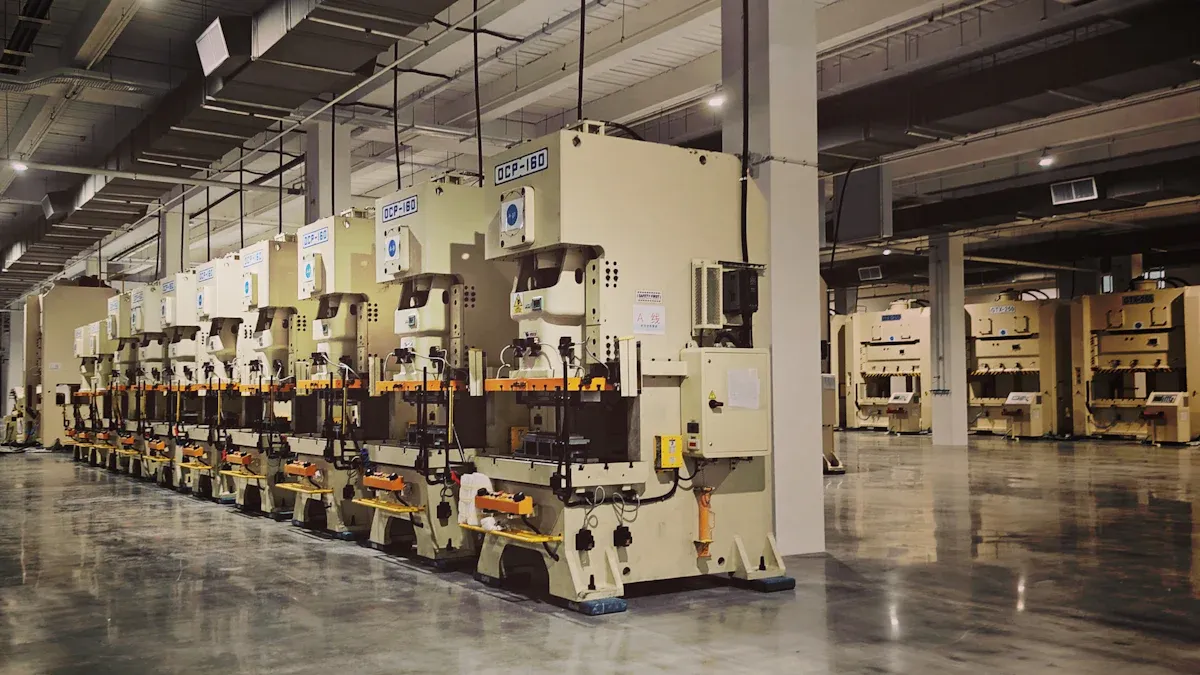
I often wonder how these factories make so many PDUs. When I look into it, I see that a modern China PDU factory uses really advanced methods. They have state-of-the-art technology and automation. This helps them make PDUs very precisely. It also ensures consistent quality. They even integrate IoT sensors for real-time monitoringng. This means they can watch how things are going during production. They also use energy-efficient power conversion technologies. This makes the PDUs better for the environment. Some factories even include advanced power management software. This helps users control their power better. I also learned that they focus on security. They follow advanced security certifications like UL 2900-1 and IEC 62443-4-2 standards. This shows me they care about keeping our systems safe. They even build in features like twin gB Ethernet ports for redundancy. This means if one port fails, another takes over. They can also achieve 1% accuracy in power measurement. This is very precise! They use robust encryption protocols too. All these things tell me they use smart technologies and advanced analytics to make their products.
Product Range and Variety
When I need a PDU, I know I can find many options from a China PDU factory. They offer a wide range of products. For example, I can get PDUs that mount in standard 19-inch racks. These can be horizontal (1U, 2U) or vertical (0U). This flexibility helps me fit them into any server rack or network cabinet. They also have many different outlet configurations. I often see C13 or C19 sockets. These are very common for IT equipment. But they also make PDUs with universal outlets. These work in many countries, like those in Asia, the Middle East, and Africa. I can even find specific outlet types. They make UK type and German type rack power distribution units. I have also seen South Africa 6 outlets server PDUs and India types outlets server PDUs. This wide variety means I can always find the right PDU for my specific needs, no matter where I am.
Customization Options Available
One thing I really appreciate about these factories is their ability to customize. They don’t just offer standard products. I can ask for specific changes to my PDUs. For example, I can choose different outlet types. They offer NEMA, IEC, Universal, and SCHUKO outlets. This is great because different regions use different plugs. I can also specify the cable length. A common option is 1.5m, but I can often request other lengths. And if I want my PDUs to match my data center’s color scheme, I can choose from different colors. They offer options like yellow, white, silver, gray, and black. This level of customization helps me get exactly what I need.
Production Capacity and Scalability
I know that when I place a large order, these factories can handle it. They have impressive production capacity. For instance, I learned that UnitronicPower, a Chinese manufacturer, can produce about 3,000 PDU units each month. This includes basic PDUs. Another company, YOSUN, which provides intelligent power solutions, boasts an even higher capacity. They can produce over 30,000 PDU units every month. This shows me that a China PDU factory can scale up production quickly. They can meet the demands of big projects or ongoing needs. This high capacity means I can rely on them for consistent supply, even for bulk orders.
Quality and Reliability from a China PDU Factory
Adherence to International Certifications
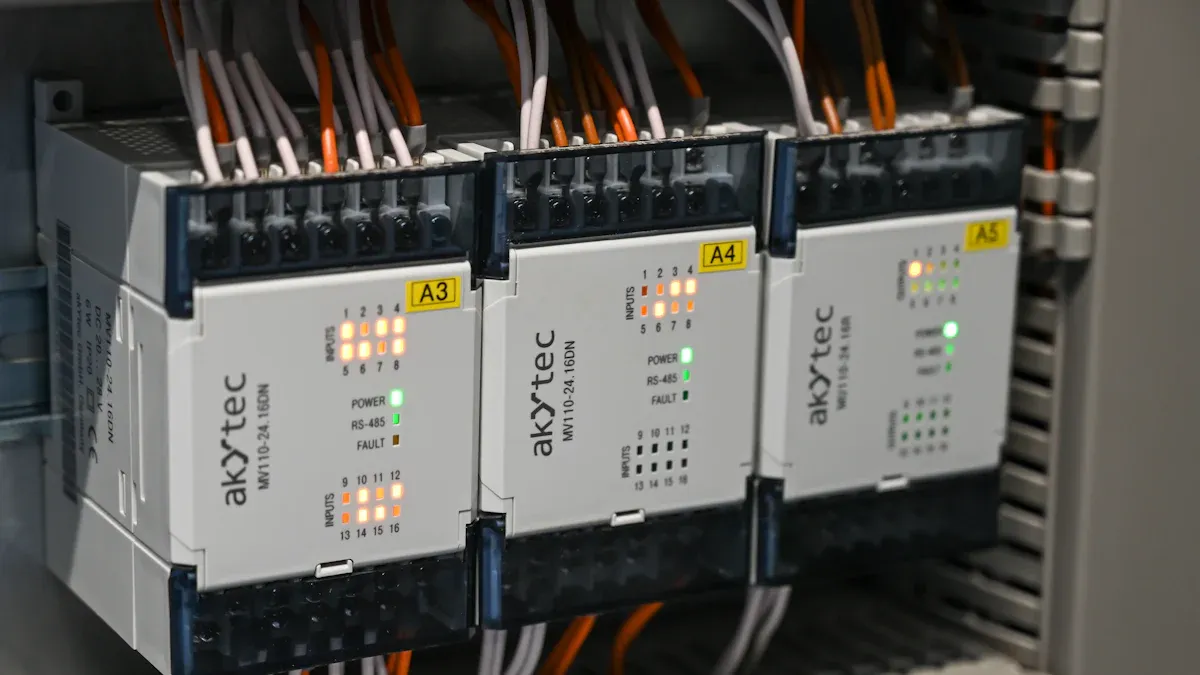
I always look for certifications when I choose a PDU. A good China PDU factory understands this. They make sure their products meet global standards. I often see certifications like CE, UL, and RoHS. These are really important for safety and environmental reasons. They also get ISO9001 for quality management. Sometimes, I even see VDE or CSA, which shows their commitment to different market requirements. For specific safety, UL 60950 is a key one.
Quality Control Procedures
How do they ensure quality? I’ve learned that these factories have strict quality control. They check products at every step. From the raw materials to the final assembly, they test everything. This helps catch any issues early. I appreciate this thoroughness because it means fewer problems for me later.
Material Selection and Durability
Durability is key for PDUs. I want them to last. A China PDU factory uses strong materials. For the internal wiring, they often use copper busbars. These are great for efficient power and heat. They also use 12-14 AWG copper conductors for branch circuits. This ensures safe current handling. For the casing, I see heavy-gauge steel or aluminum. These materials protect the insides and help with heat. A powder-coated finish on steel also resists wear.
Compliance for Export Markets
Exporting PDUs means meeting many rules. I know that for markets like Europe, they must meet high compliance standards. This includes things like UL, CE, RoHS, and ISO. There’s a big push for energy efficiency and safety globally. So, these factories design their PDUs to meet these changing requirements. This gives me confidence in their products, no matter where I use them.
Cost-Effectiveness of a China PDU Factory
Competitive Pricing Advantages
I often find that a China PDU factory offers really good prices. They can provide low prices without compromising on quality. This is a big advantage for my budget. I can get wholesale price options directly from manufacturers. This ensures I get the best value for my money. I buy directly from their suppliers and factory outlets. This gives me access to premium PDU products at competitive prices.
Balancing Cost and Quality
I always wonder how they balance low cost with good quality. They focus on quality, reliability, and performance. They also meet many important certifications. I see FCC, ETL, CE, CCC, EAC, and KC marks on their products. These show me they meet international standards. YOSUN, a leading factory, says they deliver high-quality PDUs at competitive prices. They want to give organizations innovative solutions for better power management.
Long-Term Savings and Performance
Choosing a cost-effective PDU from China helps me save money in the long run. These PDUs perform well. They are reliable. This means I do not need to replace them often. Good performance also prevents costly downtime for my equipment. This saves me money on repairs and lost productivity.
Economies of Scale for Bulk Orders
When I need many PDUs, buying from a China PDU factory makes sense. They produce a lot of units. This allows them to offer even better prices for bulk orders. This is called economies of scale. It means the more I buy, the less each unit costs. This is great for large projects or expanding data centers.
How to Choose the Right China PDU Factory
Assessing Factory Reputation and Experience
When I look for a PDU supplier, I always start by checking their reputation. I want to know how long they have been making PDUs. A factory with many years of experience usually means they know what they are doing. I also try to find out what other customers say about them. Do they deliver on time? Are their products reliable? A good reputation tells me I can trust them with my power needs.
Evaluating Product Quality and Certifications
I always make sure the PDUs meet high-quality standards. I ask for test reports that are right for the product and where I plan to use it. For electronics, I look for reports like EMC, RoHS, or FCC. I check if the manufacturer’s name on the report matches the supplier. I also confirm the product SKU is correct. It is important that the testing company is accredited, like Bureau Veritas or SGS.
I also verify their certifications. I ask for the certificate ID and when it was issued. Then, I visit the certification body’s website to check its validity. I make sure the certificate shows the supplier’s correct legal name and location. Sometimes, I even email the certifier to confirm everything. Beyond certifications, I gather information on their regulatory history. I check for any fines or violations. I also look at their business licenses to ensure they are active. I assess their production capacity and how well they follow industry standards like REACH or CE. For my due diligence, I check their financial health and legal standing. I ask for client references and get product samples. I also conduct factory assessments, either in person or virtually.
Considering Customization and Flexibility
I often need PDUs that fit my specific setup. A good China PDU factory offers many customization options. They can build PDUs with a fully modular structure. This means I can customize every part, from the input terminals to the outlet modules. I can choose the exact number and type of outlets I need. I can also specify the input voltage and control features. This makes my investment future-proof. I can easily swap modules for upgrades without replacing the whole unit.
They offer a wide range of socket systems. I can get IEC, C13, C19, NEMA, or Schuko outlets. This helps with global compatibility. They can handle high power, from 10A up to 100A, and power from 2500W to 25,000W. They offer 110VAC, 220VAC, and 380VAC configurations. I can also choose different control functions. These include main power switches, circuit breakers, and LED indicators. I can even get options for overall system control or individual unit control. They design these PDUs for 19-inch standard cabinets. But they can adapt them for non-standard setups. I can install them horizontally or vertically in zero-U space. They can be up to 2 meters long and have up to 45 output units. This flexibility helps me meet the varying needs of my facilities and power loads.
Reviewing Customer Service and Support
Good customer service is very important to me. I want a factory that communicates clearly and quickly. If I have questions or issues, I need them to respond fast. I look for a partner who offers good technical support. This means they can help me with installation or troubleshooting. A factory that values its customers will provide ongoing support. This builds a strong, long-term relationship.
Importance of Samples and Audits
Before I place a big order, I always ask for product samples. Checking samples helps me ensure consistent product quality. I evaluate a small sample from a production batch before they start full production. This helps me catch any flaws early. It prevents defective products from reaching my data center. This also improves my brand’s reputation because I consistently deliver high-quality products. It minimizes quality risks by allowing the manufacturer to make adjustments before mass production. It also assures compliance with industry regulations.
I also conduct factory audits. Reviewing production samples on-site during a factory visit speeds up the approval process. I can give immediate feedback and identify any problems. I often use independent quality control professionals. They conduct supplier verification audits. These audits give me an objective evaluation of a supplier’s capabilities. Third-party audit reports score suppliers on objective criteria. This makes it easier for me to compare them. These audits check the factory’s quality management system and quality control procedures. They also look at HR recruitment and training practices, often based on ISO 9001 standards. I always get a ‘golden sample.’ This is the final, customer-approved product sample. It serves as my ideal reference before mass production. It ensures the manufacturing partner aligns with my expectations. It means all product revisions are complete, allowing for final adjustments. This helps ensure the final product is produced at a high quality.
I believe partnering with a reputable China basic PDU factory offers great advantages. I get quality products, custom options, and save money. I always do my homework and communicate clearly. This helps me secure reliable power solutions for my specific needs.
Tip: Always evaluate capabilities and quality standards carefully!
FAQ
What is the main difference between a basic PDU and a smart PDU?
I see a basic PDU just distributes power. A smart PDU, however, offers remote monitoringng and control. It gives me more data and management options for my equipment.
Can I get a custom PDU from a China factory?
Yes, I often find China factories offer extensive customization. I can choose specific outlets, cable lengths, and even colors to fit my exact needs.
Why are certifications important for PDUs?
Certifications like UL and CE assure me the PDU meets safety and quality standards. They give me peace of mind about the product’s reliability and compliance.
Post time: Jan-19-2026


