

Introduction
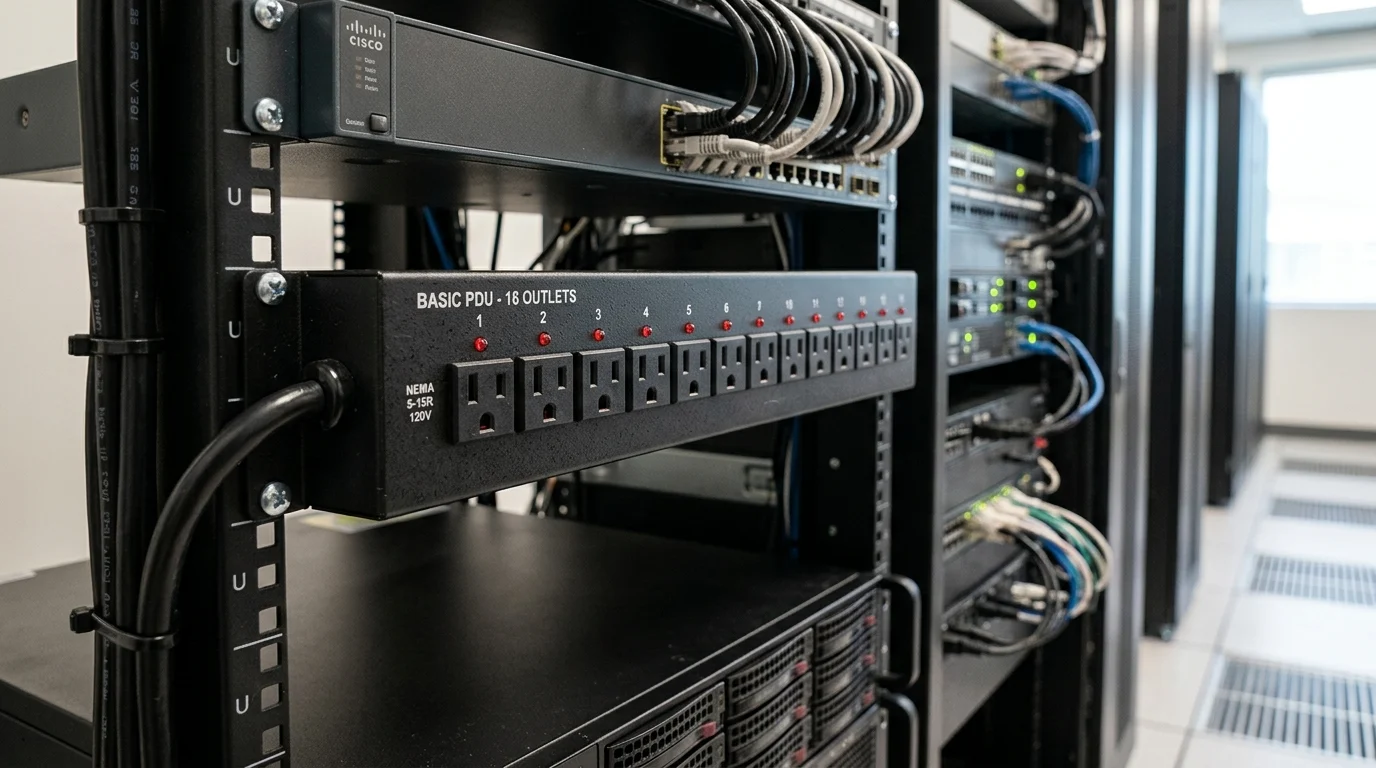
In many industrial racks and equipment cabinets, the best power distribution choice is not the most feature-rich one. A basic PDU focuses on the core job—reliable power delivery—without adding network modules, switching components, or monitoring hardware that increase cost and complexity. This article explains where basic PDUs make the most sense, how they improve durability and reduce failure points, and why they remain a practical fit for data centers, telecom sites, and factory environments. It also sets up the key tradeoffs between simplicity, scalability, and total cost of ownership so the rest of the discussion can evaluate whether a basic PDU is the right solution for your deployment.
Why is a basic PDU still the smart choice
Whenever I sit down with a client to map out their data center or facility power architecture, I inevitably get asked: ‘Why aren’t we putting smart, networked PDUs in every single rack?’ It is a fair question, especially in an era when we want to monitor everything down to the microsecond. However, the reality I always come back to is that simplicity often wins.
A perfectly engineered power distribution unit does not need a microprocessor to do its primary job well: delivering uninterrupted electricity to your critical hardware. In fact, stripping away the network cards and relays often results in a vastly more resilient infrastructure. Let me walk you through why I still heavily advocate for the humble, un-networked workhorse.
How I frame the business case for a basic PDU
Here is how I frame the financial reality: an enterprise-grade Basic PDU typically runs anywhere from $50 to $150, depending on the receptacle count and amperage. Compare that to a fully switched and monitored unit, which can easily exceed $600 to $800 per strip. If you are outfitting a small footprint of 50 racks with dual power feeds (100 PDUs total), you are looking at a baseline cost of $10,000 for basic units versus $60,000 or more for smart ones.
That $50,000 difference is massive. If your facility already has branch circuit monitoring at the panel board or UPS level, paying a premium to monitor power again at the rack level is just redundant capital expenditure. I always advise my clients to allocate that budget to better servers or cooling infrastructure unless remote outlet rebooting is an absolute, non-negotiable requirement.
Where industrial basic PDUs deliver the strongest cost-to-reliability value
I find that these units deliver the highest value in environments where uptime is critical and IT staff intervention is rare. Think edge computing nodes, harsh industrial manufacturing floors, and telecom closets. Because they lack intelligent controllers, there is no firmware to update, no IP addresses to manage, and zero cybersecurity vulnerabilities to patch.
This translates directly to hardware reliability. The Mean Time Between Failures (MTBF) on a well-built basic unit frequently exceeds 100,000 hours. When you remove the sensitive logic boards and mechanical relays from the equation, you are left with solid copper busbars and robust wiring. In high-temperature hot aisles or vibration-heavy industrial settings, that physical simplicity is exactly what keeps the power flowing.
What defines an industrial basic PDU
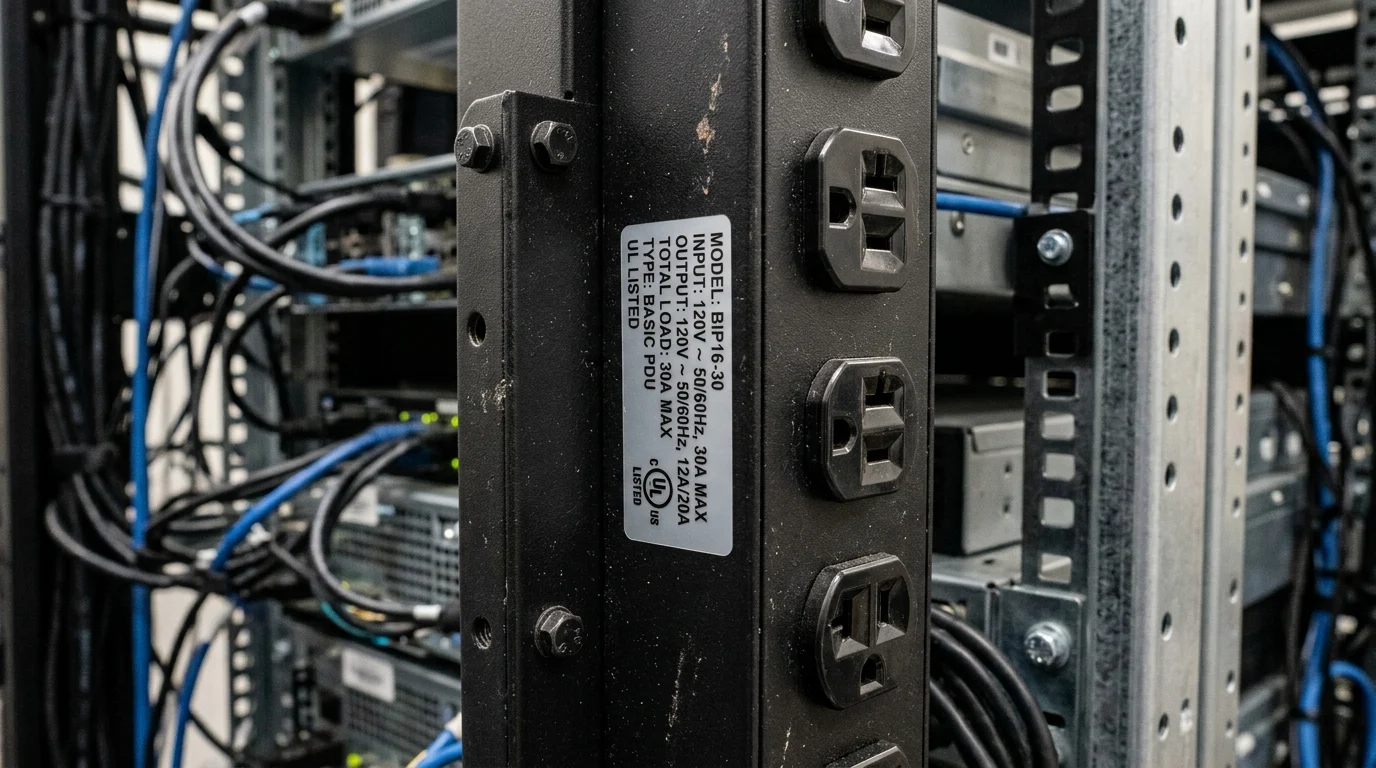
You might be tempted to think of these units as overgrown versions of the plastic power strips you would buy at a local hardware store. That is a dangerous misconception. A true Industrial Power Strip is engineered for continuous, high-draw operation, often pulling enough current to melt consumer-grade plastics.
Understanding what separates an industrial-grade unit from a commercial commodity requires looking under the hood at the electrical ratings, the chassis construction, and the specific add-ons that make it suitable for a data center or factory floor.
Which basic PDU specifications matter most: input, output, and phase
The first things I look at are the core electrical specs: input voltage, amperage, and phase. Industrial units typically handle 120V, 208V, 230V, or even 400V 3-phase power. Amperage ratings generally range from 15A up to 60A. For example, a 30A 208V single-phase input will deliver roughly 5kW of usable power (factoring in standard derating).
On the output side, the mix of receptacles is crucial. I usually specify units with a heavy density of standard IEC C13 outlets for 1U/2U servers, interspersed with several higher-capacity IEC C19 outlets for blade chassis or large network switches. Getting this mix right prevents you from having to daisy-chain adapters, which is a major safety hazard.
How enclosure materials, operating conditions, and mounting format affect fit
Enclosure material is a non-negotiable factor for me. I strictly spec units with extruded aluminum or heavy-duty steel chassis. These materials act as natural heat sinks and withstand physical impacts during rack installations. Operating temperature ratings are equally vital; a proper industrial unit should be rated to operate flawlessly in ambient temperatures up to 60°C (140°F), which is standard for modern hot-aisle containment systems.
Mounting format dictates how easily you can deploy the unit. For dense server racks, I almost always prefer 0U vertical profiles that mount in the rear channels, saving precious RU space for compute hardware. For shallow network closets or AV racks, 1U or 2U horizontal mounts usually make more sense.
What optional features are worth paying for in a basic PDU
Even though we are talking about “basic” power, there are a few physical upgrades I never skip. Locking receptacles are at the top of my list. Whether they use proprietary locking cables or universal retention clips, preventing an accidental disconnect during maintenance is worth the slight premium.
I also highly recommend color-coded chassis or power cords. When you are standing behind a rack with 80 cables, knowing instantly that the red PDU is the A-feed and the blue PDU is the B-feed dramatically reduces the chance of human error during a maintenance window. Finally, in environments with dirty power, integrated surge protection with a rating of at least 2,000 Joules is a smart addition.
How does a basic PDU compare with metered, monitored, and
When I am defending a facility design to a CFO or a CTO, the conversation always turns to comparisons. They see the glossy brochures for intelligent power systems and want to know what they are missing out on if we go with the simpler route.
My approach is to strip away the marketing jargon and look at the actual operational trade-offs: cost, failure rates, and the true utility of the features being offered.
Which comparison table best shows basic PDU versus intelligent alternatives
To make the decision objective, I use a baseline matrix that compares the four main tiers of rack power distribution. This helps stakeholders see exactly what they are paying for.
| PDU Category | Average Cost Band | Remote Monitoring | Per-Outlet Switching | Typical MTBF |
|---|---|---|---|---|
| Basic | $50 – $150 | No | No | >100,000 hrs |
| Metered | $150 – $300 | Local Display Only | No | ~80,000 hrs |
| Monitored | $300 – $600 | Yes (via IP) | No | ~60,000 hrs |
| Switched | $600 – $1,200+ | Yes (via IP) | Yes | <50,000 hrs |
As you move down the table, the cost increases exponentially while the Mean Time Between Failures actually decreases due to the added complexity.
When a rack basic PDU is the better fit
I specify a Rack PDU without intelligent features when the surrounding infrastructure is already smart. If your UPS and your intelligent floor-mount PDUs or tap boxes are already giving you granular data on power consumption and phase balancing, adding smart rack strips is just paying for the same data twice.
They are also the superior choice in colocation deployments where the remote hands team handles physical reboots anyway, or in highly secure air-gapped environments where putting a power strip on a management network violates security policies.
How I evaluate lifecycle cost, failure risk, and operational complexity
When evaluating lifecycle costs, I look beyond the initial purchase order. Switched PDUs rely on mechanical relays to turn outlets on and off. Relays can weld shut or fail open over time, especially when dealing with high inrush currents from modern server power supplies.
A basic unit’s failure rate is typically less than 0.1% over a five-year lifecycle. I do not have to budget for replacement network modules, I do not have to spend engineering hours patching SNMP vulnerabilities, and I do not have to worry about a failed firmware update taking down a rack of production database servers.
What should buyers check before selecting a basic PDU
I have seen buyers make seemingly minor specification mistakes that end up costing weeks in deployment delays or requiring expensive electrical rework. Buying a simple power strip still requires diligent engineering checks.
Before I sign off on a purchase order, I run through a strict qualification checklist encompassing electrical loads, regional compliance, and supply chain logistics.
How to match a basic PDU to the load profile
The first step is always matching the unit to the intended load profile. I calculate the maximum theoretical draw of the rack and apply the National Electrical Code (NEC) 80% derating rule for continuous loads. If I have a rack with 10 servers drawing 300W each, my total load is 3kW.
To support 3kW safely, a 20A 208V PDU is required (which provides roughly 3.3kW of usable capacity after derating). I never size a basic unit to run at 100% capacity; leaving a 20% buffer ensures that if a redundant power feed fails, the surviving unit can handle the entire rack’s load without tripping a breaker.
Which compliance, safety, and regional power standards matter most
Compliance is another area where you cannot cut corners. For the North American market, I strictly look for UL 62368-1 certification. If a unit only has recognized components but lacks a full assembly listing, it will not pass a strict fire marshal or electrical inspector audit.
Region-specific plugs are also critical. A NEMA L6-30P is standard for 30A 208V in the US, but if I am shipping racks to Europe, I need to specify IEC 60309 (Commando) plugs. Overlooking this means dealing with expensive, uncertified adapter cables on site.
What sourcing, lead time, logistics, and channel support factors to review
Finally, I evaluate the vendor’s supply chain. If I am deploying a new data hall, I cannot wait 12 weeks for power strips. I look for partners providing reliable B2B Power Solutions who maintain domestic inventory for standard configurations, ensuring lead times of under two weeks.
If we need custom whip lengths or specific outlet color coding, I check the Minimum Order Quantity (MOQ). A good manufacturer will often accept custom runs with an MOQ as low as 50 to 100 units, which is perfect for a medium-sized facility build-out.
How can I make the final basic PDU decision
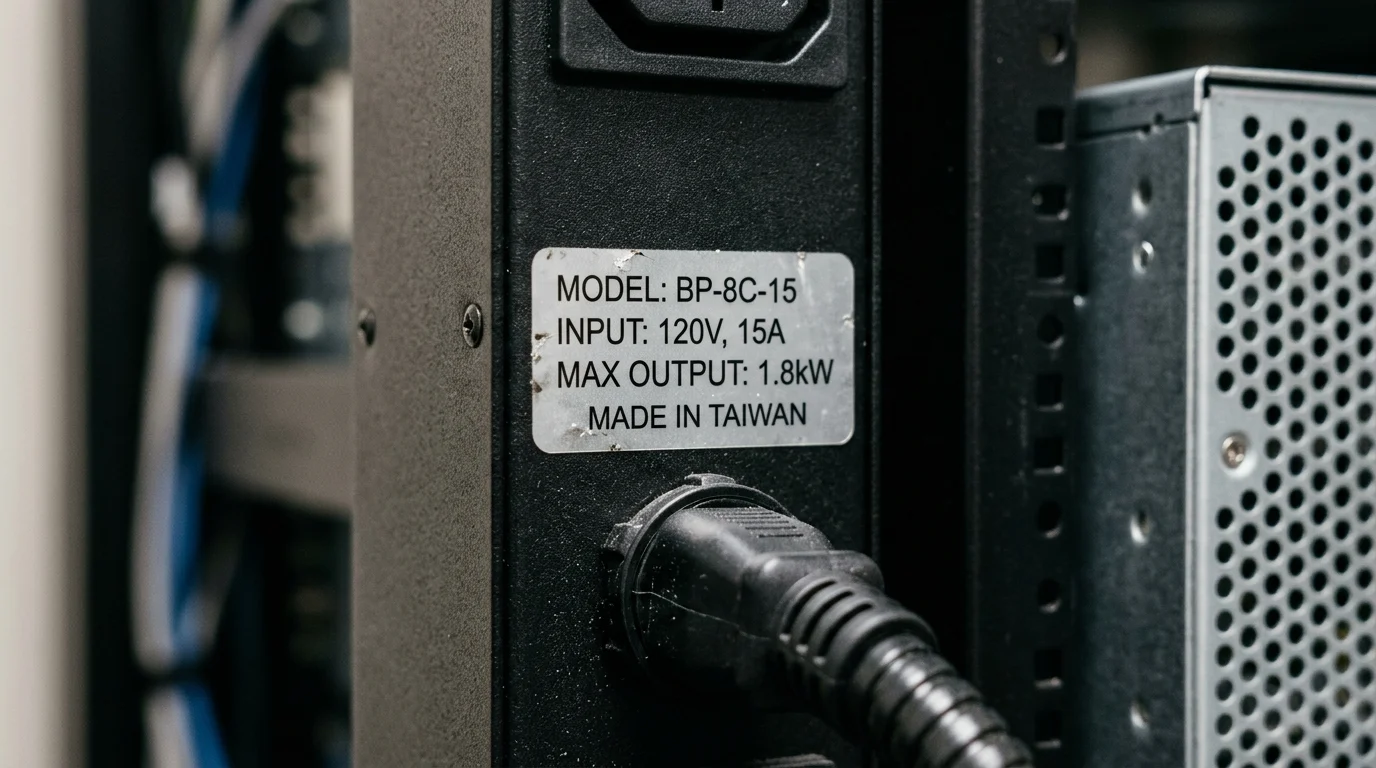
Making the final decision does not have to be a headache if you follow a systematic approach. It is all about matching the physical realities of your IT load to the electrical realities of your facility.
I use a structured selection process to ensure that every dollar spent is buying actual reliability, rather than just flashing LED lights.
Which step-by-step basic PDU selection process works best
I train my infrastructure teams to follow a four-step selection matrix. This ensures we do not over-provision or under-spec our power gear.
| Selection Step | Key Metric | Target / Threshold |
|---|---|---|
| 1. Load Calculation | Total Rack Draw (kW) | Keep below 80% of rated PDU capacity |
| 2. Receptacle Count | C13 / C19 Ratio | Add 20% extra ports for future expansion |
| 3. Form Factor | 0U, 1U, or 2U | 0U preferred for racks >42U to save space |
| 4. Input Feed | Plug Type & Cable Length | Minimum 3-meter whip, matched to facility NEMA/IEC |
By treating this checklist as a hard rule, we eliminate the guesswork and ensure standardization across all our global deployments.
What the strongest purchase criteria look like when balancing price and reliability
Ultimately, the strongest purchase criteria balance upfront cost against long-term physical resilience. I am always looking for an Affordable PDU that does not compromise on build quality.
Saving $20 by choosing a unit with a flimsy plastic housing or undersized internal wiring is a terrible trade-off when it puts a $10,000 server at risk. By focusing on heavy-duty metals, high MTBF ratings, and proper UL compliance, you secure a rock-solid power foundation that will quietly and flawlessly do its job for the next decade.
Key Takeaways
- The most important conclusions and rationale for Basic PDU
- Specs, compliance, and risk checks worth validating before you commit
- Practical next steps and caveats readers can apply immediately
Frequently Asked Questions
When is a basic PDU a better choice than a smart PDU?
Choose a basic PDU when you need reliable rack power without outlet monitoring or remote rebooting. It fits edge sites, telecom closets, and industrial floors where uptime, lower cost, and simpler maintenance matter most.
What specifications should I check before buying a basic PDU?
Confirm input voltage, amperage, phase, plug type, outlet mix, and mounting style. For server racks, many buyers need mostly IEC C13 outlets plus a few C19s to avoid unsafe adapters.
Why are industrial basic PDUs safer than consumer power strips?
Industrial PDUs are built for continuous high loads with metal chassis, robust internal wiring, and proper electrical ratings. Consumer strips are not designed for rack servers, hot aisles, or factory environments.
How much money can a facility save by using basic PDUs?
Savings can be substantial. A basic unit may cost about $50 to $150, while monitored or switched models often exceed $600. Across dozens of racks, the budget difference can reach tens of thousands of dollars.
Can YOSUNPDU help match a basic PDU to my rack or facility?
Yes. YOSUNPDU offers basic PDU options for data centers, telecom rooms, and manufacturing sites. Share your voltage, amp rating, plug type, outlet count, and rack layout to get a suitable configuration.
Post time: May-14-2026


