

Introduction
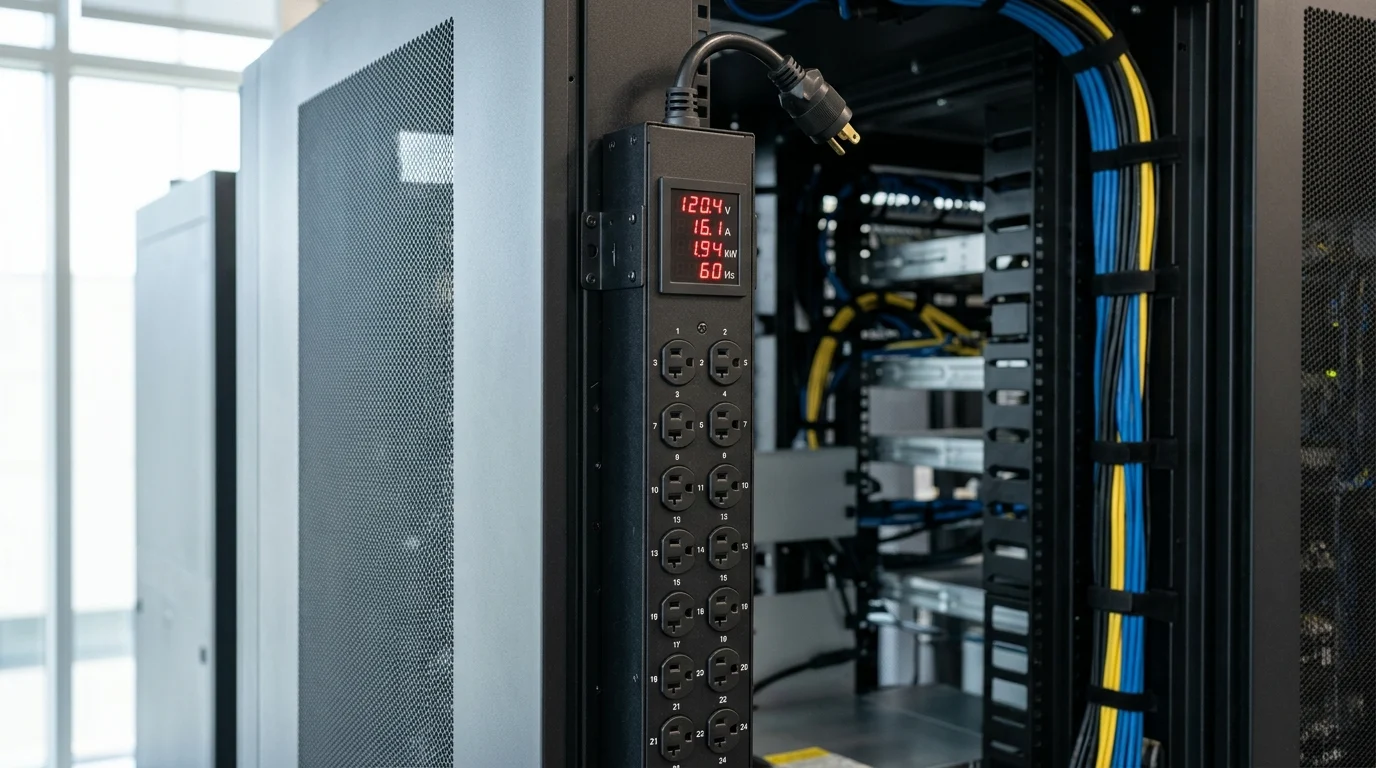
Energy efficiency in a data center is shaped by decisions made at the rack, where small power imbalances can turn into wasted capacity, higher cooling demand, and avoidable risk. A metered PDU gives operators direct visibility into real-time power draw, making it easier to track consumption, prevent circuit overloads, and balance loads more accurately. That data supports better capacity planning and helps teams identify where energy is being used inefficiently before costs rise or uptime is affected. The sections that follow explain how metered PDUs improve monitoring, strengthen operational control, and contribute to measurable efficiency gains across the facility.
Why a Metered PDU Matters for Data Center Energy
I’ve spent enough time walking through humming server aisles to know that flying blind on power consumption is a recipe for disaster. When discussing Data Center Efficiency, the conversation must start at the rack level. Upgrading to a Metered PDU isn’t just a nice-to-have feature anymore; it has become a fundamental requirement for modern facility management and capacity planning.
Value Beyond Basic Power Distribution
Basic power strips simply don’t cut it when managing high-density, mission-critical environments. A metered unit provides real-time visibility into local power consumption, displaying voltage, current, and active power directly on a local LED or LCD screen. Having this immediate data prevents catastrophic circuit overloads before they happen, keeping critical loads online. Instead of guessing if a 30A circuit is maxed out, facility managers can see exactly when it hits the 24A (80% derated) National Electrical Code safety threshold, allowing for dynamic load balancing.
Energy, Capacity, and Uptime Pressures
The daily pressure to optimize power usage effectiveness (PUE) is intense. With modern server densities routinely pushing past 15 kW to 20 kW per rack—thanks in large part to heavy AI and machine learning workloads—stranded capacity is a luxury facilities simply cannot afford. By leveraging accurate Energy Monitoring, operators can safely deploy more equipment per rack without fear of tripping a breaker. This level of insight allows data centers to reclaim up to 10% to 15% of previously stranded power capacity, which directly translates to lower operational expenses, better capital utilization, and significantly improved uptime.
How a Metered PDU Improves Rack-Level Visibility and Efficiency
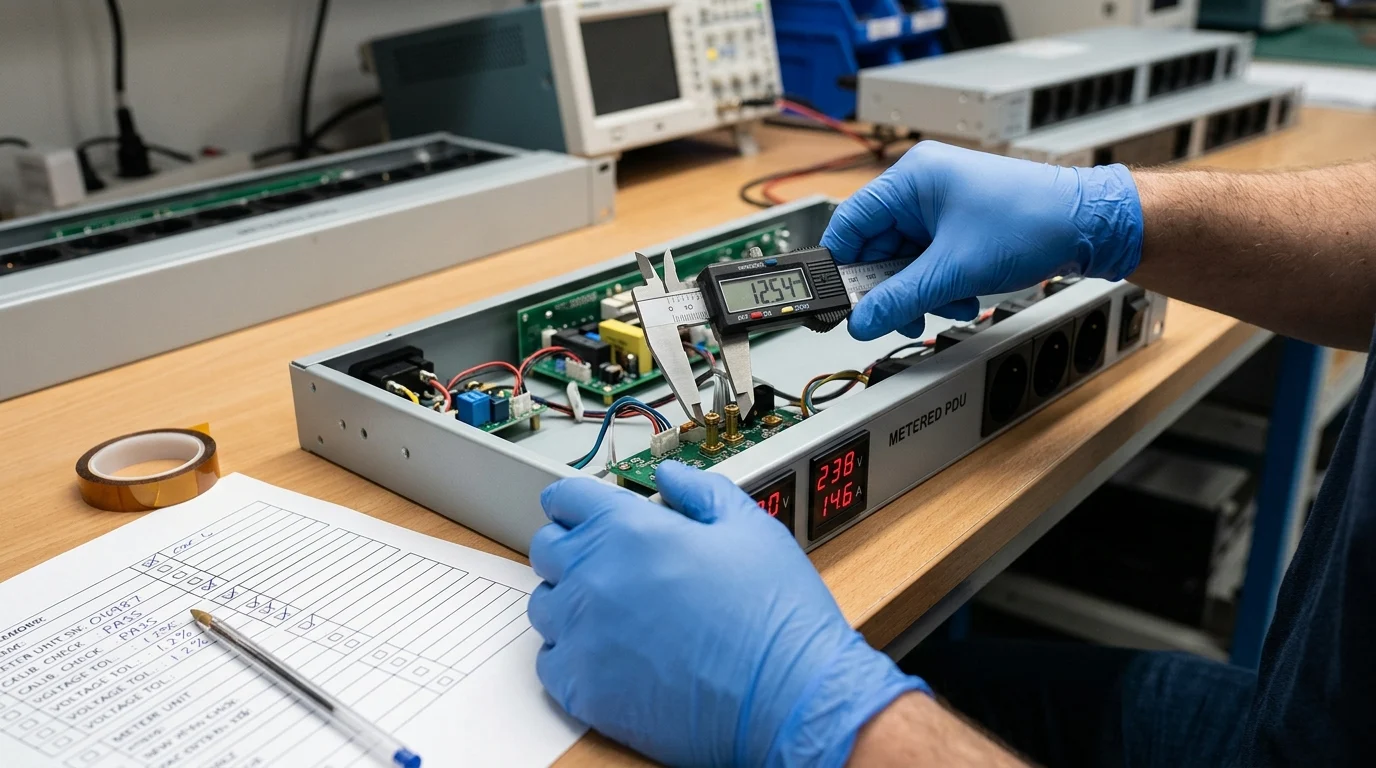
When it comes to rack management, visibility is everything. You cannot optimize what you cannot accurately measure. Integrating intelligent Rack Power solutions bridges the crucial gap between estimated power draws on paper and the actual physical consumption happening on the data center floor.
Metrics That Help Reduce Waste
By closely monitoring metrics like amps, volts, watts, and power factor, operators can pinpoint exactly where energy is being wasted. For instance, achieving billing-grade accuracy—usually within a tight +/- 1% tolerance—allows facilities to allocate utility costs perfectly to different internal departments or external colocation tenants. If a dashboard shows a power factor dropping below 0.90 on a specific rack, it immediately highlights inefficient server power supplies dragging down overall efficiency. This prompts an immediate investigation, potentially saving thousands of dollars in wasted utility costs over a year.
Metered PDU vs Basic PDU
Comparing these two options is like comparing a modern smart grid meter to a simple extension cord. Basic strips just pass electricity, while metered units act as the first line of defense in a facility’s telemetry strategy. Here are the core differences to highlight when pitching an upgrade to stakeholders:
| Feature | Basic PDU | Metered PDU |
|---|---|---|
| Local Display | None | LED / LCD Screen |
| Network Monitoring | No | Yes (SNMP, Modbus, API) |
| Accuracy | N/A | +/- 1% Billing Grade |
| Overload Prevention | Reactive (Breaker Trips) | Proactive (Alerts at 80% load) |
| Cost Premium | Baseline | Typically 20% to 40% higher |
While the initial capital expenditure is higher, the ROI is realized within months through avoided downtime and optimized capacity.
What to Evaluate Before Choosing a Metered PDU

Picking the right hardware requires upfront planning. Facilities do not want to overhaul their Power Distribution only to find out the new units don’t play nicely with existing infrastructure, or worse, fail to meet local safety and building codes. Approaching this phase with a strict checklist is essential.
Electrical Specs, Compliance, and Integration
First, verify the core electrical specifications. Determine whether the setup requires standard single-phase 120V/208V or three-phase 400V to the cabinet. It is critical to match the input plugs (like NEMA L6-30P or IEC 60309) and ensure the unit can handle the required amperage, which often ranges from 16A up to a massive 60A per whip in high-density setups. Compliance is completely non-negotiable; look strictly for UL or CE certifications and an operating temperature rating of at least 60°C (140°F) to ensure the units survive in hot-aisle containment zones. Furthermore, the hardware must integrate smoothly with existing DCIM software via standard protocols like SNMPv3 or RESTful APIs.
Implementation and Deployment Steps
Rolling these out across a facility takes careful coordination. It is highly recommended to start with a pilot deployment of 5 to 10 units to test network connectivity, IP address management, and alarm thresholds. Warning alerts are typically configured at 75% load and critical alerts at 80% to ensure plenty of lead time before a breaker ever trips. Once the IP addresses are mapped and the DCIM dashboard is pulling data cleanly without latency, teams can confidently scale up to the rest of the data hall. It is a methodical process, but doing it right the first time saves countless headaches down the road.
Key Takeaways
- The most important conclusions and rationale for Metered PDU
- Specs, compliance, and risk checks worth validating before you commit
- Practical next steps and caveats readers can apply immediately
Frequently Asked Questions
What does a metered PDU do in a data center rack?
It measures real-time volts, amps, watts, and power use at the rack, helping operators track load accurately and avoid guesswork.
How can a metered PDU improve energy efficiency?
It shows where power is wasted, supports better load balancing, and helps reclaim stranded rack capacity without exceeding safe circuit limits.
Why is the 80% load threshold important for metered PDUs?
On a 30A circuit, 24A is the common safe continuous-load limit. A metered PDU helps staff spot approaching overloads before breakers trip.
How is a metered PDU different from a basic PDU?
A basic PDU only distributes power. A metered PDU adds local display, monitoring data, and alerts, making it useful for capacity planning and uptime protection.
What should buyers check before choosing a metered PDU from YOSUN?
Confirm input/output ratings, outlet type, rack size, monitoring protocol support like SNMP or Modbus, and required safety or compliance certifications for your facility.
Post time: May-07-2026


