

smart-pdu standardization for modular data center deployment
Why Smart PDU Standardization Matters for Modular Data Centers

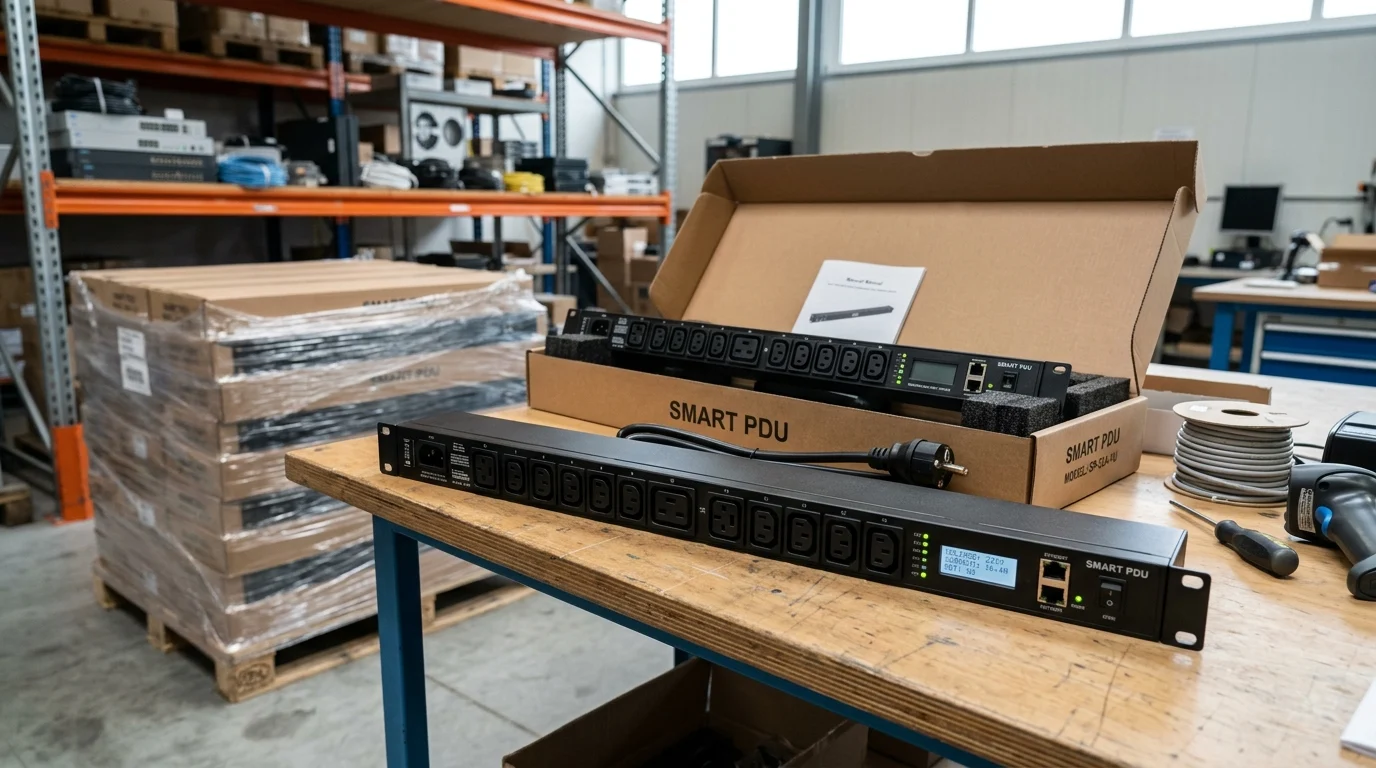
When I talk to procurement teams and infrastructure directors about scaling modular data centers, the conversation always turns to power distribution. A smart-pdu isn’t just a fancy power strip anymore; it is the central nervous system of the rack. As data center architectures shift toward prefabricated and modular builds, standardizing the power distribution unit becomes an absolute necessity rather than a nice-to-have.
Without a standardized approach, you end up with a fragmented portfolio of hardware. Different sites end up running different firmware versions, requiring unique management protocols, and relying on varied form factors. This kind of fragmentation destroys the core value proposition of modular data centers, which is supposed to be rapid, repeatable, and cost-effective deployment.
By committing to a standardized smart-pdu architecture, wholesale buyers and deployment teams can dramatically simplify their supply chain. You reduce the number of SKUs you need to manage, streamline your vendor relationships, and ensure that every new modular pod rolls out with predictable thermal and power management capabilities. It’s about creating a plug-and-play environment at scale.
Reducing integration risk across deployments
Integration risk is the silent margin-killer in modular deployments. When you use different smart-pdu models across various builds, your engineering team has to validate network compatibility, physical clearances, and thermal tolerances every single time. Standardizing on a specific Modular PDU design means your physical layouts and DCIM (Data Center Infrastructure Management) integrations are solved once and replicated endlessly, practically eliminating last-minute commissioning delays.
Commercial drivers behind platform standardization
From a commercial perspective, standardization gives buyers massive leverage. When you consolidate your purchasing power into a handful of standardized SKUs, you unlock better volume pricing, priority manufacturing slots, and more favorable payment terms. Furthermore, holding inventory becomes much cheaper because you aren’t forced to stock unique spares for every bespoke site. You essentially build a leaner, more agile supply chain.
Why interoperability and lifecycle consistency matter
A smart-pdu typically sits in a rack for five to seven years. Over that lifecycle, you will need to push firmware updates, patch security vulnerabilities, and integrate with evolving monitoring software. If you have ten different PDU platforms in the field, lifecycle management becomes a nightmare. Standardization guarantees interoperability, ensuring that a single firmware update can secure your entire global footprint simultaneously.
Key Smart PDU Standards and Specifications
Diving into the technical specifications of a smart-pdu is where procurement teams need to align closely with engineering. You aren’t just buying hardware; you are buying data granularity, environmental resilience, and network security. Understanding the baseline standards is crucial for drafting an effective Request for Proposal (RFP) that weeds out underperforming suppliers.
The market is flooded with options ranging from basic networked units to highly advanced models with per-outlet switching and environmental sensor ports. As a buyer, you need to define your baseline requirements early. This prevents scope creep and ensures you aren’t paying a premium for features your modular data center will never actually use.
Moreover, because modular data centers are often deployed in harsh or non-traditional environments—from edge telecommunications sites to industrial facilities—the physical and environmental specifications of your smart-pdu carry just as much weight as its digital capabilities.
Core electrical and mechanical requirements
At the core, you must define the input phases (single-phase vs. three-phase), amperage (typically 16A to 63A depending on region), and the physical form factor (0U vertical vs. 1U/2U horizontal). Mechanical requirements also include the chassis material, toolless mounting peg spacing, and the physical footprint to ensure it doesn’t obstruct airflow or cable management within dense modular racks.
Outlet, input, metering, and network options
You need to decide where the metering happens. Do you need input-level metering just to monitor total rack draw, or do you require outlet-level metering for accurate tenant billing and capacity planning? Network connectivity is equally important; modern deployments demand dual network ports for daisy-chaining and redundancy, supporting protocols like SNMP, Redfish, and Modbus TCP.
Comparing basic, metered, monitored, and switched models
To help visualize the differences when rationalizing your catalog, here is a breakdown of common smart-pdu classifications:
| PDU Type | Metering Level | Remote Switching | Best For | Typical Price Premium |
|---|---|---|---|---|
| Metered Input | Phase/Circuit | No | Baseline capacity planning | $ |
| Monitored | Per Outlet | No | High-density, tenant billing | $$ |
| Switched | Phase/Circuit | Yes | Remote rebooting, edge sites | $$$ |
| Switched with Outlet Metering | Per Outlet | Yes | Maximum control and visibility | $$$$ |
Rack, circuit, and environmental compatibility
Modular data centers often run hotter than traditional enterprise facilities to save on cooling costs. Therefore, your smart-pdu must be rated for high ambient temperatures, ideally up to 60°C (140°F). Additionally, circuit breaker configurations—such as low-profile hydraulic-magnetic breakers—must be specified to prevent nuisance tripping in fluctuating thermal environments.
How to Compare Smart PDU Options for Procurement
When it comes to the actual procurement process, evaluating smart-pdu options requires looking far beyond the spec sheet. I always advise my teams to evaluate the total cost of ownership (TCO) rather than just the unit price. A cheap PDU that fails in the field or requires constant manual intervention will cost you tenfold in maintenance and downtime.
Distributors and wholesale buyers must also consider how easily a product line can be integrated into their existing catalog. You want a vendor whose product architecture allows for flexibility without demanding massive inventory commitments. This is where modularity within the PDU itself becomes a massive asset for procurement.
Ultimately, the goal is to find a balance between advanced features, reliable supply chains, and healthy margins. This requires a structured evaluation framework that prioritizes long-term operational stability over short-term savings.
Key evaluation criteria for buyers and distributors
When vetting options, look closely at the controller intelligence, the quality of the internal relays, and the vendor’s software ecosystem. For distributors, offering Scalable Power solutions that allow end-users to upgrade metering capabilities via hot-swappable network cards is a massive selling point that differentiates you from commodity box-movers.
SKU rationalization and backward compatibility
A major goal of procurement should be replacing 50 highly specific SKUs with 5 highly adaptable ones. Look for smart-PDUs that offer universal inputs or combination C13/C39 outlets. Backward compatibility is also key; the new PDUs must integrate seamlessly with legacy DCIM software already running in older modular pods.
Pricing, margin, and total landed cost
Don’t just look at the FOB (Free on Board) price. Calculate the total landed cost, factoring in ocean or air freight, import tariffs, and warehousing. High-density intelligent PDUs are heavy and long, which impacts pallet utilization. Work with suppliers who optimize packaging to maximize container loads, thereby protecting your margins.
How to Qualify Smart PDU Suppliers
Qualifying a supplier for a smart-pdu rollout is a rigorous process. Because these devices handle critical power loads and sit on the secure management network, the OEM (Original Equipment Manufacturer) must demonstrate excellence in both hardware manufacturing and software development.
I always tell my procurement teams to treat smart-pdu suppliers like enterprise software vendors. You are relying on them for ongoing firmware support, security patches, and protocol updates. If a supplier has a massive factory but outsources all their firmware development to a third party, that is a massive red flag for long-term support.
Furthermore, for large-scale modular deployments, the supplier’s supply chain resilience is critical. You need to know where they source their microcontrollers and relays, and what their buffer stock looks like during global component shortages.
OEM capability, testing, and firmware support
A qualified OEM should have an in-house R&D team dedicated to firmware. Ask to see their firmware release notes for the past two years to gauge how actively they patch vulnerabilities. Additionally, their testing facilities should include automated burn-in chambers, surge testing, and network stress-testing environments.
MOQ, samples, packaging, and private labeling
For wholesale importers and integrators, flexibility is key. Negotiate Minimum Order Quantities (MOQs) that align with your deployment schedules. If you are a distributor, inquire about Custom Power Solutions and private labeling options. Having your brand on a high-quality smart-pdu builds immense equity with your modular data center clients.
Capacity, sourcing, and change control
You need a supplier with strict engineering change order (ECO) controls. If they swap out a network chip or a relay brand due to supply chain issues, they must notify you immediately, as this can void your internal validations or certifications. Ensure they have sufficient production capacity to scale up when you land a massive modular deployment contract.
Factory audits and quality checkpoints
Never commit to a long-term contract without a factory audit, whether in-person or via a trusted third party. Review their incoming quality control (IQC) for raw materials, their automated optical inspection (AOI) for PCB assembly, and their final functional testing protocols. Consistent quality checkpoints are what prevent DOA (Dead on Arrival) units in the field.
Compliance and Certification Risks
Navigating compliance is one of the most complex parts of global smart-pdu procurement. Modular data centers are often built in one country, integrated in another, and deployed in a third. This means your power distribution equipment must meet an overlapping web of international safety and environmental regulations.
If a single smart-pdu lacks the proper regional certification, customs can impound an entire modular data center pod. This translates to devastating project delays and financial penalties. Procurement teams must be absolutely ruthless in demanding and verifying compliance documentation before issuing a purchase order.
Furthermore, compliance is no longer just about electrical safety. With the rise of networked infrastructure, environmental compliance and cybersecurity regulations are becoming strict prerequisites for market access in regions like the EU and North America.
Regional safety and market access requirements
Your smart-pdu must carry the appropriate marks for its destination. This typically means UL/cUL (UL 62368-1) for North America, CE for Europe, and potentially UKCA, CCC, or RCM for other regions. Don’t assume a “universal” PDU covers all bases; verify the exact certifications on the specific SKU you are purchasing.
EMC, RoHS, REACH, and cybersecurity considerations
Beyond basic safety, units must pass Electromagnetic Compatibility (EMC) testing (like FCC Part 15) to ensure they don’t interfere with server operations. Environmental directives like RoHS and REACH are mandatory for European imports. Increasingly, cybersecurity standards (such as IEC 62443) are required to prove the device has secure boot processes and encrypted communications.
Documentation, test reports, and traceability
Never take a supplier’s word for it. Demand the full Declaration of Conformity (DoC) and the underlying third-party lab test reports. Ensure the manufacturer maintains strict serial number traceability so that if a component recall happens, you can pinpoint exactly which modular sites are affected.
Packaging, Logistics, and After-Sales Support
Procuring the right smart-pdu is only half the battle; getting it to the integration site intact and keeping it operational is the other half. Because these are long, relatively fragile pieces of equipment containing sensitive electronics, logistics play a massive role in the overall success of the standardization program.
When you are shipping hundreds of units for a modular data center build, packaging failures result in bent chassis, broken mounting pegs, or shattered LCD screens. Procurement teams need to specify packaging standards in their supplier agreements to mitigate transit risks.
After-sales support is equally critical. In a modular environment, downtime is unacceptable. You need a robust strategy for handling RMAs (Return Merchandise Authorizations) and securing replacement parts quickly, minimizing reliance on the OEM’s standard lead times.
Export packaging and damage prevention
Specify drop-tested, reinforced export packaging. Individual units should be suspended in custom-molded EPE foam, not cheap styrofoam that crumbles. For bulk shipments, require palletization with corner protectors and shrink-wrap to prevent shifting during ocean transit or rough handling at customs warehouses.
Lead times, inventory buffers, and deployment logistics
Managing lead times requires tight coordination. Below is a typical text-based chart showing a healthy procurement timeline:
Chart: Typical Smart PDU Lead Time Breakdown
- Weeks 1-2: Component sourcing and PCB fabrication.
- Weeks 3-4: Assembly and firmware flashing.
- Week 5: Burn-in testing and Quality Assurance.
- Weeks 6-9: Ocean freight and customs clearance.
- Week 10: Inland delivery to modular integration facility.
To mitigate delays, smart buyers negotiate buffer stock agreements where the manufacturer holds a percentage of finished goods on standby.
Warranty, spares, and remote support
Negotiate a minimum three-year warranty with advanced replacement options. Look for suppliers that utilize Hot-Swappable Modules for the network controller. If a PDU loses network connectivity in the field, a hot-swappable brain allows local technicians to replace the controller without dropping power to the critical IT load.
A Standardization Process for Procurement Teams
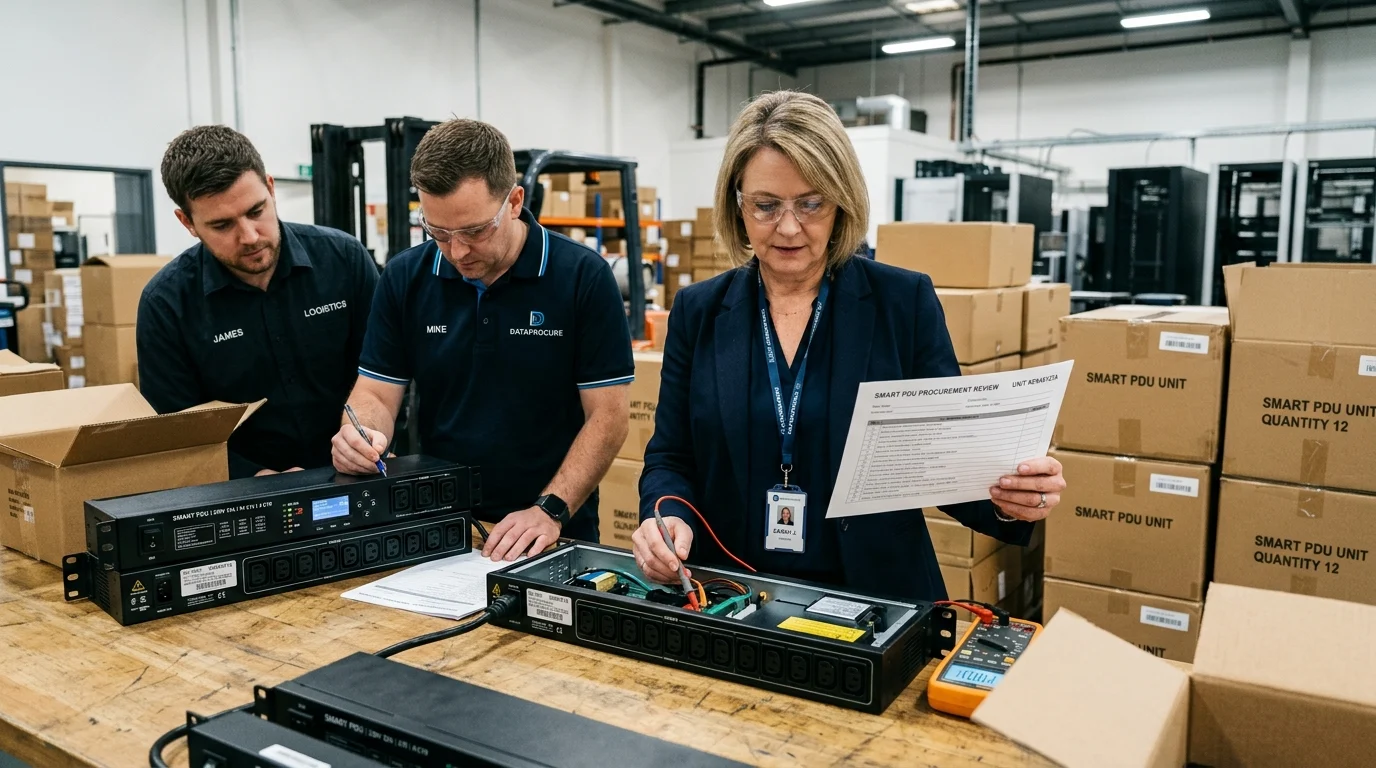
Implementing a standardization strategy isn’t something that happens overnight. It requires a deliberate, phased approach that brings together stakeholders from procurement, IT engineering, and facility operations. The goal is to build a consensus on a platform that serves the business’s needs for the next half-decade.
I recommend starting with a deep dive into your historical purchasing data. Look at what was actually deployed versus what was originally specified. You will often find a massive disconnect, highlighting exactly why a formalized standardization process is necessary.
By following a structured roadmap, you can transition from a chaotic, reactive purchasing model to a strategic, proactive one. This not only saves money but significantly accelerates your modular data center time-to-market.
Building a standardization roadmap
Start by defining your target end-state. Audit your current deployments, identify the most common power densities, and draft a baseline specification. From there, issue an RFI (Request for Information) to a curated list of suppliers, focusing heavily on their ability to support Infrastructure Standardization at a global scale.
Pilot validation and approved vendor lists
Once you narrow down your options, purchase pilot units. Deploy them in a test lab to validate DCIM integration, thermal performance, and mechanical fit. Only after a successful pilot should a supplier be added to your Approved Vendor List (AVL). I recommend maintaining a primary and a secondary supplier on the AVL to mitigate supply chain risks.
Balancing customization with standard platforms
The golden rule is 80/20. Aim for your standard SKUs to cover 80% of your modular deployments. For the remaining 20% that require unique configurations, work with an OEM whose base platform is modular enough to accommodate slight tweaks (like different input cords) without requiring a completely new engineering cycle.
Key takeaways for long-term deployment
Standardization is an ongoing discipline, not a one-time project. Review your standard SKUs annually to ensure they still meet the rising power demands of modern AI and high-density compute workloads. Stay close to your OEM’s product roadmap so you can anticipate end-of-life (EOL) announcements and transition to next-generation models seamlessly.
Smart PDU Standardization FAQ
Even with a solid strategy in place, procurement and operations teams frequently encounter specific hurdles when finalizing their smart-pdu catalogs. Addressing these common questions upfront helps align expectations between buyers, integrators, and OEMs.
How many variants to keep in the portfolio
For most modular data center operators, keeping between three to five standard SKUs is the sweet spot. This typically includes a standard density unit, a high-density unit, and perhaps a specialized switching unit for edge deployments. Anything more dilutes your purchasing power.
Whether one platform can cover multiple regions
Yes, but it requires careful planning. Many modern smart-PDUs use universal input architectures that can accept various regional power feeds (e.g., 208V in the US, 230V in Europe) while outputting via standard C13/C19 receptacles. However, you must ensure the unit carries all the necessary regional compliance certifications.
Expected lead times, MOQs, and compliance documents
For standardized, high-volume orders, expect lead times of 6 to 8 weeks, though this can stretch during component shortages. MOQs for standard units are usually low (10-50 units), but custom configurations may require 100+. Always demand the DoC, RoHS certificates, and UL/CE test reports before the first shipment leaves the factory.
Related Reading: Modular PDU
Key Takeaways
- Wholesale sourcing and supply-chain implications for smart-pdu
- Specifications, compliance, and commercial terms buyers should validate
- Actionable recommendations for distributors and procurement teams


