

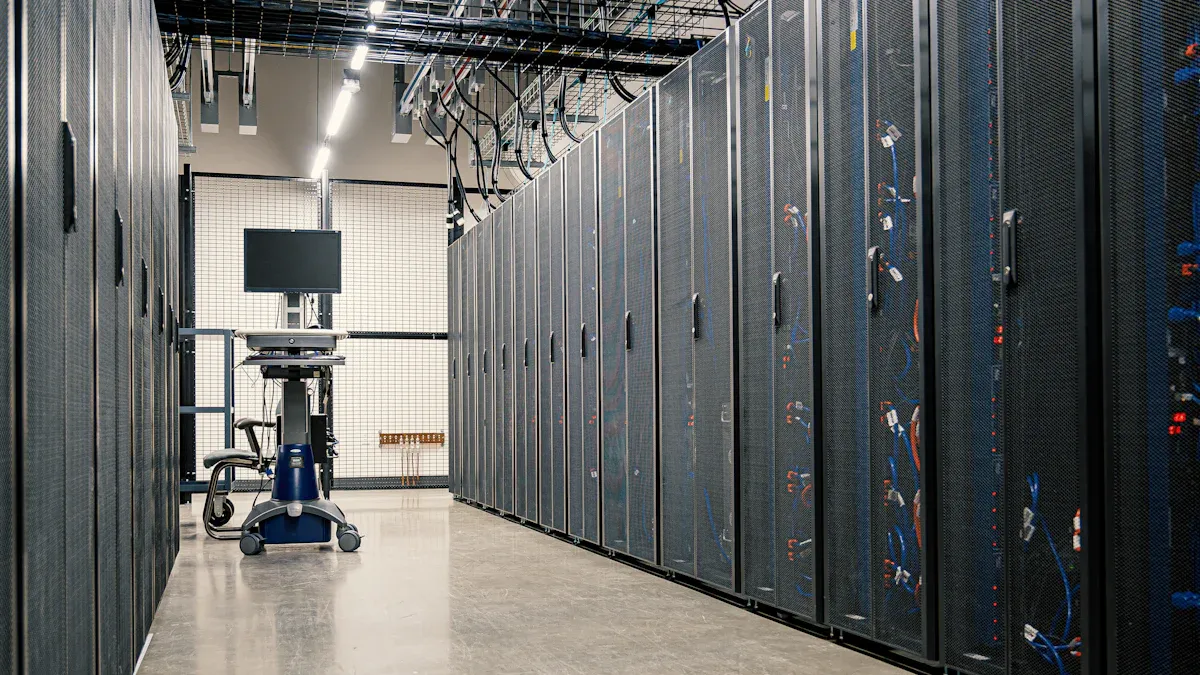
I believe Rackmount PDU & Custom PDU solutions are absolutely critical for future-proofing your data center. They give you efficient, reliable, and scalable power distribution. This directly tackles growing power demands and keeps your operations running smoothly. The right Rackmount PDU & Custom PDU can make all the difference.
Key Takeaways
- Standard power strips are not enough for data centers. They lack important features like monitoring and surge protection. This can cause problems and waste energy.
- Rackmount PDUs make power distribution better. They help you monitor power, save space, and keep your systems running without issues. This makes your data center more reliable.
- Custom PDU solutions are best for your data center’s unique needs. They let you choose specific features and grow with your business. This helps you save money and avoid future problems.
Understanding Rack Power Distribution Challenges

Limitations of Standard Power Strips
I often see people trying to use standard power strips in their racks, and I just shake my head. They might seem like a quick fix, but they really fall short in a data center environment. These basic strips lack the features we need for proper power management. They don’t offer monitoring, surge protection, or individual outlet control. This means I can’t see how much power my equipment is drawing, and I can’t remotely cycle power if something freezes up. It’s like trying to run a marathon in flip-flops; it just won’t work efficiently or safely.
Common Power Distribution Headaches
I’ve seen my share of power distribution headaches in data centers. One big problem is what I call ‘dirty’ power. This includes things like harmonics, voltage distortions, and sudden transients. These issues don’t just waste energy; they also make my cooling systems work harder, which drives up my Power Usage Effectiveness (PUE). I’ve noticed that AI models, with their sudden power surges, make this even worse. They create electrical noise and can even overheat power supply units or cause costly transformer failures.
The power grid itself, much of it built decades ago, wasn’t designed for the “spikey” loads modern data centers produce. My servers, LED lights, and variable-speed HVAC units create non-linear demands that the old grid struggles to handle. I also deal with ‘stranded power’ – energy that’s available but not used. This happens when I have idle IT equipment, undersized infrastructure, or too much spare capacity. It’s frustrating to have power I can’t effectively use. I also know that almost half of data center outages, about 44%, come from onsite power system failures. A big chunk of those, 40%, are specifically due to UPS issues. This tells me that reliable power distribution isn’t just a convenience; it’s absolutely critical for keeping everything running.
The Power of Rackmount PDU Technology
Enhanced Reliability and Uptime with Rackmount PDUs
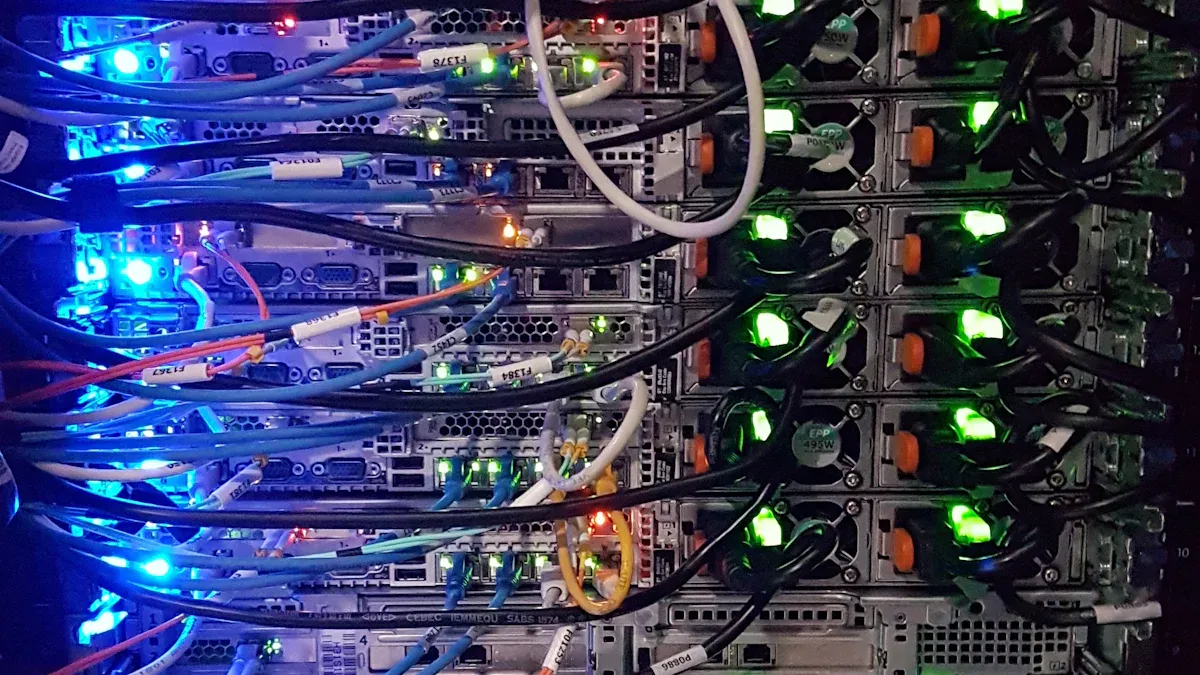
I used to worry a lot about my systems going down unexpectedly. But with modern rackmount PDUs, I feel much more secure. These intelligent units, like some of the advanced Rackmount PDU & Custom PDU models I’ve seen, give me incredible monitoring features. I really value seeing what’s happening with my power in real-time. I can also analyze any power quality issues as they happen. This helps me prevent problems before they cause an outage. It truly boosts my uptime and keeps my data center running smoothly and efficiently.
Optimized Power Monitoring and Management
What I love most about these PDUs is how much control they give me. I can monitor power at every single outlet, which we call Per Outlet Power Sensing (POPS). This tells me the current, voltage, and power for each device. I also get Per Inlet Power Sensing (PIPS) for the whole PDU. This gives me super accurate data. I can check everything through a secure web interface. Plus, I get alerts if temperatures or humidity get too high. If something goes wrong, I get an email or an SNMP trap right away. These units even have strong security features and can update their firmware automatically.
Space Efficiency and Cable Management Benefits
Space is always tight in my racks. That’s why I appreciate how rackmount PDUs help me use every inch. They are designed to fit perfectly, so I can install more devices without making a mess.
| Mounting Option | Rack Space Utilization | Outlet Availability |
|---|---|---|
| Vertical (Zero U) | 0U (no rack space) | Up to 54 outlets |
| Horizontal | 1U or 2U | 8-16 outlets |
| Traditional Power Strips | Significant external space | Limited outlets, more clutter |
I often use vertical PDUs because they take up zero rack units. This means I save valuable space for my servers. They also help me keep my cables neat and organized. This high outlet density lets me power many devices with fewer units. It really makes my racks look cleaner and work better.
Custom PDU Solutions for Evolving Demands
Why Standard Rackmount PDUs Fall Short
I’ve talked about how great rackmount PDUs are, but sometimes, even the standard ones just don’t cut it for me. My data center isn’t a one-size-fits-all kind of place. I often find that off-the-shelf PDUs have limitations. They might not have the right number of outlets for my specific gear, or the power input might not match my facility’s infrastructure perfectly. I’ve seen situations where the cord is too short, or the outlet type isn’t what I need for a new piece of equipment. These small mismatches can cause big headaches. They force me to use adapters, which I really try to avoid, or they leave me with unused capacity. This means I’m not getting the most out of my investment. My needs are always changing, especially with new technologies coming in. A standard PDU just can’t keep up with that kind of dynamic environment.
Key Customization Options for Optimal Performance
This is where custom PDU solutions really shine for me. I can tailor them exactly to my data center’s unique requirements. It’s not just about getting power; it’s about getting the right power, in the right way.
Here are some of the customization options I find most valuable:
- Input Cord Type and Length: I can specify the exact input cord type to match my worldwide connector requirements. I also get to choose the perfect length, size, and amperage. This means no more struggling with cords that are too short or too long.
- Input Cord Entry Location: I can even decide where the cord enters the device – front, top, or bottom. This helps me keep my racks super tidy and improves airflow.
- AC/DC Power Distribution: Whether I need AC or DC power chains, I can get engineering solutions for either. This flexibility is crucial for different types of equipment.
- Outlets: I can choose from a huge variety of outlet options. This includes NEMA, IEC, CEE, and even specialized hybrid outlets like HDOT® Cx®. I also get a flexible architecture for the outlet layout, meeting my unique outlet type and quantity needs.
- Form Factor & Dimensions: I can customize the PDU to fit perfectly into my specific rack, cabinet, and server enclosure dimensions. No more wasted space!
- Overcurrent Protection: I make sure my custom PDUs have the proper safety protections and branch circuit ratings. This keeps my equipment safe.
- High kAIC Breakers and Fuses: I can design devices with higher breaker and fuse options for different power capacities. This gives me peace of mind.
- Color-Coding: I love the option for full-color chassis and color label customizations. This helps me with visual identification and organization in a busy rack.
- Worldwide Certifications: My provider handles compliance testing and certification to meet all regulatory needs. This saves me a lot of hassle.
- Intelligence Features: I can even get specialized embedded firmware to address unique power management problems. This means my PDU can do exactly what I need it to do.
These options mean I get a PDU that’s built for my environment, not just a generic solution.
Scalability and Flexibility with Custom PDU Designs
My data center is always growing and changing. Custom PDU designs give me the scalability and flexibility I need to handle future demands. I don’t want to rip and replace my entire power infrastructure every few years.
Here’s how custom solutions help me stay agile:
- Increased PDU Capacity: I can get high-power PDUs that deliver more energy per unit. This means I need fewer PDUs per rack. It streamlines my cable management and improves cooling efficiency. This is especially important for high-performance computing, like AI and GPU-based workloads. I can handle increased power demands, sometimes up to 100A inputs or 57.5 kW per cabinet, without redoing my entire rack layout.
- Modular Design for Growth: Modular PDUs are fantastic. I can easily expand them by adding more outlets or changing power configurations. I can even increase capacity without replacing the whole unit. This saves me time and money on infrastructure upgrades.
- Enhanced Efficiency: I can customize my power distribution setup to fit my specific operational requirements. I adjust configurations based on the load to optimize performance and minimize energy waste.
- Improved Reliability and Redundancy: I can configure modular PDUs with redundancy features. This includes dual power sources and hot-swap capabilities. This ensures continuous operation and allows for maintenance without downtime. Uptime is critical for me.
- Simplified Maintenance and Upgrades: Components are easy to replace or upgrade with minimal disruption. This extends the lifespan of my power distribution infrastructure and minimizes downtime.
- Voltage Flexibility: I find custom PDUs with triple-output voltage transformers incredibly useful. They can handle 208V, 400V, 415V, and even 480V. This means I can buy PDUs in bulk to avoid supply chain issues. Then, I can reconfigure them after deployment to match site-specific voltage requirements. This flexibility reduces procurement costs, simplifies inventory, and speeds up deployment.
- Isolated PDU Design: For multi-tenant environments, I use isolated PDU data center designs. This physically separates field connection terminals from live parts. It means I can do modifications or maintenance on one part of the system without disrupting power to other tenants. This enhances reliability and lets me safely modify loads without losing redundancy. This is crucial for maintaining uptime and flexibility in dynamic colocation environments.
- AI and HPC Workloads: Custom PDUs are essential for my AI and HPC workloads. These demand larger power blocks and flexible configurations. I get enhanced power quality management to handle power transients (up to 150% of steady-state maximum power). I also get sophisticated harmonic filtering to prevent equipment malfunctions. Plus, I have greater flexibility in voltage delivery options for diverse loads and improved fault isolation capabilities to minimize downtime.
Custom PDU solutions give me the confidence that my power infrastructure can adapt to whatever the future brings. I see Rackmount PDU & Custom PDU solutions as a vital part of my strategy.
Implementing Your Custom PDU Strategy
Assessing Current and Future Power Needs
When I plan for my data center’s power, I always start by looking closely at what I have now and what I’ll need later. I conduct a thorough needs assessment to figure out my availability requirements, like if I need N, N+1, or even 2N configurations. I identify every piece of equipment that draws power, from my servers to my cooling units, and note their individual power needs. I calculate the total load, which is everything installed, and then the critical load—the stuff that absolutely must stay on. I also estimate future critical load because IT equipment changes so fast. I consider my UPS load, including its efficiency, and even my lighting and cooling requirements. Cooling often takes the most power! Finally, I do a full electrical capacity computation, sizing power to peak consumption. I also make sure my backup generator is the right size. I estimate my IT load, cooling system power, and all supporting infrastructure. I always plan for redundancy and future growth. I also implement a power management plan, do regular energy audits, and use virtualization to save power. I even use power capping and look into renewable energy.
Partnering with the Right Custom PDU Provider
Choosing the right partner for my custom PDU solutions is a big deal. I look for a provider who really understands my unique challenges and can offer more than just off-the-shelf products. They need to have a strong track record in designing and manufacturing high-quality, reliable Rackmount PDU & Custom PDU solutions. I want a team that can walk me through all the customization options, from specific outlet types and cord lengths to advanced monitoring features. Good communication and excellent support are also non-negotiable for me. I need a partner who can ensure my custom PDUs meet all necessary certifications and integrate smoothly with my existing infrastructure.
Seamless Integration with Existing Infrastructure
Once I have my custom PDUs, integrating them into my current setup needs careful planning. I make sure my new PDUs are compatible with my existing power distribution units, racks, and network management systems. My goal is to minimize any disruption during installation. I work closely with my provider to ensure a smooth transition, often scheduling installations during off-peak hours. This careful approach helps me avoid downtime and ensures my custom power solutions start delivering benefits right away, making my data center more efficient and resilient.
I truly believe investing in Rackmount PDU & Custom PDU solutions is a strategic move. It ensures my power distribution is reliable, efficient, and scalable. This helps me future-proof my data center operations. Plus, it reduces my total cost of ownership in the long run. It’s a smart decision for me.
FAQ
Why should I choose a custom PDU over a standard one?
I choose custom PDUs because they perfectly match my specific needs. Standard ones often fall short. This means I get optimal performance and no wasted space.
Can custom PDUs really save me money?
Absolutely! I find custom PDUs reduce my operational costs. They optimize power usage. They also prevent costly downtime. This lowers my total cost of ownership.
How do custom PDUs help with future growth?
I rely on custom PDUs for scalability. They adapt to my evolving power demands. This means I can easily expand my data center without major overhauls.
Post time: Dec-15-2025


